Can Crypto Fix Its Biggest Security Problem: Humans?
Can better wallets, protocols and UX reduce crypto’s biggest security risk? Explore how technology can fight social engineering and scams.

Nevertheless, crypto has spent years strengthening mechanisms for consensus, smart contracts, and blockchains; many of its greatest losses currently occur before code attacks. A victim transfers, clicks, signs, or trusts. The FBI reported 181,565 cryptocurrency-related complaints and $11.37 billion in damages in 2025, which is an increase of 21% and 22%, respectively, from 2024. The question now is whether cryptocurrency can make risky decisions more difficult to make, rather than whether consumers should exercise greater caution.
Crypto’s Biggest Vulnerability Isn’t the Blockchain
The most enlightening recent attacks didn't need to bypass cryptography or breach Ethereum. They needed to persuade others that the attacker was real.
EtherWorld published an article in April 2026 titled North Korean Hackers Behind $285M Drift Protocol Hack. In this case, the hackers allegedly used malicious software and social engineering to compromise multisig signers instead of taking advantage of Drift's fundamental smart contracts.
At the individual level, a similar trend emerged. In the article ZachXBT Exposes Alleged $5M Crypto Scam, victims of an alleged support-impersonation operation were contacted by individuals posing as representatives of wallet firms and exchanges. Following a fraudulent communication, one identified victim lost almost $1.2 million in Bitcoin and Ethereum.
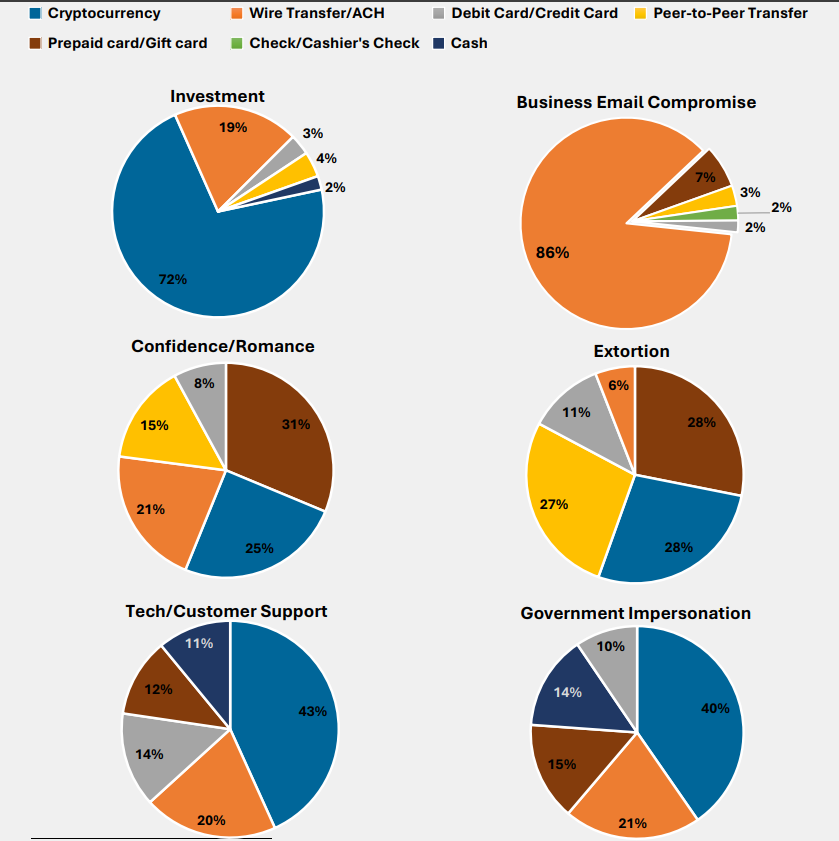
Compared to individual instances, the scale is greater. In 2025, the FBI reported 61,559 allegations of cryptocurrency investment fraud and $7.23 billion in losses, a 25% increase in losses and a 48% increase in complaints.

Source: IC3
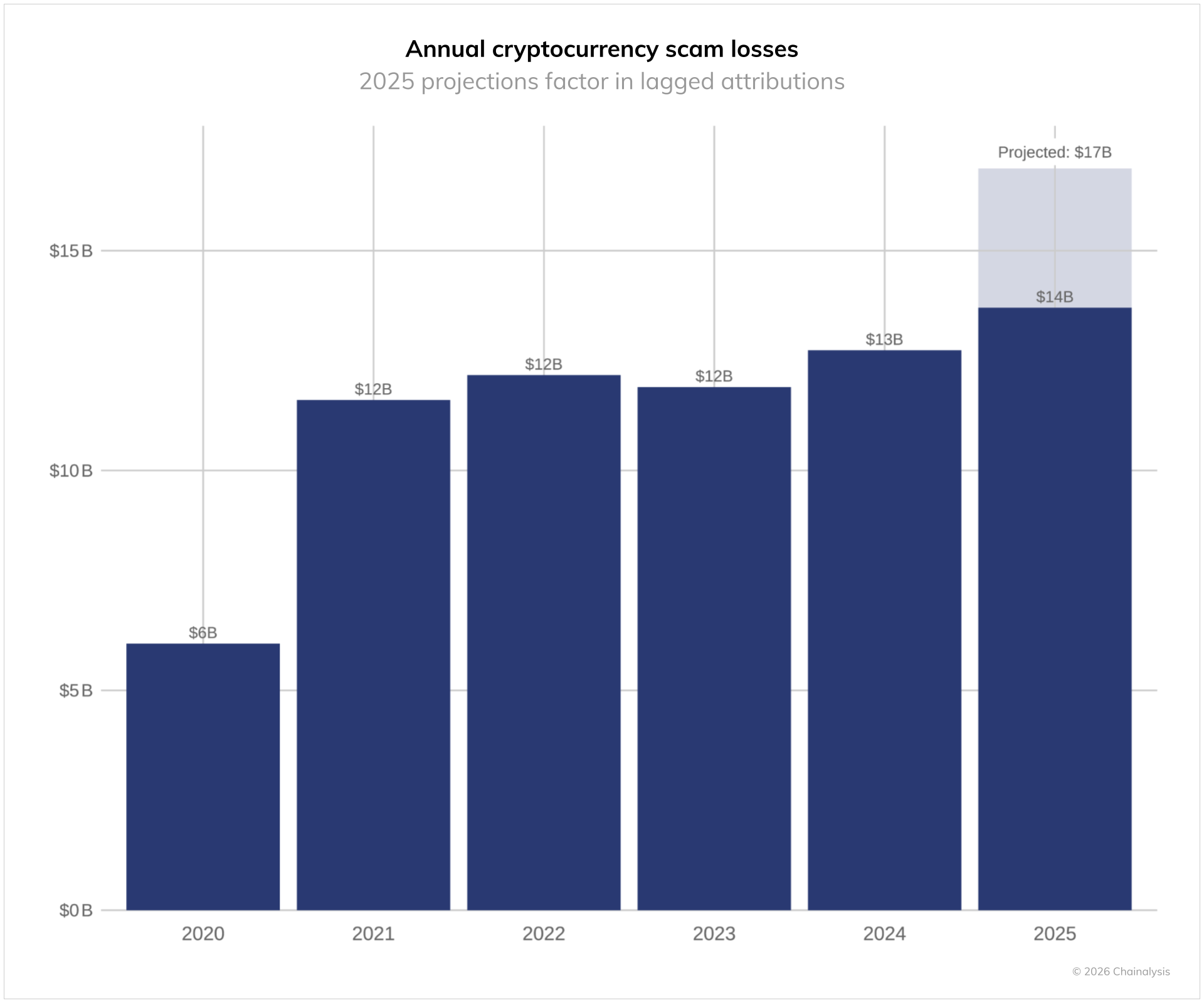
According to Chainalysis, on-chain inflows from crypto scams and fraud totalled $14 billion in 2025; when additional illegal addresses are found, this amount may rise to $17 billion. While impersonation scams increased by 1,400%, average scam payments increased from $782 in 2024 to $2,764 in 2025.
Source: Chainalysis
Therefore, the critical security boundary is not just the blockchain but also the human interface.
ZachXBT Exposes Fake News Crypto Scam Ring has already looked at how coordinated fake X accounts leveraged AI-generated identities, bought audiences, and emotionally charged content to build credibility before promoting a cryptocurrency scam.
How Social Engineering Scams Steal Crypto?
Social engineering is effective because the attacker manipulates the transaction's context.
Urgency can be created by a fraudulent support agent. Legitimacy can be created by a compromised influencer. A fake website has the ability to make a wallet connection seem normal. The blockchain faithfully carries out the victim's last deed.
Such a strategy was demonstrated in Ethereum Phishing Attack Drains $585K in 11 Hours, where four users lost $585,000 after signing fraudulent approval transactions; the attacker did not need to take advantage of Ethereum itself.
Additionally, hardware wallets may not always resolve the issue. As we have discussed in New QR Code Scam Drains Hardware Wallet Funds detailed fake physical security letters that led users to phishing websites that collected recovery phrases by scanning QR codes.
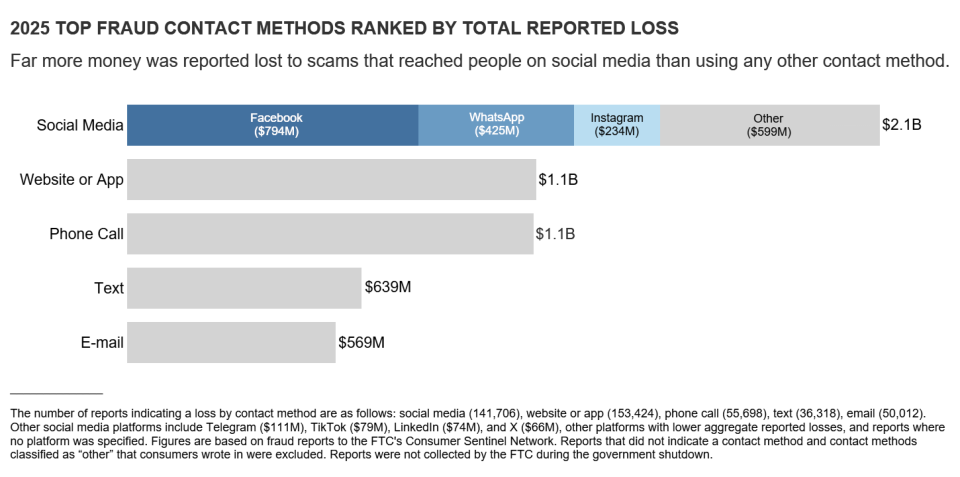
This issue is compounded by the larger social media world. According to FTC data, Americans reported $2.1 billion in losses from scams that started on social media in 2025. Of those who reported losing money, roughly 30% said the scam started on social media.
Source: FTC
ZachXBT Exposes Fake News Crypto Scam Ring similarly examined how fake accounts and fabricated credibility can turn social platforms into the first stage of a crypto attack.
The security problem, therefore, begins before the wallet opens.
Why Crypto Makes Human Mistakes More Expensive?
In traditional finance, a bank, card issuer, or fraud department may occasionally make a wrong decision. That last step is frequently eliminated by crypto.
In 2025, the FBI reported an average cryptocurrency-related loss of $62,604, with 18,589 complainants suffering losses over $100,000. $7.23 billion in damages were reported as a result of a cryptocurrency investment scam alone.
However, human error is not the only major design issue. It is that wallets can display really important actions in ways that are difficult for regular users to assess.
Approving a token allowance, moving assets, communicating with a contract, or granting permissions that stay in effect thereafter are all examples of signing a transaction. The security burden is essentially shifted to the user if the interface simplifies all of that to "Confirm."
Social engineering should therefore be viewed as an infrastructure issue. Instead of eliminating human judgment, the goal should be to make sure that a single distorted decision does not inevitably result in the greatest amount of financial harm.
Can Wallets Prevent Users from Making a Mistake?
Although social engineering cannot be eliminated by wallets, they can create resistance before a risky activity becomes irreversible.
For instance, before users proceed, MetaMask's Security Alerts can detect potentially dangerous interactions, suspicious transactions, and malicious URLs.
Similarly, Coinbase Wallet offers options for controlling token permissions, malicious-dapp alerts, and transaction previews. Transaction understanding is the most significant advancement in Coinbase Wallet Security. In order to understand what they are signing, users shouldn't need to comprehend raw calldata.
By providing transaction information in a human-readable format rather than letting users decipher opaque data, Ledger's Clear Signing technique aims to address this.
Source: Blockchain Transaction Simulation Phishing
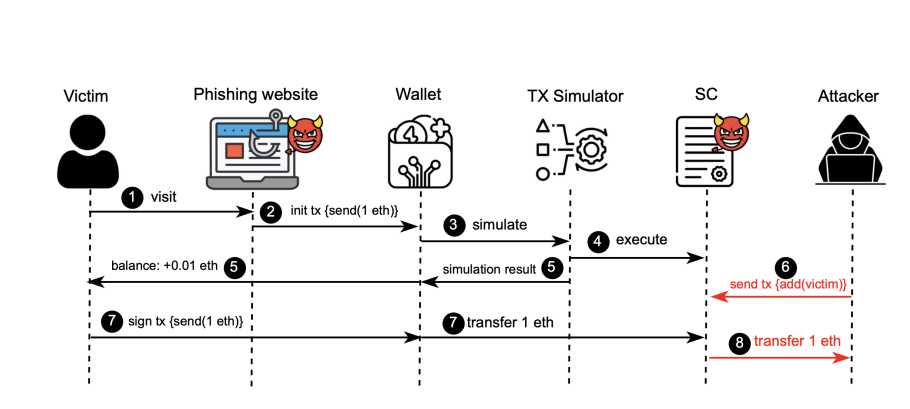
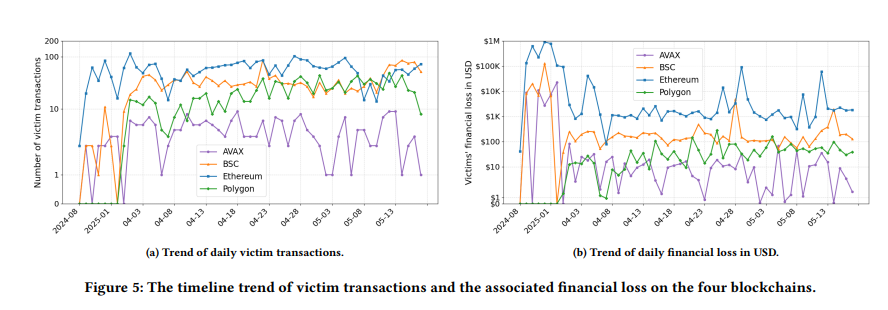
However, warnings are insufficient on their own. More than 4,000 phishing contracts, more than 5,700 victims, and over $3.48 million in losses were found in research released in 2026. It also showed that transaction simulations themselves may encounter difficulties when contract behaviour depends on shifting blockchain states.
This larger shift toward viewing security as an ecosystem-level obligation rather than just a user responsibility is relevant to the discussion in Ethereum Foundation Adds Security Expert pcaversaccio to Its Board.
Therefore, several layers must cooperate in the future generation of wallets, i.e., readable signing, address reputation, approval restrictions, transaction simulation, and adaptive friction when behaviour seems strange.
Source: Blockchain Transaction Simulation Phishing
Can Blockchain Become an Anti Scam Layer?
Blockchain data gives cryptocurrency one edge that traditional structures frequently lack; observable on-chain traces are left by transactions, addresses, and contract interactions.
Before the transfer of payments, that data can be misused. Wallets and exchanges can determine whether a contract is recently launched, whether a destination has references to known scam addresses, whether an approval is abnormally broad, or whether a transaction significantly departs from a user's typical behaviour.
This strategy is already being used in production. In February 2026, Chainalysis said that OKX had implemented Alterya's fraud-prevention technology to help identify and stop transfers to known fraud destinations before money leaves the platform.
Similar protection can start even earlier, at the social-account layer, where many scams start, as highlighted in our discussion of X Introduces Crypto Account Locks to Curb Phishing.
Reputation might be covered by the same rule. We looked at alternatives to engagement-driven credibility in our other blog, Prediction-Based Social Media Could Replace Viral Algorithms.
In the context of cryptocurrency, this would entail substituting quantifiable signals, such as account history, domain age, wallet behaviour, prior transaction patterns, and independently verifiable reputation, for "verified-looking" identities.
Blocking every odd transaction is not the aim. The goal is to find signal combinations that point to manipulation and set up a suitable checkpoint.
Can Social Engineering Ever Truly Be Solved?
Probably not entirely. Attackers change social engineering whenever a safety net becomes predictable. However, eliminating human fraud is not necessary for crypto to lessen its financial impact.
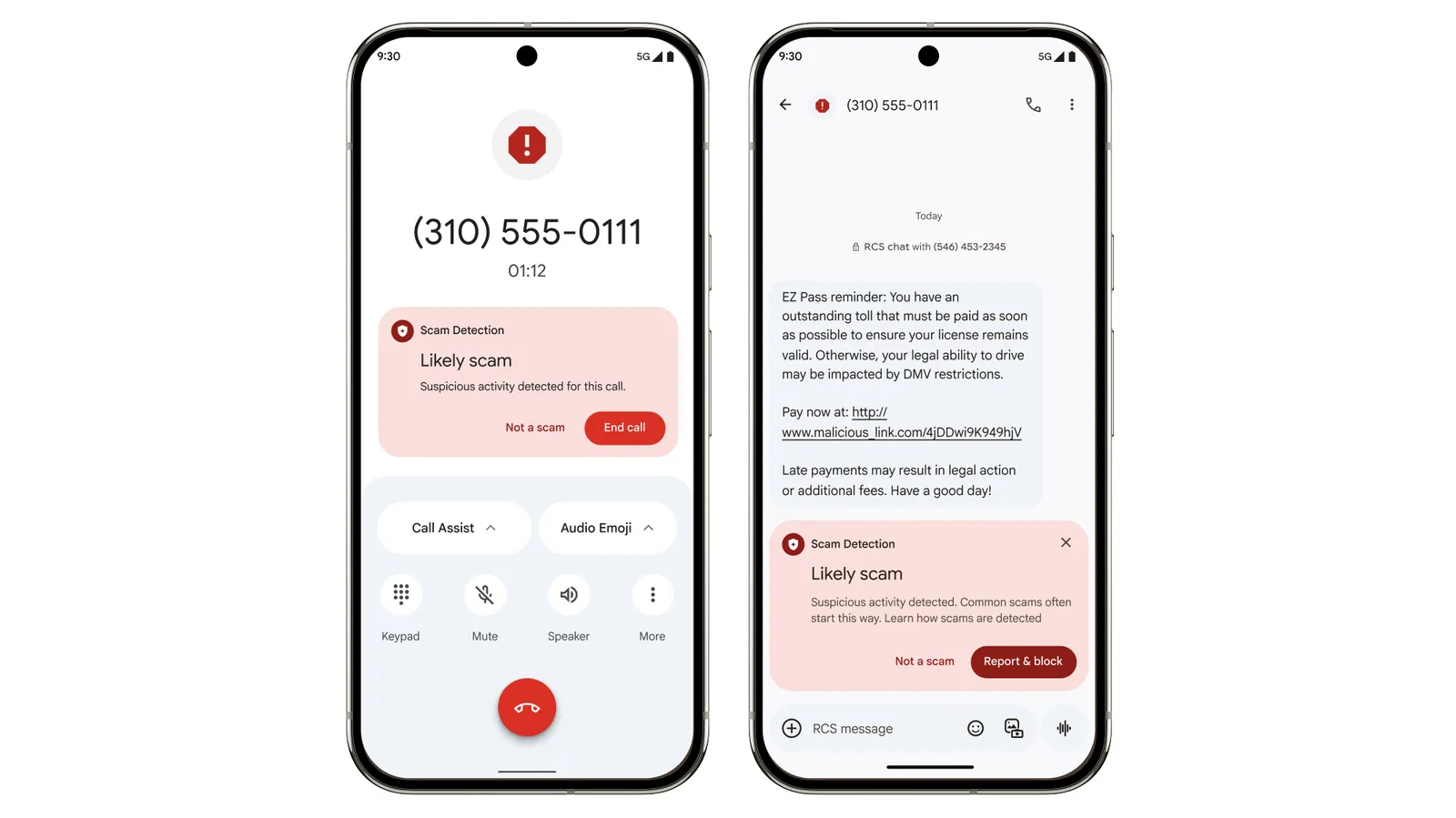
Hundreds of millions of fraudulent search results are reportedly blocked daily by Google's AI-powered algorithms, demonstrating how extensive behavioural detection can function before consumers get to dangerous locations.
Crypto's own transaction pipeline can use the same idea.
The problem is that cross-platform attacks are common. Fake social media accounts, messaging apps, cloned websites, and wallet signatures are all possible starting points for scams. The whole tale is hidden in each wallet.
Source: Google
Coordinated intelligence is crucial because of this. As stated in India Intensifies Crackdown on Rising Crypto Scams, investigations are increasingly linking digital assets to mule accounts and money laundering networks as part of India's growing response to crypto-linked fraud.
Another discussion, India's ED Raids 19 Locations, Seizes 3.35 Crore in Crypto, offers an additional illustration of investigators pursuing money connected to cryptocurrency after the initial scam.
Decentralised governance is not exempt from the human element. The article BonkDAO Loses $20M in Governance Attack on EtherWorld's blog illustrated how a valid governance mechanism may turn harmful when participants don't understand what a proposal genuinely authorises.
That suggests that security by design, as opposed to security by warning, is the true solution.
Users should be able to see what they are signing in wallets. Catastrophic rights should be restricted by protocols. Suspicious identities should be identified by social media platforms. Transfers to known fraud destinations should be stopped by exchanges. The information required to link these signals should be provided by blockchains.
Errors will still be made by users. The question is whether the architecture of cryptocurrency will continue to view these errors as the user's fault or, in the end, construct the system so that falling for a scam does not always entail losing everything.
If you find any issues in this article or notice missing information, please feel free to reach out at team@etherworld.co for clarifications or updates.
To promote your Web3 articles, events, and projects, you may reach out anytime via EtherWorld PR for submissions and collaboration.
Related Articles
- Why Smaller Countries Are Embracing Crypto Faster?
- Crypto Fundamentals Outpacing Prices: Is the Market Missing Adoption?
- Crypto Payments Are Mainstream, but Who's Actually Paying?
- Best Crypto DEXes Every DeFi Trader Should Know
- Top 10 Indian Crypto Exchanges Every Investor Should Know
To follow blockchain news, track Ethereum protocol progress, and read our latest stories, subscribe to our weekly today.
Join the EtherWorld & Avarch Internship Program and build your career in blockchain, content, social media, video, podcast editing, or operations. Send your resume and brief introduction to contact@etherworld.co.
Disclaimer: The information contained in this website is for general informational purposes only. The content provided on this website, including articles, blog posts, opinions, & analysis related to blockchain technology & cryptocurrencies, is not intended as financial or investment advice. The website & its content should not be relied upon for making financial decisions. Read full disclaimer & privacy policy.
To stay updated on blockchain news, Ethereum protocol progress, and our latest stories, subscribe to our weekly digest and YouTube channel for ELI5 content.
To promote your Web3 articles, events, project updates, and Press Releases, reach out anytime via EtherWorld PR for submissions and collaboration. For other queries, email contact@etherworld.co.
If you’d like to support our work, share the content and consider donating at avarch.eth.
Join our community on Discord and follow us on Twitter, Facebook, LinkedIn & Instagram.

 ×
×

Author

Nidhi Kumari is a Web3 content writer at EtherWorld.co, tracking ecosystem developments, funding activity, and market trends shaping the crypto space.