Why Smaller Countries Are Embracing Crypto Faster?
Discover why Bhutan, El Salvador and other small nations are turning to crypto for growth, remittances, investment and global financial access.

For smaller economies, cryptocurrency is a response to structural constraints rather than merely a trend in technology. Conventional growth strategies can be costly and delayed due to high remittance costs, limited export bases, inadequate banking connections, and restricted access to foreign financing.
While El Salvador adopted Bitcoin as a national payment method, Bhutan is harnessing hydropower to create cryptocurrency. When taken as a whole, these examples highlight the benefits and risks of moving early.
Why Smaller Countries Are Moving Faster?
Small countries can use relatively modest projects to make significant economic bets. In a small economy as opposed to a large one, a mining facility, digital wallet, or blockchain payment system may have a faster impact on public revenue and foreign exchange access.
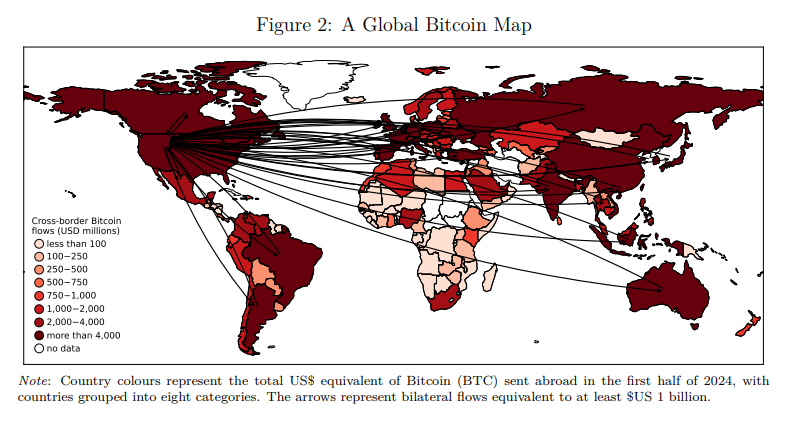
Source: BIS
Typically, their motivation is pragmatic:
- Bhutan aspires to expand beyond tourism and hydropower exports.
- El Salvador looked for new technological investment, increased financial access, and less expensive remittances.
- Georgia's affordable electricity, favourable tax laws, and encouraging business climate drew cryptocurrency miners.
- The Marshall Islands sought a payment system appropriate for their isolated, dollar-based economy.
- The Central African Republic attempted to create a new monetary system and draw in investment by using cryptocurrency.
Where traditional finance is expensive or insufficient, cryptocurrency is particularly attractive. Businesses may have trouble accepting international payments, governments may have restricted access to foreign investors, and migrant workers may find it difficult to send money through banks.
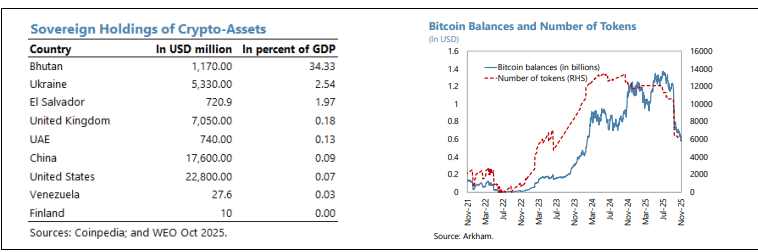
Source: IMF - Bhutan
Being early does not, however, always confer a benefit. Additionally, a smaller nation is less able to absorb a policy error. Public finances and household confidence can be rapidly impacted by a sudden decline in a government-owned digital asset, a failing currency, or a banking restriction.
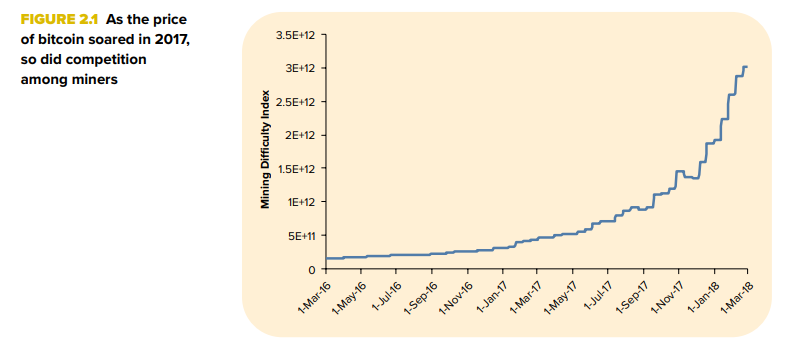
Source: World Bank
Bhutan’s Bitcoin Mining Strategy
Bhutan has adopted one of the most transparent national cryptocurrency strategies. Instead of making Bitcoin a mandatory national currency, the state investment business Druk Holding and Investments has mined Bitcoin using its hydropower resources.
The strategy transforms power into a digital asset that is traded internationally. Bhutan has a lot of hydropower, but export demand and electricity production don't always coincide. The nation can employ its mining resources to create Bitcoin, which can then be sold for foreign exchange or used to fund government expenditures.
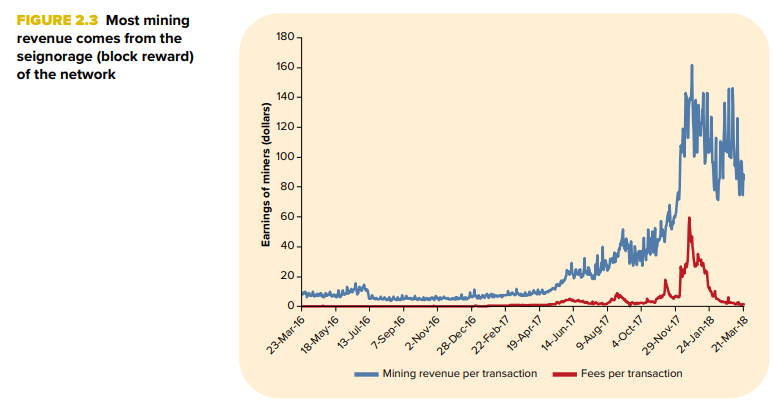
Source: World Bank
Along with tourism and hydropower exports, this provides Bhutan with an additional revenue stream. Bhutan has one of the biggest government cryptocurrency asset holdings in the world, according to the International Monetary Fund, and private investment in mining infrastructure is still ongoing. It also highlights Bhutan's inexpensive electricity as the strategy's cornerstone.
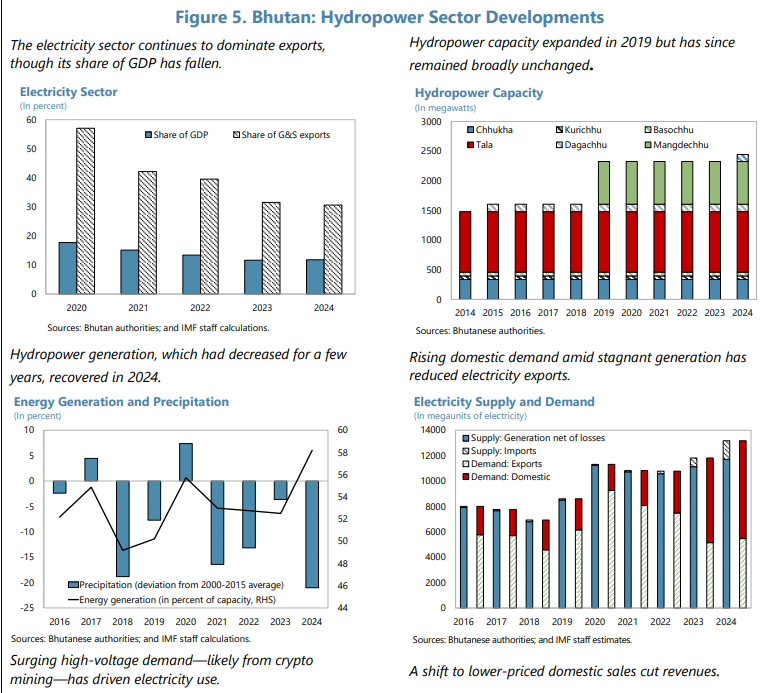
Source: IMF -Bhutan
A portion of the government's properties have previously been sold to fund public expenditures, such as raising civil servant salaries. The model's practical value lies in the conversion of renewable energy into an asset that can be kept and sold when the government needs cash.
Because Bhutan's strategy is based on a physical resource, it seems more reliable than many national cryptocurrency initiatives. It is difficult to copy, though. Inexpensive electricity, pricy computer hardware, dependable internet infrastructure, and the capacity to tolerate fluctuations in the price of Bitcoin are all necessary for mining.
Opportunity costs also exist. Households, enterprises, and export clients cannot all require the same amount of electricity as used for mining. When the power would otherwise be underutilised or sold at a low return, the technique is most effective. Therefore, Bhutan's experience does not prove that mining Bitcoin is a good idea for every small economy. It is proof that cryptocurrency can be beneficial when it is linked to a real national advantage.
El Salvador’s Bitcoin Experiment
In September 2021, El Salvador became the first nation to accept Bitcoin as legal tender. Bitcoin was promoted by the government as a way to lower remittance costs, increase financial inclusion, and draw in tech firms.
The primary adoption channel was the Chivo wallet. Businesses had to accept Bitcoin at first, and citizens were given incentives to download it. In order to relieve merchants of the danger associated with the asset's pricing, the government additionally pledged automatic conversion into US dollars.
Although the idea attracted attention from around the world, public use fell short of the government's goals. According to an IMF analysis, there was still little use of Bitcoin, and the policy had not significantly increased financial inclusion. Risks to consumer protection, financial integrity, and public finances were also noted.
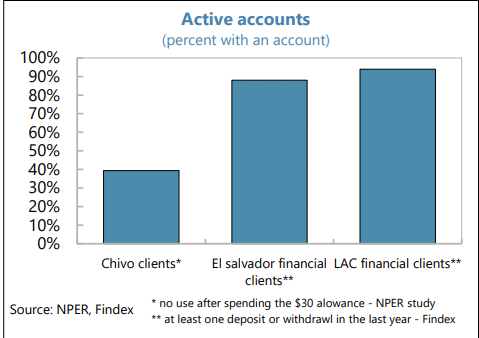
Source: IMF - El Salvador
The experiment revealed a fundamental issue, i.e., having access to a digital wallet does not equate to having faith in a digital currency. Due to the fact that pricing, wages, taxes, and contracts were already based on dollars, the majority of households and companies continued to favour them. Because of its price volatility, Bitcoin was also inappropriate for many common transactions.
Later on, the government relaxed the policy's requirement. Reforms implemented in 2025 as part of El Salvador's IMF program reduced the state's direct exposure to Bitcoin and made private company acceptance voluntary.
Bitcoin does help El Salvador gain recognition and establish itself as a hub for cryptocurrency investment and tourism. However, it is challenging to quantify these advantages apart from the nation's larger tourist and investment programs. The primary promise, that Bitcoin will revolutionise financial inclusion and remittances, has not been persuasively fulfilled.
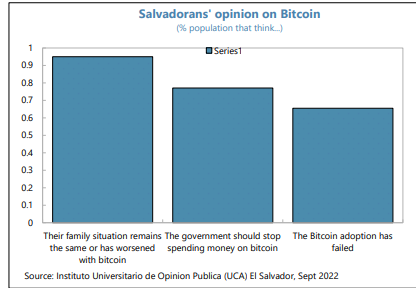
Source: IMF - El Salvador
The lesson from El Salvador is not that it is difficult to implement national crypto policies. It is that laws by themselves are insufficient for governments to achieve widespread adoption. Customers continue to select the payment option they believe to be the most reliable, secure, and user-friendly.
Stablecoins for Payments & Remittances
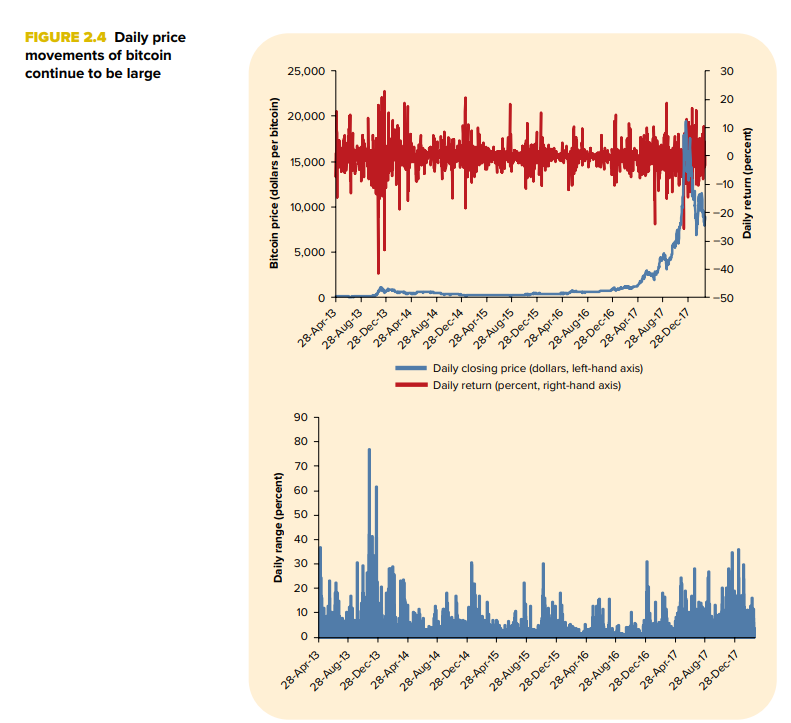
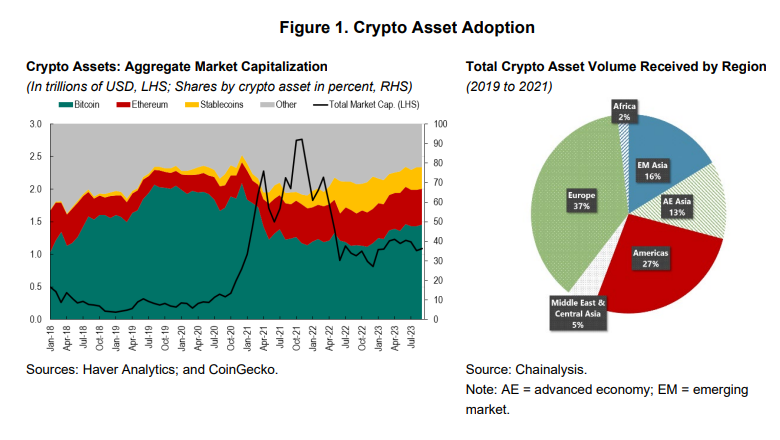
For smaller economies, stablecoins might provide a more useful application for cryptocurrency. They are intended, in contrast to Bitcoin, to keep a steady value, typically by following the US dollar. They are more appealing when it comes to transferring digital currency over international borders.
For remittances in particular, this is important. Stablecoins can be sent straight to family members by migrant workers, who may subsequently exchange them for local currency. Small businesses don't need to keep a traditional bank account overseas in order to accept international payments. Dollar-linked digital assets can also be held by citizens of nations with weak or volatile currencies.
According to a 2025 Bank for International Settlements study on cross-border cryptocurrency flows, stablecoins were more strongly linked to transactional requirements and remittance expenses than to investment motivations. In developing and emerging economies, the link was particularly robust.
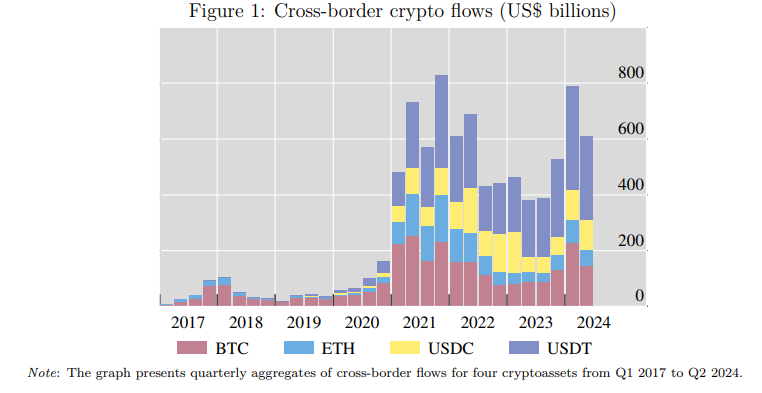
Source: BIS
Stablecoins are still reliant on real organisations. Users require access to currency, trustworthy digital wallets, identification verification, and regulated exchanges. Users may have few options if a token issuer freezes accounts or is unable to honour its reserves.
Source: World Bank
When stablecoins are used extensively within a nation, the hazards increase even further. Widespread use of foreign cryptocurrency assets may boost currency substitution and capital outflows during stressful times, according to an IMF analysis of small emerging economies. Additionally, it might make it more difficult for the central bank to control the economy.
For this reason, stablecoins are more likely to succeed as regulated payment tools than as unregulated replacements for national currencies.
Source: IMF
Marshall Islands & Blockchain Payments
The Marshall Islands have to deal with a challenge that is unique to economies on distant islands, i.e., geographical isolation. The US dollar is the official currency, the population is dispersed over far-off islands, and there is little domestic banking infrastructure.
The Sovereign, or SOV, a blockchain-based currency designed to function alongside the dollar, was approved by the government in 2018. The project was designed to give the nation a new source of income, modernise payments, and establish a digital national identity.
Theoretically, a digital currency might speed up island-to-island transactions and lessen reliance on actual cash and international banking services. In reality, the initiative ran into financial, institutional, and legal issues.
The IMF cautioned that a national cryptocurrency asset managed privately could jeopardise financial integrity and monetary stability. The Marshall Islands stated that the government did not plan to move further with the project by 2023, and the SOV had not yet been operationalised.
The failure implies that blockchain technology is unable to resolve a payment issue on its own. Public trust, safe infrastructure, monetary credibility, and legal clarity are still requirements for a national digital currency. Less ambitious but possibly more in line with the nation's current financial arrangements would have been a digital payment system backed by dollars.
Failed Crypto Experiments
The most obvious example of a cryptocurrency experiment that failed due to economic and legal pressure is the Central African Republic.
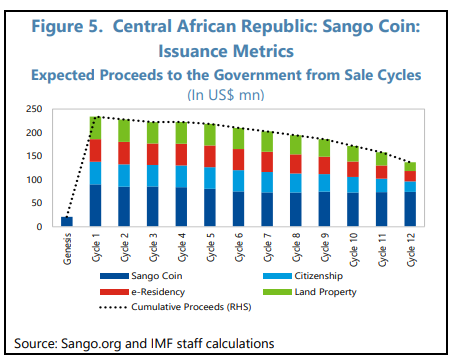
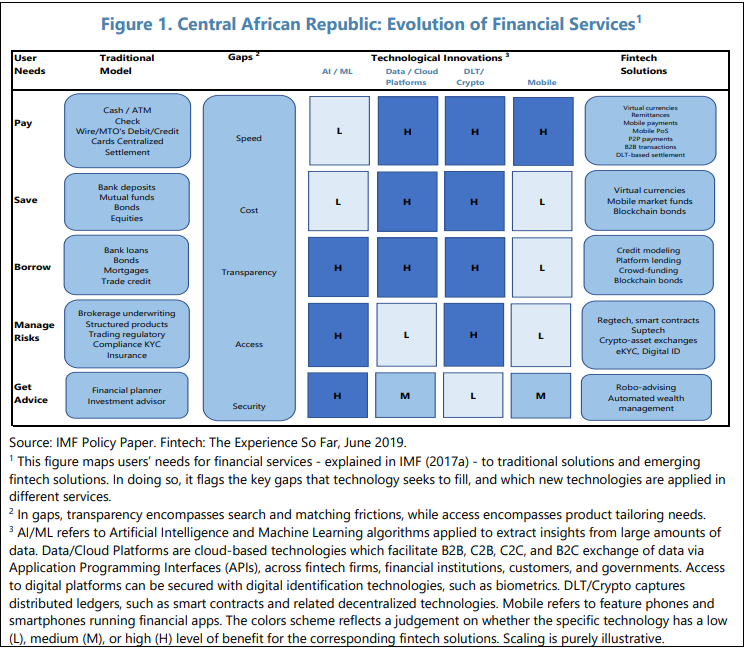
In 2022, the nation introduced Sango, a state-backed digital coin, and granted legal tender status to cryptocurrency holdings. Plans of digital citizenship, land acquisition, foreign investment, and natural resources were connected to the project.
Source: IMF - Central African Republic
Implementing these goals proved challenging. The nation is a member of the Central African Economic and Monetary Community, whose regional organisations are in charge of managing financial arrangements. As a result, regional regulations clashed with the national crypto policy.
Plans to use Sango for land, natural resources, citizenship, and e-residence were also denied by the Constitutional Court. Less than $2 million worth of Sango, or about 0.2% of the intended issuance, has been sold, according to the IMF's estimate.
The Sango project had essentially disappeared from the government's economic agenda by 2024, and no financial commitments were anticipated for it.
It wasn't just the volatility of cryptocurrency pricing that caused Sango to fail. With a single digital token, it tried to address financial, tax, investment, and citizenship issues. The financial and legal framework required to support a national asset was also absent from the proposal.
Source: IMF - Central African Republic
Risks for Smaller Economies
Compared to the size of a small economy, cryptocurrency can provide abnormally high risks:
- Public-finance risk: During a drop in price, a government might be compelled to sell Bitcoin in order to pay for public wages or imports.
- Currency substitution: By switching to stablecoins instead of the local currency, citizens may undermine central bank authority.
- Energy pressure: Mining could take electricity away from homes, businesses, or exports.
- Legal conflict: Regional monetary arrangements may be dissolved by a national token.
- Consumer losses: Platform failures, fraud, volatility, and frozen tokens can all cause citizens to lose money.
Transparency issues: If governments fail to release comprehensive records, it is challenging to evaluate public cryptocurrency holdings.
These risks do not mean that smaller economies should avoid digital finance. They mean that a country should distinguish between a regulated payment service, an energy-based mining industry and a speculative national currency. They are not the same policy.
Can Crypto Create a Real Economic Advantage?
When cryptocurrency is used to strengthen an already-existing national strength, it can actually be advantageous. There is renewable energy in Bhutan. Mining and blockchain activity have been drawn to Georgia due to its robust infrastructure and business environment. If digital payment systems are reliable, reasonably priced, and integrated with regional currency networks, remote island economies might profit from them.
Source: World Bank
Targeted adoption has the highest level of credibility. A government should start with a specific issue, such as inefficient access to foreign payments, costly transfers, or underutilised electricity, and use the most specific technique to solve it.
The Sango project in the Central African Republic has a weaker economic base than Bhutan's energy-based mining approach. El Salvador demonstrates that citizens cannot be compelled to use a volatile asset by legal recognition. A blockchain payment system may be more practical than a new national currency, as the Marshall Islands show.
Crypto is neither a definitive shortcut nor a futile experiment for smaller economies. When linked to energy, payments, or investments that already make financial sense, it can provide access to international capital. However, it can exacerbate the vulnerabilities it was intended to address when it is used to circumvent legal institutions, take the role of monetary stability, or draw in money through irrational claims.
If you find any issues in this article or notice missing information, please feel free to reach out at team@etherworld.co for clarifications or updates.
To promote your Web3 articles, events, and projects, you may reach out anytime via EtherWorld PR for submissions and collaboration.
Related Articles
- Putin Signs Russia's Landmark Crypto Regulation Law
- Crypto Fundamentals Outpacing Prices: Is the Market Missing Adoption?
- Cloudflare Wallets Bring Stablecoin Payments to AI
- Bitcoin Treasuries Shift as Corporate Holdings Grow
- What the COLDCARD Exploit Means for Crypto?
To follow blockchain news, track Ethereum protocol progress, and read our latest stories, subscribe to our weekly today.
Join the EtherWorld & Avarch Internship Program and build your career in blockchain, content, social media, video, podcast editing, or operations. Send your resume and brief introduction to contact@etherworld.co.
Disclaimer: The information contained in this website is for general informational purposes only. The content provided on this website, including articles, blog posts, opinions, & analysis related to blockchain technology & cryptocurrencies, is not intended as financial or investment advice. The website & its content should not be relied upon for making financial decisions. Read full disclaimer & privacy policy.
To stay updated on blockchain news, Ethereum protocol progress, and our latest stories, subscribe to our weekly digest and YouTube channel for ELI5 content.
To promote your Web3 articles, events, project updates, and Press Releases, reach out anytime via EtherWorld PR for submissions and collaboration. For other queries, email contact@etherworld.co.
If you’d like to support our work, share the content and consider donating at avarch.eth.
Join our community on Discord and follow us on Twitter, Facebook, LinkedIn & Instagram.

 ×
×

Author

Nidhi Kumari is a Web3 content writer at EtherWorld.co, tracking ecosystem developments, funding activity, and market trends shaping the crypto space.