Best Crypto DEXes Every DeFi Trader Should Know
A deep analysis of the top decentralized exchanges driving innovation across DeFi trading and liquidity markets.

By 2026, decentralised exchanges will be competing on how they transform markets into code rather than on token listings or liquidity depth. Architectural intent is now the most significant distinction between protocols. In essence, each DEX is a theory about how trading should function in a decentralised setting, which is reflected in the way infrastructure is managed, trades are executed, and liquidity is organised.
The basic shift is that infrastructure, execution, and liquidity are no longer closely related. It is now possible to program liquidity, abstract execution across several venues, and modify infrastructure at the protocol level. Specialised categories addressing different inefficiencies in decentralised trading have emerged as a result of this division.
Layered optimisation rather than fragmentation is the outcome. Some DEXs concentrate on creating intelligent and adaptable liquidity. Others reconstruct the order book model on-chain to restore control and accuracy to trade.
Trades are routed across dispersed liquidity sources by a different class of protocols that optimise execution itself. In the meantime, ecosystem-specific DEXs become users' default gateways by deeply integrating themselves into various blockchains.
Therefore, comprehending these structural decisions is more important for understanding the top DEXes in 2026 than ranking platforms. The subject of how markets should operate in the absence of intermediaries is reflected differently in each protocol.
- 1. Uniswap
- 2. Curve Finance
- 3. Balancer
- 4. dYdX
- 5. Hyperliquid
- 6. 1inch
- 7. SushiSwap
- 8. 0x Protocol
- 9. GMX
- 10. PancakeSwap
- 11. Jupiter
1. Uniswap
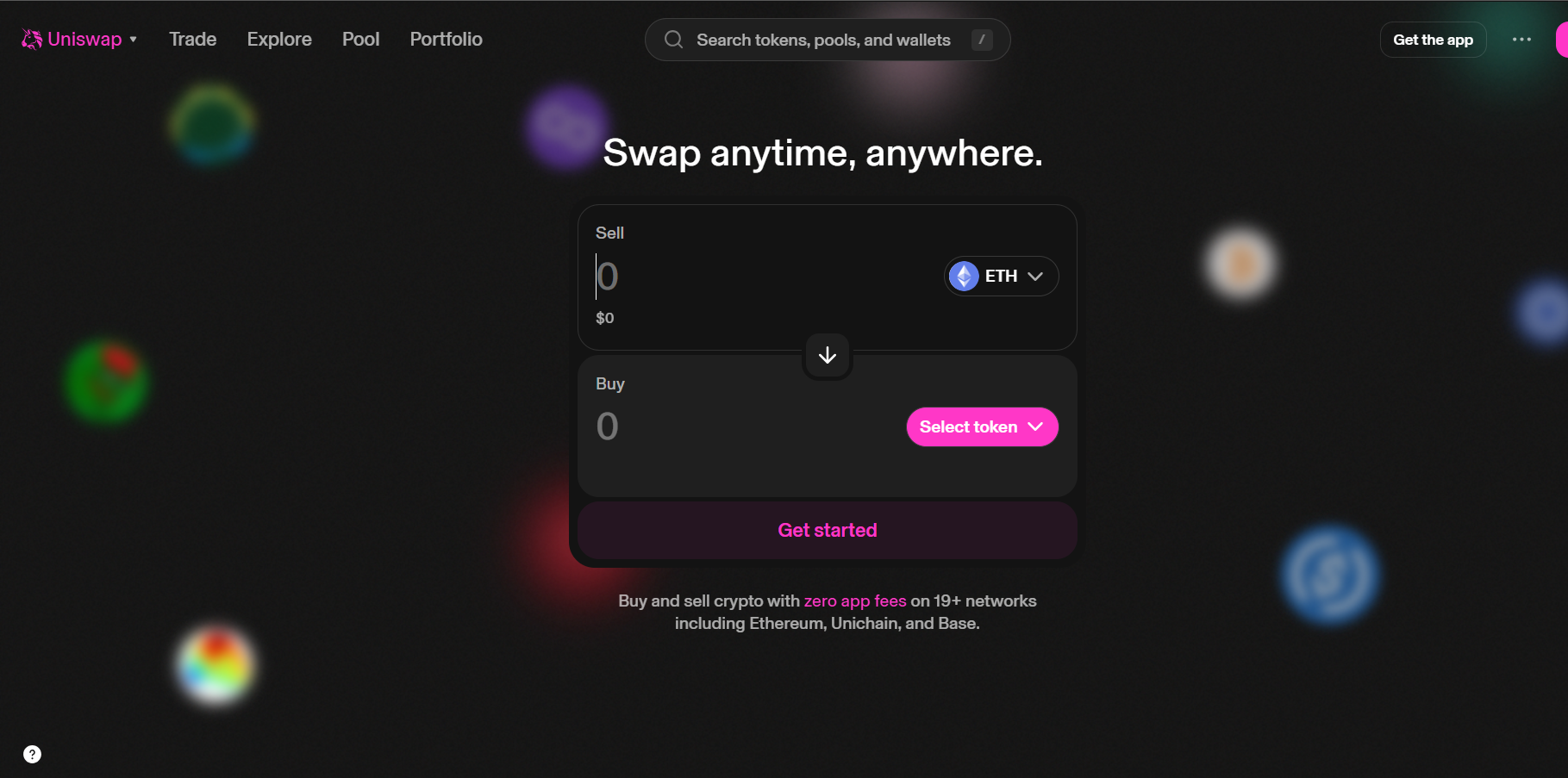
With its v4 architecture, Uniswap has successfully redefined what an AMM is. Hooks enable external smart contracts to alter pool behaviour at various points in time, such as before swaps, following changes in liquidity, or during startup. As a result, pools are no longer homogeneous; instead, each one can function using its own inherent logic.
Useful innovations have already resulted from this adaptability. Instead of being implemented through external systems, concepts like time-weighted execution (TWAMM), dynamic fee adjustments, and on-chain limit order behaviour are now implemented directly within liquidity pools.
In 2026, Uniswap's transition from a protocol to a platform is noteworthy. Liquidity has evolved into programmable infrastructure with thousands of custom hooks already created and a rapidly growing developer ecosystem.
Source: Uniswap
2. Curve Finance
Curve Finance has increased its focus on stable asset efficiency while purposefully avoiding generalisation. Compared to generalist AMMs, its bonding curve design significantly decreases slippage because it is particularly designed for assets that trade at near parity.
Curve's development in 2026 is closely related to its crvUSD environment, where swapping and lending are becoming more intertwined. Curve is developing a system where stablecoin issuance, collateralization, and trade support one another instead of treating liquidity as separate pools. This establishes a feedback loop that preserves capital efficiency while stabilising liquidity.
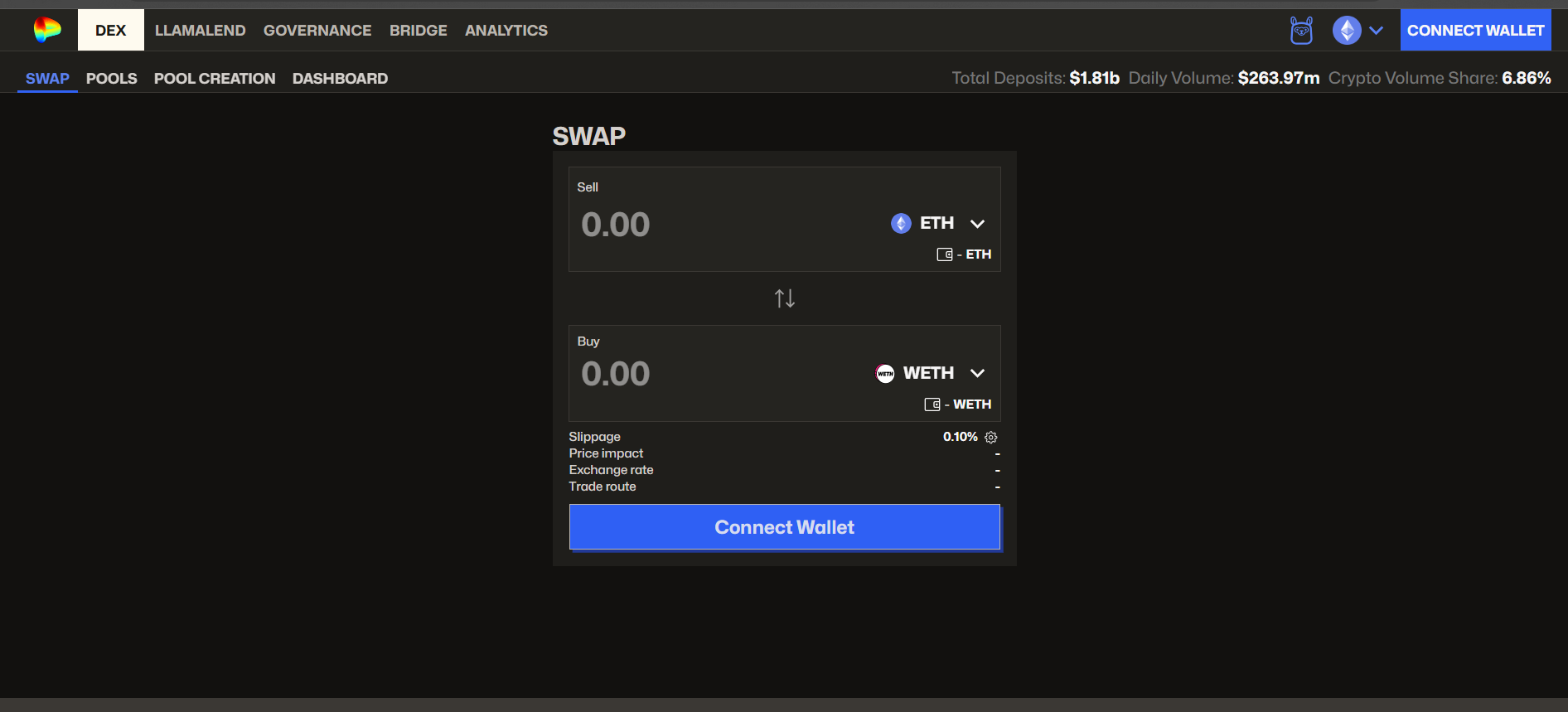
Curve Finance continues to anchor stablecoin liquidity with over $1.81B in deposits, processing $263.97M in daily volume and capturing 6.86% of total crypto trading activity.
Its gauge system is still crucial, focusing incentives on pools that require liquidity the most. Curve has a distinct structural advantage in sustaining extensive stablecoin markets thanks to this governance-driven liquidity allocation.
Source: Curve
3. Balancer
AMMs are not viewed by Balancer as trading pools, but rather as portfolio management systems. It converts liquidity provision into an automated asset allocation approach by permitting several tokens with adjustable weights.
The way capital is used has altered dramatically in 2026 due to Balancer's emphasis on increased pools. Liquidity can be used in external lending procedures rather than being idle, and it can still be traded. Overall efficiency is increased by this dual utility without the need for further user intervention.
In DAO treasury management, Balancer's function has also grown. Balancer pools are being used by protocols more frequently to dynamically manage reserves, thereby transforming them into an infrastructure layer for on-chain asset management.

Source: Balancer
dYdX
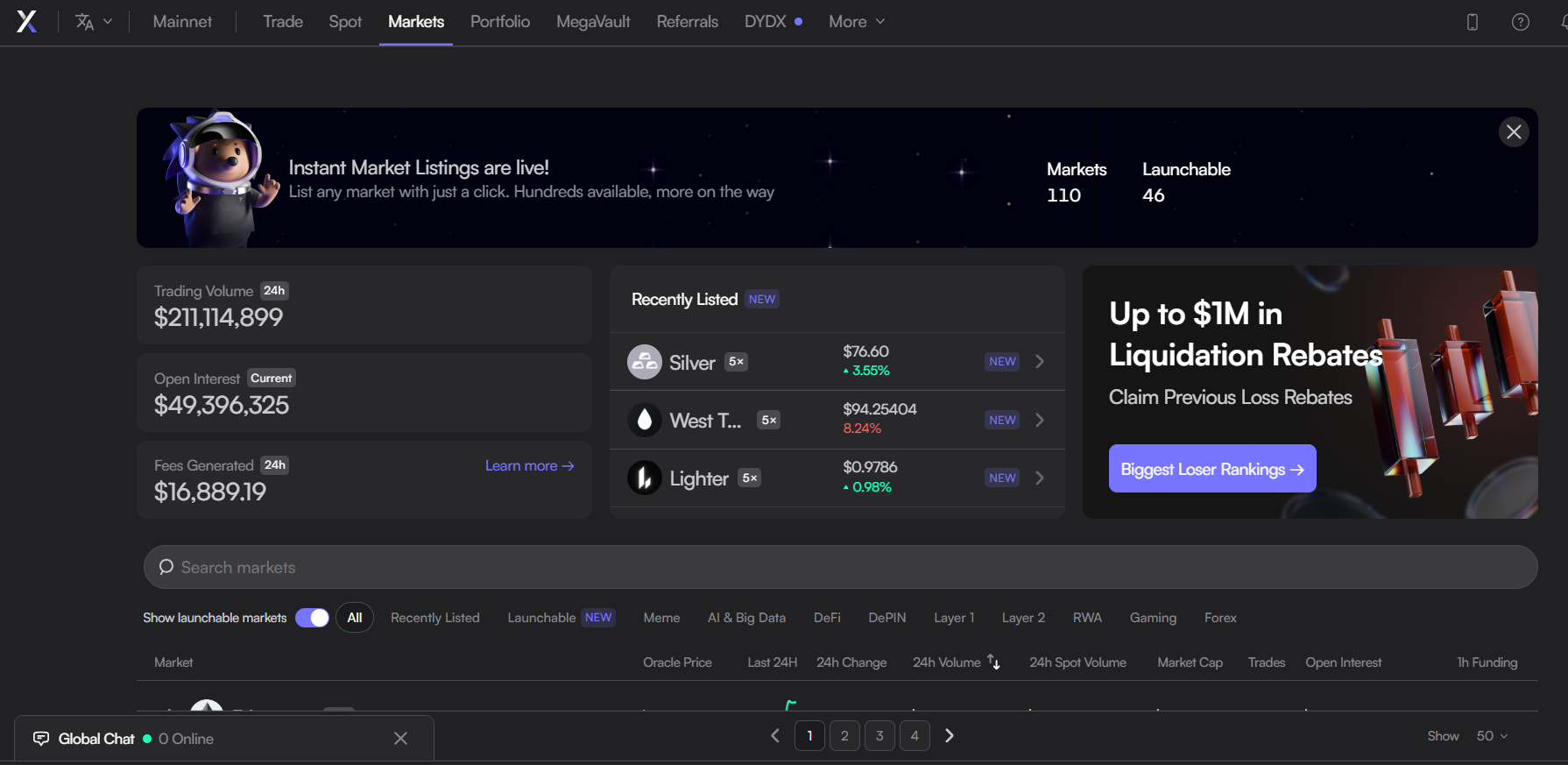
With the introduction of its own Cosmos-based blockchain, dYdX has completely transformed decentralised derivatives. It was previously challenging for Ethereum-based systems to fully decentralise their order book while retaining high throughput and low latency, but this change made it possible.
The development focus of dYdX has turned to institutional-grade infrastructure and validator decentralisation in 2026. It is one of the few DEXs that can actually allow algorithmic trading at scale because of its trading environment, which features cross-margining, sophisticated order types, and a very strong API layer.
In order to maximise both performance and governance at the same time, DEXs are progressively taking ownership of their infrastructure, which is reflected in the protocol's shift to an independent chain.
Source: dYdX
Hyperliquid
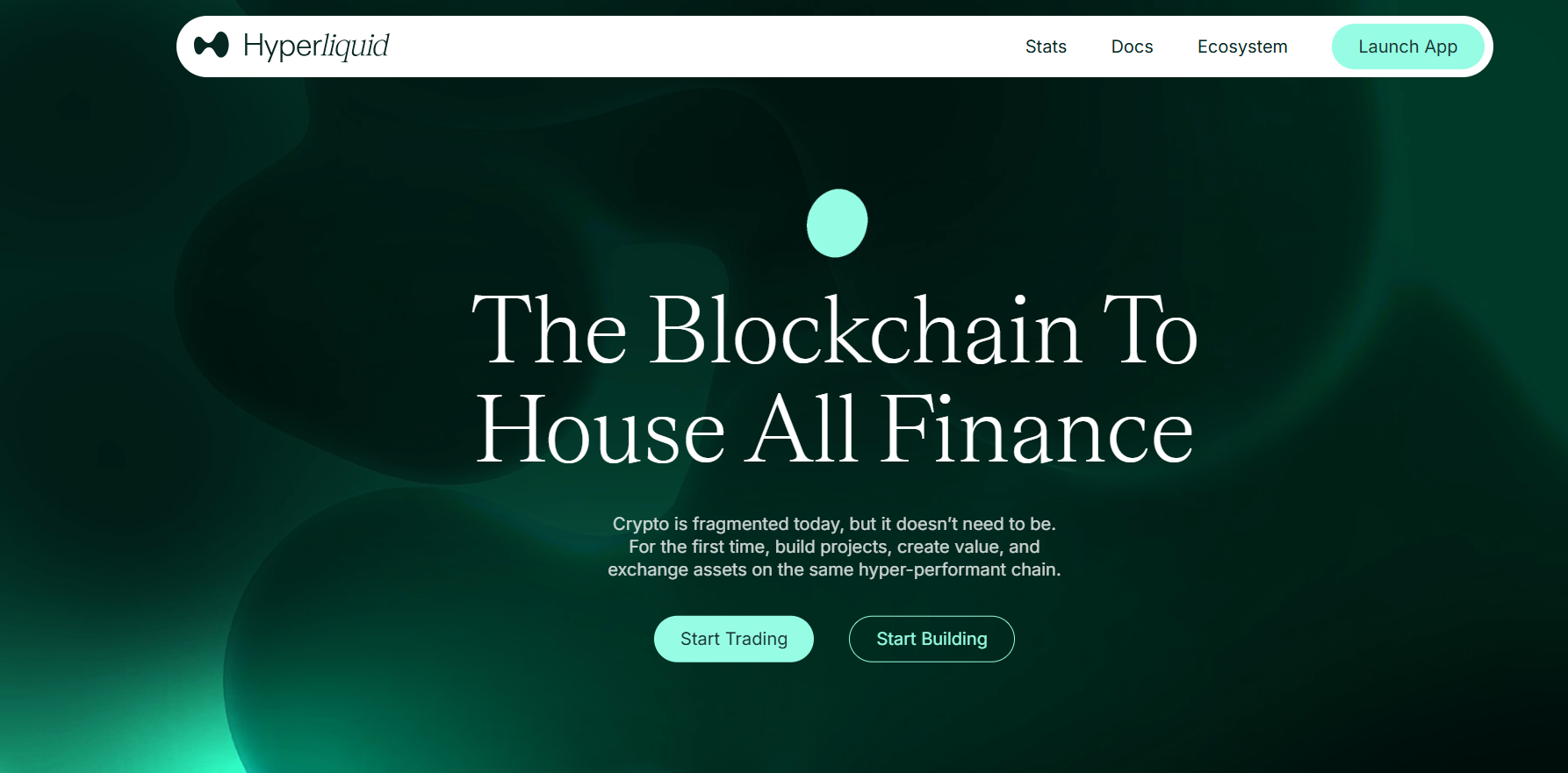
Hyperliquid is an alternative to the order book concept that is more focused on performance. It maintains complete on-chain transparency while putting execution speed and user experience first because of its proprietary Layer-1 architecture.
Hyperliquid has placed a strong emphasis on liquidity incentives and latency optimisation in 2026 to enable professional traders to work with the least amount of hassle. The platform is one of the closest approximations of centralised exchange performance within a decentralised environment because of its near-instant finality.
Hyperliquid's emphasis on execution excellence as a fundamental characteristic sets it apart philosophically. Rather than modifying pre-existing infrastructure, it starts from scratch with trading performance in mind.
Source: Hyperliquid
1inch
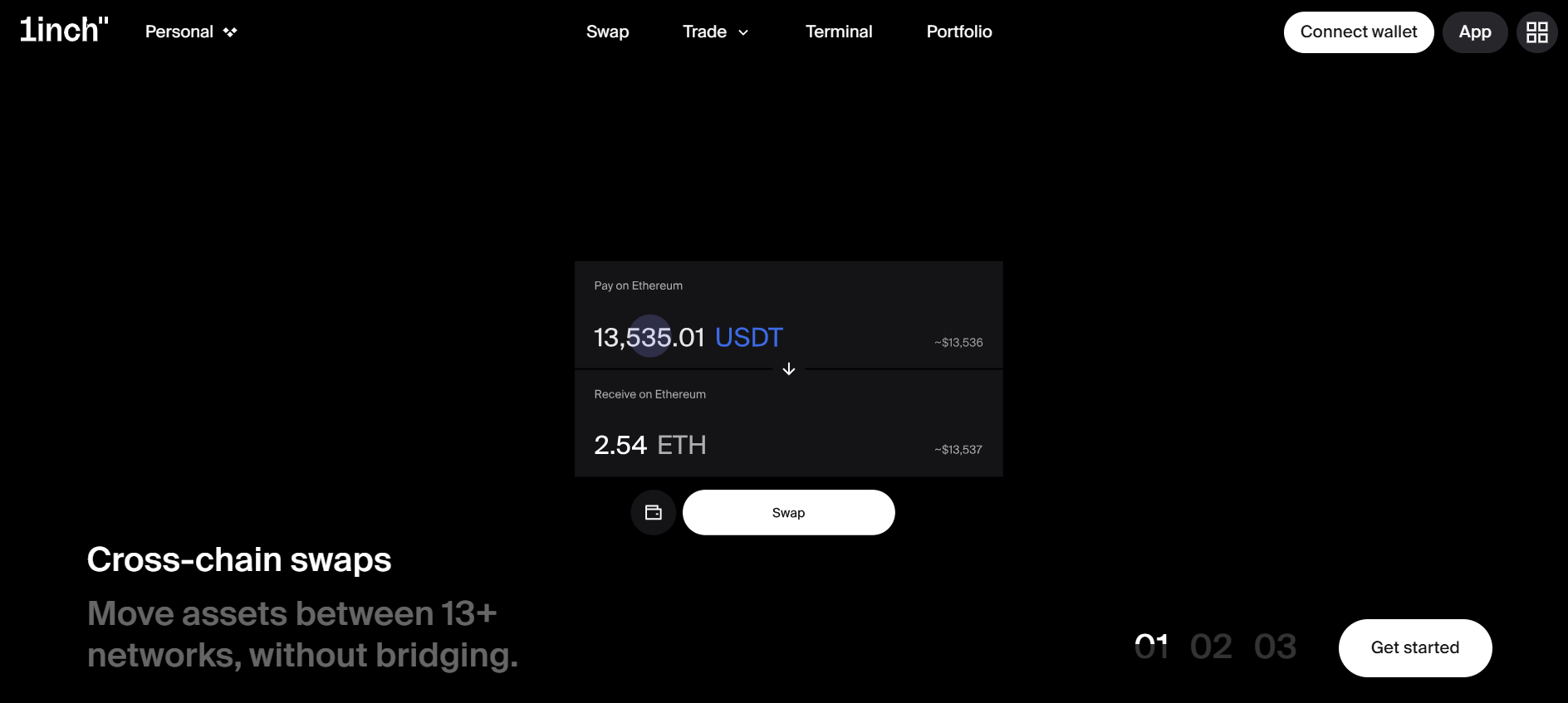
The concept that execution quality may be engineered is the foundation of 1inch's design. Its Pathfinder algorithm creates ideal trade paths by dividing orders across several liquidity sources and integrating them into a single transaction, rather than just looking for the lowest price. Its capacity to atomise and reconstruct trades sets it apart from more basic routing systems.
Its evolution is obviously aimed at eliminating hidden inefficiencies. By enabling resolvers to compete in satisfying orders, fusion mode effectively externalises execution while maintaining user outcomes, marking a departure from conventional on-chain execution. This mitigates MEV vulnerability and lowers gas costs in a manner not possible with conventional aggregators.
Additionally, a deeper goal is shown in its cross-chain expansion. 1inch views chains increasingly as interconnected liquidity layers rather than as distinct settings. Bridging is incorporated into the execution logic itself and is no longer a distinct phase.
Source: 1 inch
SushiSwap
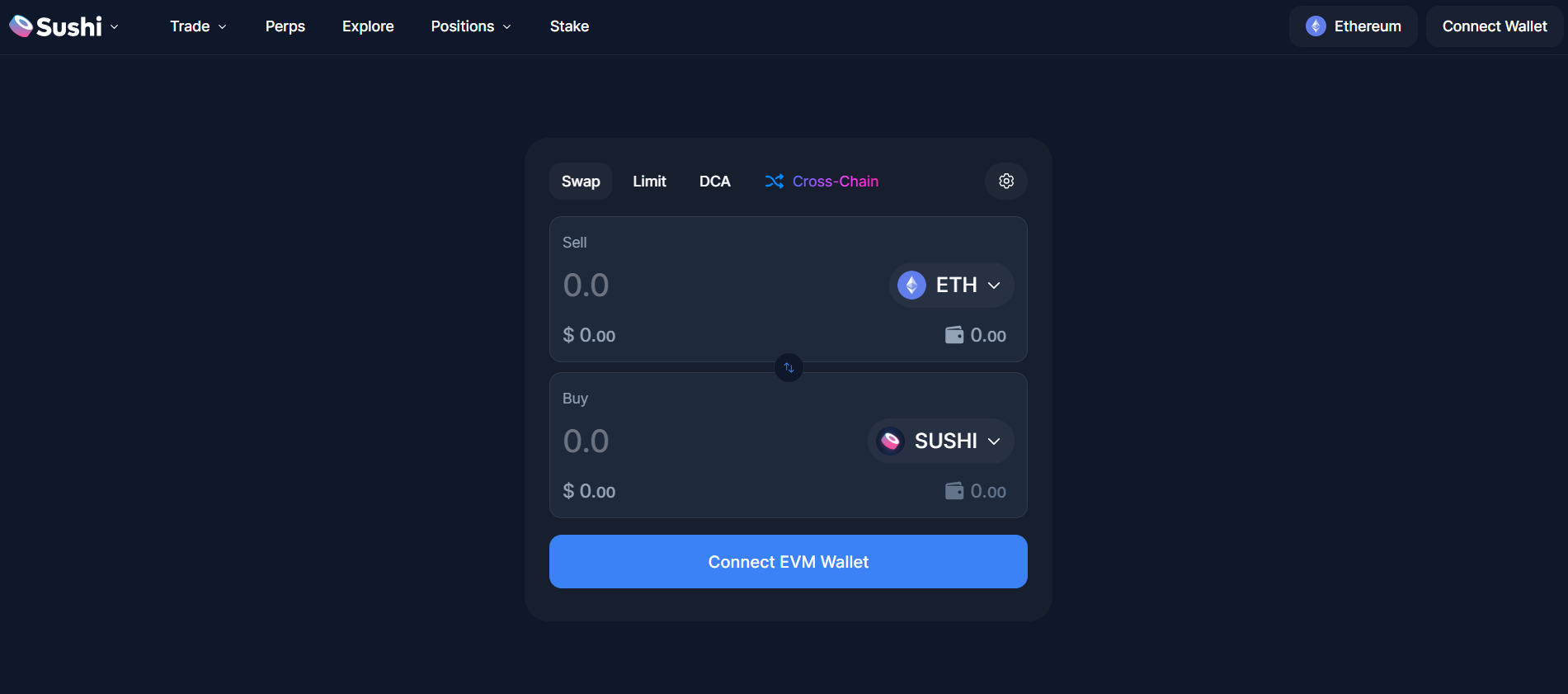
The evolution of SushiSwap can be best described as a change from a liquidity venue to a connection layer. Although it started out as an AMM, its current architecture shows a greater emphasis on chain composability. A key component of this change is the Route Processor, which abstracts the intricacy of multi-step trades so that users may engage with a single interface while the protocol takes care of routing, bridging, and execution in the background.
SushiSwap's focus on interoperability as a first-class feature rather than an add-on is what sets it apart fundamentally. Cross-chain swaps are typical within the trading experience and are not considered unique workflows.
SushiSwap is promoting itself as a middleware layer within DeFi on a deeper level. It unifies execution engines, bridges, and liquidity into a coherent system.
Source: SushiSwap
0x Protocol
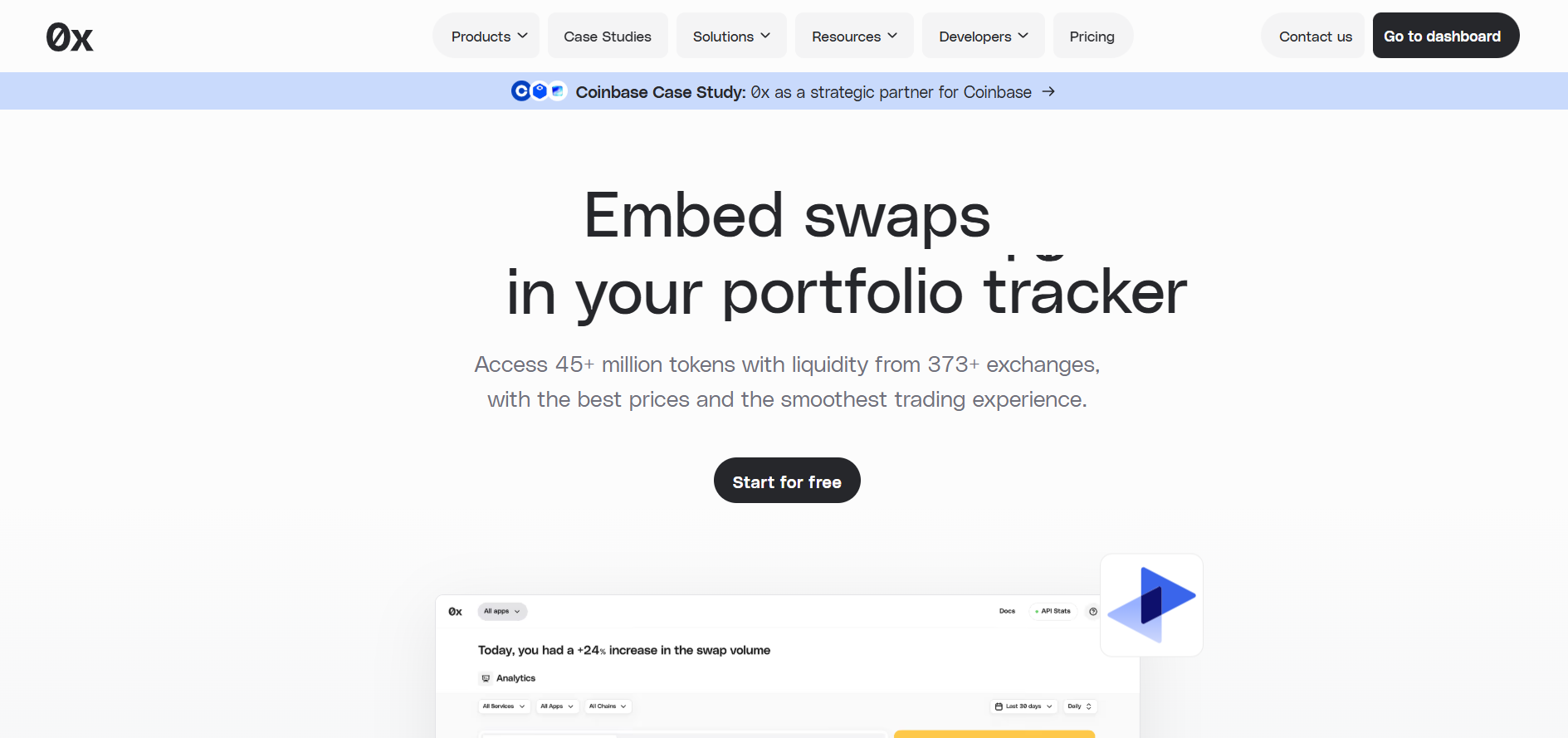
0x functions at an entirely separate abstraction layer. It offers the infrastructure that allows others to create trading interfaces rather than competing for end customers in the conventional sense. Its API-driven architecture, which enables developers to access aggregated liquidity without handling routing logic themselves, is its fundamental strength.
The evolution of 0x in 2026 is focused on integration depth and performance. Its APIs are now appropriate for high-frequency and institutional-grade applications due to their rising speed and reliability optimisation.
Matcha is one example of a proof-of-concept product that shows how its infrastructure may provide optimal execution without exposing customers to underlying complexity.
The decentralised trading backend is represented by 0x. Because it keeps interface and execution apart, trading capability can be easily integrated into wallets, apps, and platforms.
Source: Ox
GMX
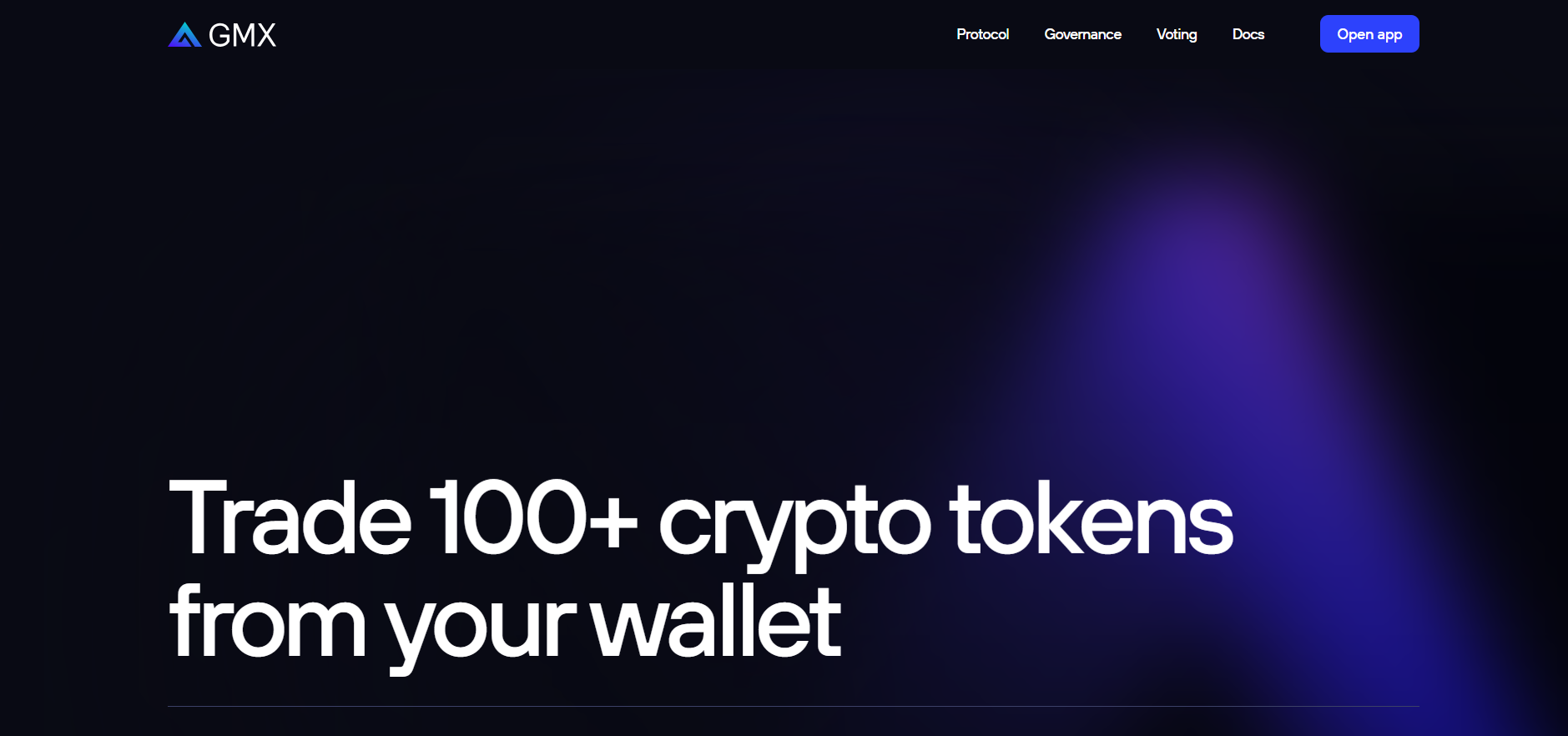
By carrying out order matching completely, GMX offers a fundamentally new method of trading derivatives. Rather, traders engage directly with a shared asset pool (GLP) using a pooled liquidity approach. As a result, trading techniques change from peer-to-peer matching to pool-based exposure, which distributes risk among liquidity providers.
GMX challenges the notion that order books are necessary for derivatives, which makes it conceptually significant. It keeps depth while making execution easier by abstracting counterparties into a liquidity pool. Because of this, consumers who value simplicity and predictability over fine-grained control will find it very useful.
Source: GMX
PancakeSwap
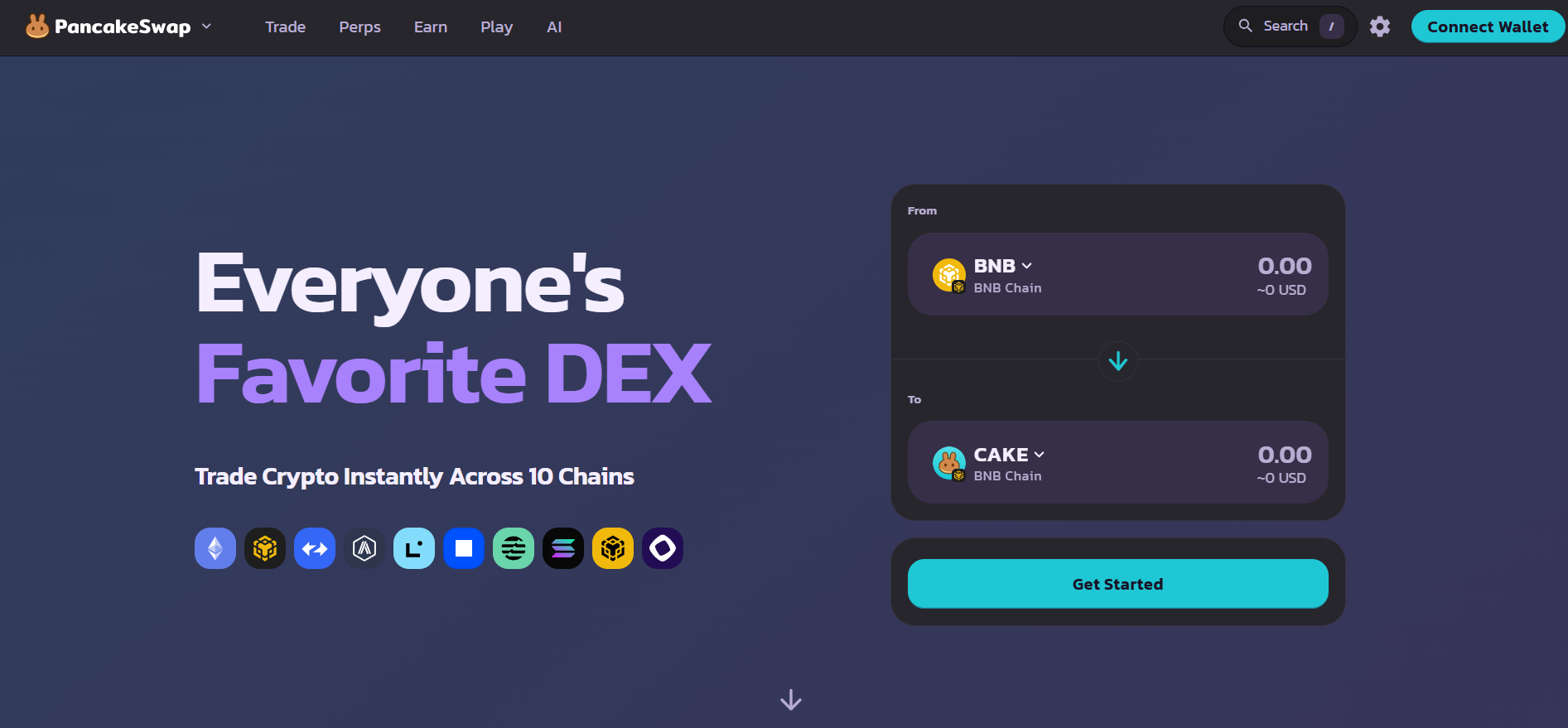
PancakeSwap's strength is its capacity to adapt to the BNB Chain ecosystem's economic realities. For a significant portion of retail consumers, it is the default entry point due to its design, which places a high priority on accessibility, minimal transaction costs, and a familiar user experience.
More capital-efficient procedures have been added to its v3 liquidity model, bringing it closer to the complexity of Ethereum-based AMMs while maintaining its simplicity. In the meantime, PancakeSwap keeps growing horizontally into related fields like yield farming, NFTs, and gamified incentives, expanding the trading environment.
Strategic positioning rather than technical innovation is what sets PancakeSwap apart. Through an interconnected ecosystem, it keeps user flow from the beginning of their DeFi experience. This means that optimising the user lifetime inside a certain chain context is more important than innovation at the protocol level.
Source: PancakeSwap
Jupiter
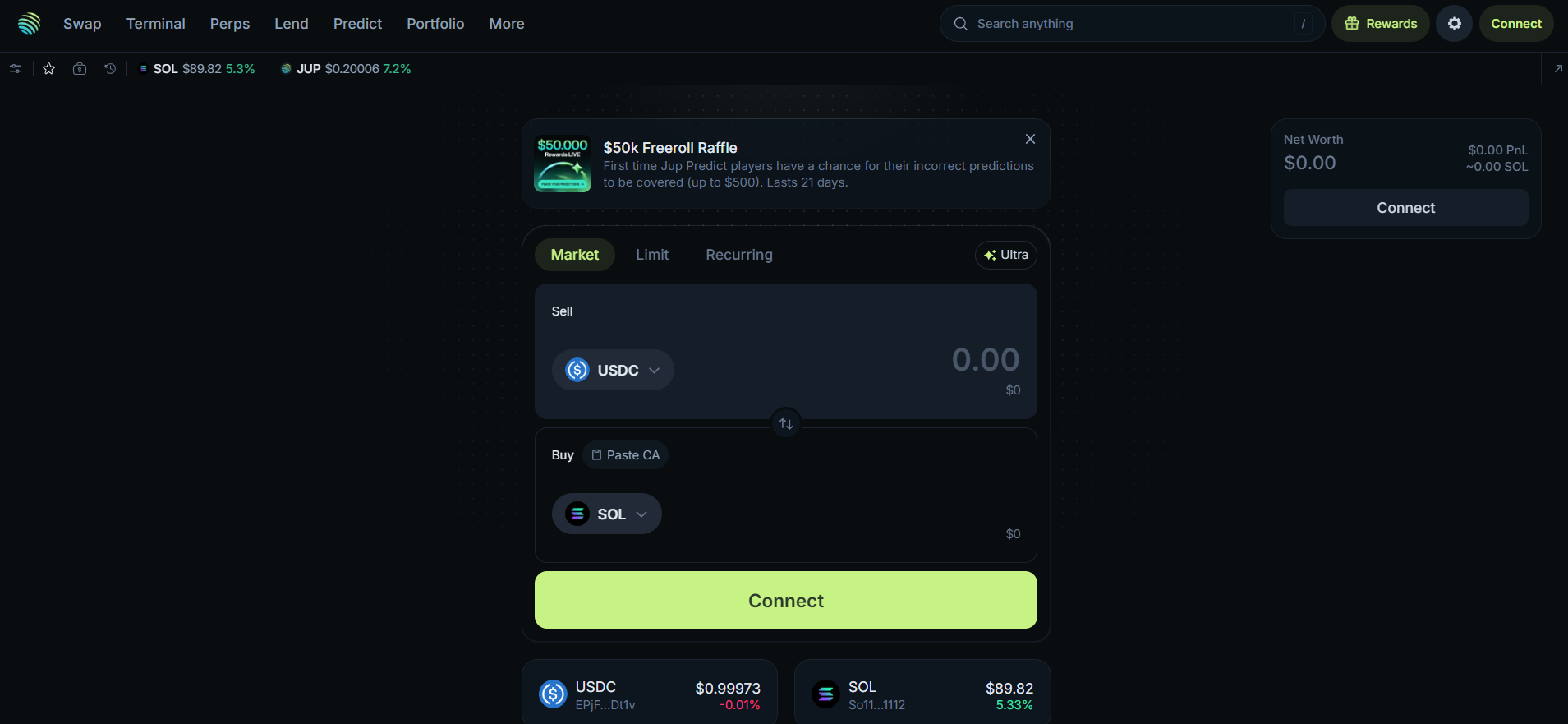
Jupiter holds a special place in the Solana ecosystem since it governs the execution of trades rather than the location of liquidity. It serves as the network's execution layer by combining liquidity from all of the main Solana DEXs and optimising routing in real time.
Jupiter's powers go beyond basic aggregation. Limit orders, sophisticated routing logic, and integrated analytics tools are examples of features that show a move away from being merely a backend router and toward becoming a complete trading interface.
In a high-throughput environment like Solana, its capacity to continuously modify routing algorithms in response to market conditions makes it extremely effective.
Jupiter serves as an example of how authority over an ecosystem can result from control over execution. It becomes essential to physically hold liquidity by controlling the interface that trades are routed through.
Source: Jupiter
If you find any issues in this article or notice missing information, please feel free to reach out at team@etherworld.co for clarifications or updates.
To promote your Web3 articles, events, and projects, you may reach out anytime via EtherWorld PR for submissions and collaboration.
Related Articles
- An Exhaustive Guide to Automated Market Makers (AMMs)
- Coinbase Cuts 14% Workforce to Become “AI-Native”
- Aave Challenges $71M ETH Freeze Against Arbitrum DAO
- Starknet Votes on Bitcoin Integration & Staking Future
- April 2026 Worst for DeFi, Over $635M Lost in Exploits
To follow blockchain news, track Ethereum protocol progress, and read our latest stories, subscribe to our weekly today.
Disclaimer: The information contained in this website is for general informational purposes only. The content provided on this website, including articles, blog posts, opinions, & analysis related to blockchain technology & cryptocurrencies, is not intended as financial or investment advice. The website & its content should not be relied upon for making financial decisions. Read full disclaimer & privacy policy.
To stay updated on blockchain news, Ethereum protocol progress, and our latest stories, subscribe to our weekly digest and YouTube channel for ELI5 content.
To promote your Web3 articles, events, project updates, and Press Releases, reach out anytime via EtherWorld PR for submissions and collaboration. For other queries, email contact@etherworld.co.
If you’d like to support our work, share the content and consider donating at avarch.eth.
Join our community on Discord and follow us on Twitter, Facebook, LinkedIn & Instagram.

 ×
×

Author

Nidhi Kumari is a Web3 content writer at EtherWorld.co, tracking ecosystem developments, funding activity, and market trends shaping the crypto space.