Crypto’s Next Big Use Case: Disaster Relief
Could crypto transform disaster relief in Nepal? Explore how stablecoins, global donations and blockchain could speed up emergency funding.
How soon a community starts to recover after catastrophe can be determined in the first few hours. In Nepal, where villages might become isolated due to landslides, earthquakes, floods, and challenging terrain, having emergency funds is nearly as important as having supplies.
Local institutions, emergency squads, roads, and helicopters won't be replaced by cryptocurrency. However, it might develop into a financial rail for swiftly transferring aid across borders, maintaining donations' visibility, and linking supporters worldwide with those in most need of assistance.
Why Nepal Needs Faster Disaster Relief Funding
Nepal's topography makes responding to disasters more challenging. Earthquakes, landslides, and floods are listed as major hazards on the government disaster-risk webpage. Because of their steep slopes and delicate geology, mountain and hill districts are particularly vulnerable to landslides. The nation is home to over 6,000 rivers and rivulets, and monsoon swelling has the potential to swiftly transform rivers into catastrophic forces.
Nepal is now facing one of its most devastating disasters in recent years. The 2026 flash floods have left at least 270 people dead and more than 800 missing, while destroyed roads, bridges, power lines and communication networks are making rescue and relief efforts increasingly difficult.
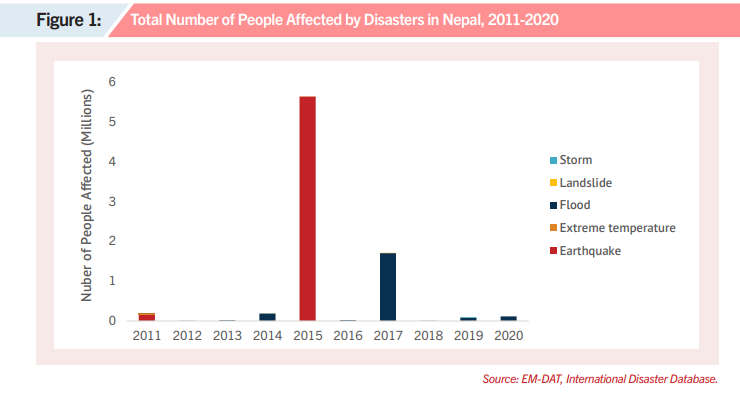
The Gorkha earthquake in 2015 demonstrated the scope of the issue. Over 5.5 million people were impacted by the 7.8-magnitude earthquake, which is estimated by the World Bank to have caused over $5 billion in economic damage. Additionally, it caused over 21,000 landslides that damaged highways and cut off villages. Financial access may become another hurdle when physical access is impeded.
Source: World Bank
Speed is therefore crucial. Food, medicines, temporary housing, transportation, communications equipment, and cash support are all necessities for emergency groups. Conventional cross-border transfers may require working hours restrictions, banks, intermediaries, and compliance checks. An organization's wallet can receive a digital asset in a matter of minutes from a donation in another nation.
What Past Crypto Relief Efforts Have Shown
The COVID-19 Crypto Relief initiative in India provided a vivid illustration of the potential of cryptocurrencies for fundraising. The effort, headed by Sandeep Nailwal, used public cryptocurrency wallets to gather donations from all over the world. Its most well-known donor was Vitalik Buterin, who made significant cryptocurrency contributions, notably SHIB. Afterward, Crypto Relief provided funding for research, rural health programs, and healthcare infrastructure.
However, the Indian example also exposed a drawback, i.e., obtaining cryptocurrency is simpler than converting it into practical assistance. The process may be slowed by compliance, liquidation, banking connections, bookkeeping, and transferring funds into the traditional economy. For Nepal, that lesson is particularly pertinent.
Source: Binance Charity Annual Report 2023
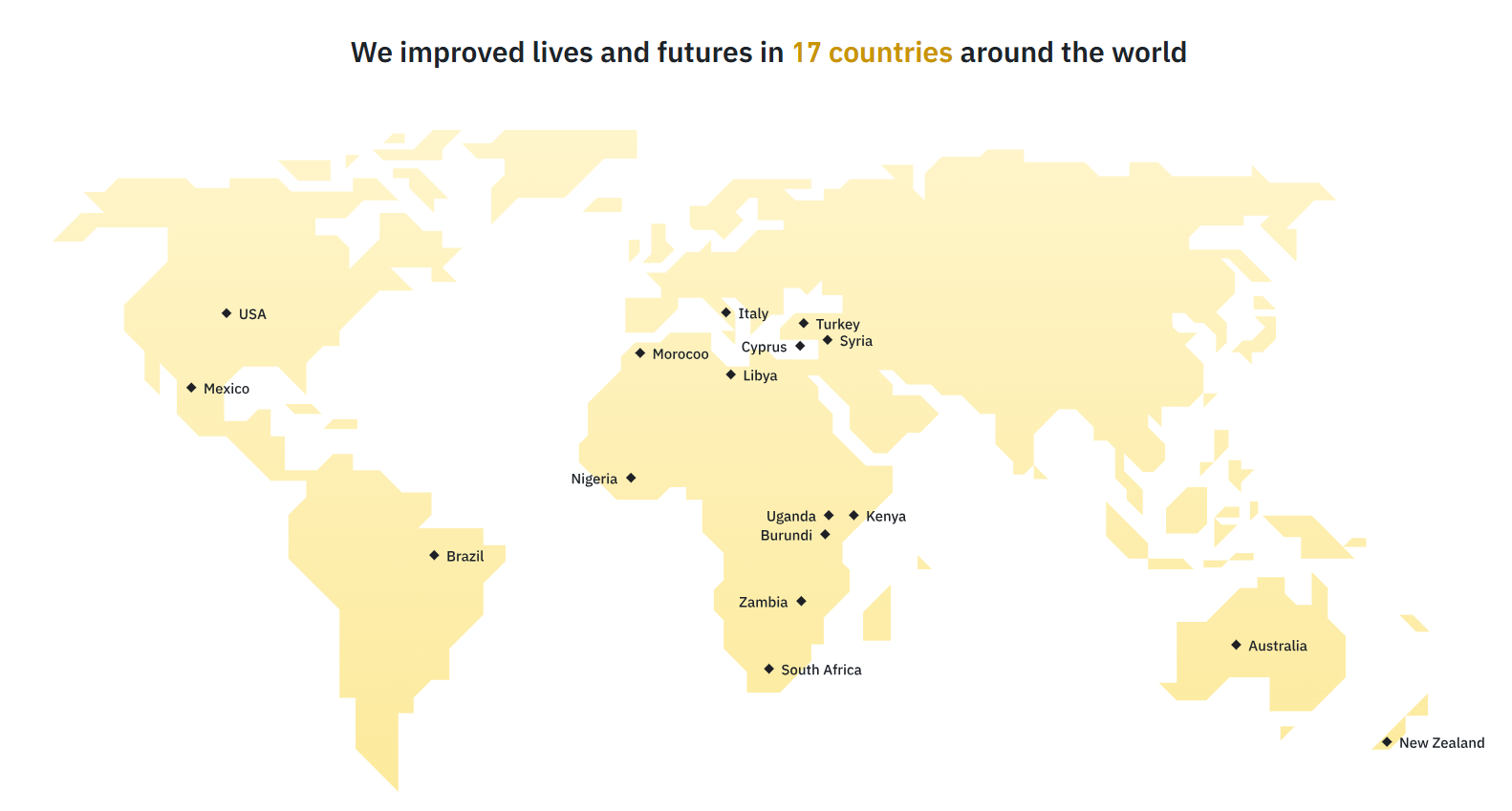
Another potent example of global cryptocurrency fundraising came from Ukraine. The official Aid for Ukraine platform, which lists government wallets and enables contributors from all around the world to contribute digital assets, was introduced by Ukraine's Ministry of Digital Transformation in March 2022. Later, Binance collaborated with Ukrainian authorities to offer internally displaced individuals cryptocurrency-based aid.
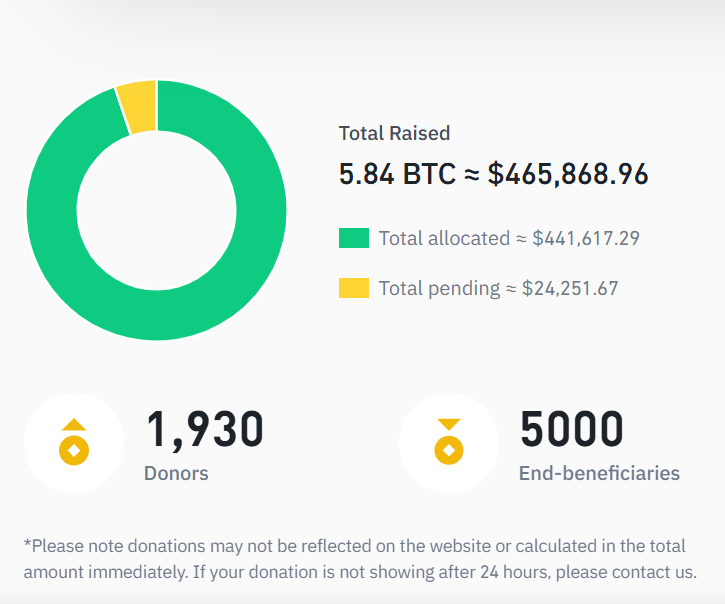
The response to the earthquake in Turkey and Syria demonstrated how cryptocurrency may enter recognized humanitarian routes. Over $463,000 was raised by Binance Charity's official earthquake appeal, with the Turkish Red Crescent and Mercy Corps receiving the proceeds. Donations in cryptocurrency were accepted by the Turkish Red Crescent, which used them for basic needs including food, cleaning products, and supplies for shelter.
Source: Binance
A fourth example is from Vanuatu, where Oxfam created the UnBlocked Cash project to provide aid following COVID-19 and Tropical Cyclone Harold using blockchain-based vouchers. The lesson was that inside a local economy, digital financial infrastructure might link funders, assistance organizations, vendors, and recipients.
When taken as a whole, these examples point to a realistic perspective on cryptocurrency relief, i.e., its greatest contribution is not the creation of new money, but rather the development of a quicker, more transparent path for money that currently exists.
WARNING: Graphic.
— binji (@binji_x) August 26, 2026
My home country, Nepal, has experienced a catastrophe in the form of a “flash flood.”
As you can see, this came out of nowhere, and is very disturbing.
Myself and others are currently trying to figure out how to assist with relief efforts. pic.twitter.com/FdhQXde86Q
How Crypto Could Help Nepal During a Crisis
Stablecoins, regulated exchanges, humanitarian NGOs, and transparent wallets might be the foundation of Nepal's disaster-relief paradigm. A dollar-linked stablecoin might be sent straight to a confirmed emergency wallet by a donor in the US, Australia, India, or the Gulf. While an independent dashboard could display allocations, conversions, and payments without disclosing beneficiaries' private information, a public address would allow contributors to keep an eye on incoming funds.
The diaspora from Nepal may find this useful. Nepalis residing overseas maintain financial ties to their native villages. A diaspora-led initiative might raise money worldwide during an earthquake or significant flood and direct it to authorized NGOs or local relief initiatives without each donor having to go through a different banking procedure.
Nepal does not have to begin with nothing. In Jaleshwor, UNICEF Nepal has already tested blockchain-based financial aid via the Rahat platform. Vulnerable families were able to obtain cash through the system's usage of digital tokens, QR codes, and mobile texts, and transactions were easier to track thanks to blockchain records. Real-time tracking, reconciliation, and potential reach in difficult-to-reach areas were noted in UNICEF's assessment.
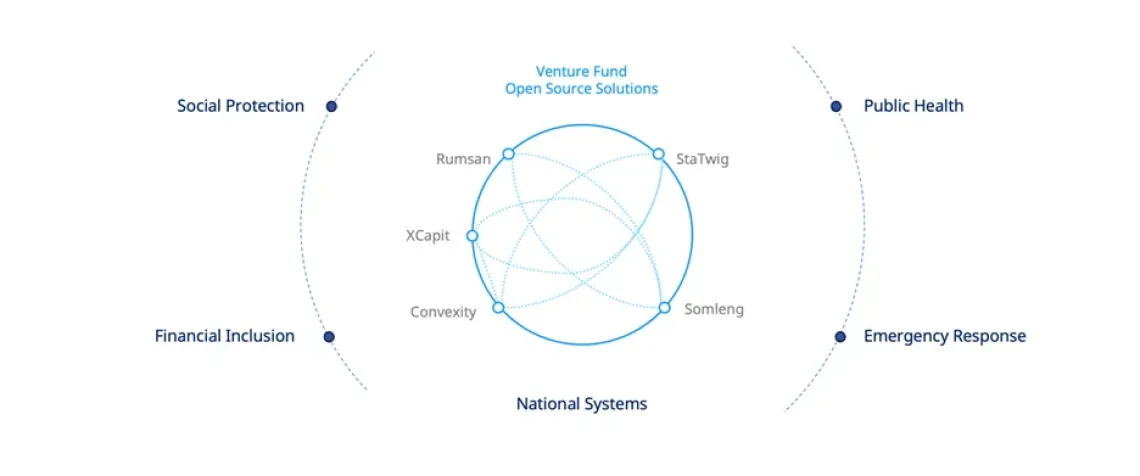
Source: UNICEF Nepal
That experiment suggests a hybrid network where local banks, payment services, NGOs, and governments handle delivery while blockchain manages fund flow and audit trails. This is more feasible than a crypto-only relief system.
The Last-Mile Challenge and What Comes Next
Whether cryptocurrency can reach Nepal is not the most difficult question. The question is whether that cryptocurrency can be made into a tent, a sack of rice, a package of antibiotics, or useful Nepalese rupees in a village that has been harmed.
This is a last-mile issue that blockchain cannot resolve on its own. A mountain community might have poor electricity, poor connectivity, no local cryptocurrency exchange, and no retailers who will take stablecoins. Instead of a smartphone, a beneficiary can own a simple phone. Additionally, local businesses can require precise guidelines for consumer protection, taxation, accounting, foreign exchange conversion, and identification verification.
Because of this, Nepal's best course of action is to construct the infrastructure before a crisis arises. Pre-approved humanitarian wallets, regulated conversion partners, multisignature controls, emergency stablecoin reserves, and agreements with banks, payment companies, and non-governmental organizations could all be established in Nepal. Donors were able to view the amount received, converted, and disbursed.
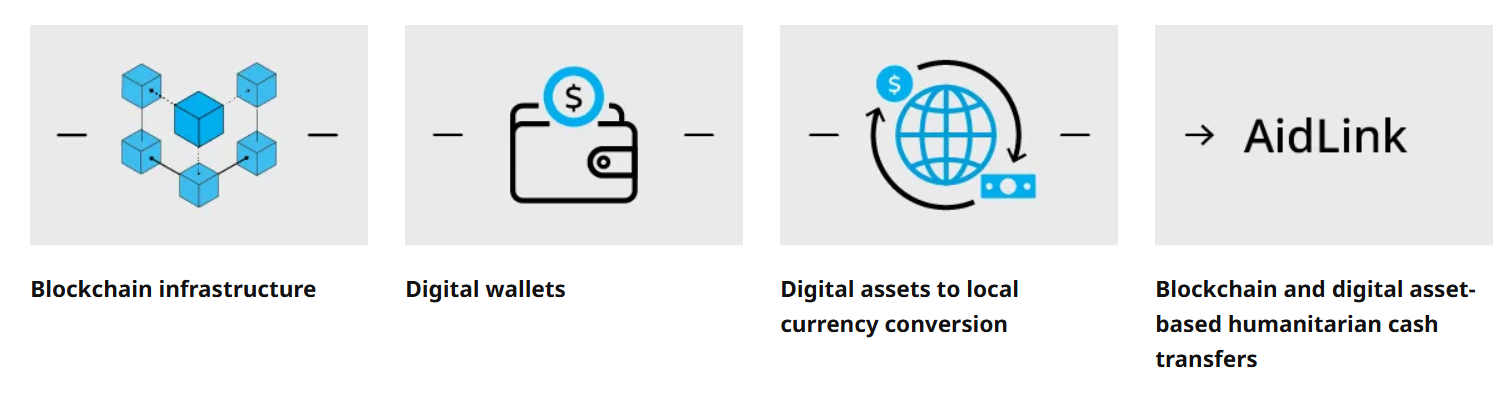
Low-tech access might be incorporated into the system from the start in Nepal. Recent humanitarian trials by UNICEF demonstrate how SMS-based solutions can connect digital asset assistance to basic phones and local cash systems. Nepal need technology that functions outside of Kathmandu, even with rudimentary connectivity.
Accepting cryptocurrency donations is only one aspect of the possibilities. Nepal might establish a disaster-finance layer that is both highly local in terms of service and global in terms of investment. Crypto can speed up the initial phase. Increased accountability can be achieved through transparent digital infrastructure. The last half has to be made actual by local institutions.
If you find any issues in this article or notice missing information, please feel free to reach out at team@etherworld.co for clarifications or updates.
To promote your Web3 articles, events, and projects, you may reach out anytime via EtherWorld PR for submissions and collaboration.
Related Articles
- Mislav Javor Joins Ethlabs to Build Ethereum
- How $900 Bought Control of an $8.5M DeFi Vault
- Yearn Vaults Safe After $8.5M Exploit
- Maya Protocol Exploit Drains $1.7M in CACAO
- CFTC Closes FTX Cases Against Ellison & Wang with Trading Bans
To follow blockchain news, track Ethereum protocol progress, and read our latest stories, subscribe to our weekly today.
Join the EtherWorld & Avarch Internship Program and build your career in blockchain, content, social media, video, podcast editing, or operations. Send your resume and brief introduction to contact@etherworld.co.
Disclaimer: The information contained in this website is for general informational purposes only. The content provided on this website, including articles, blog posts, opinions, & analysis related to blockchain technology & cryptocurrencies, is not intended as financial or investment advice. The website & its content should not be relied upon for making financial decisions. Read full disclaimer & privacy policy.
To stay updated on blockchain news, Ethereum protocol progress, and our latest stories, subscribe to our weekly digest and YouTube channel for ELI5 content.
To promote your Web3 articles, events, project updates, and Press Releases, reach out anytime via EtherWorld PR for submissions and collaboration. For other queries, email contact@etherworld.co.
If you’d like to support our work, share the content and consider donating at avarch.eth.
Join our community on Discord and follow us on Twitter, Facebook, LinkedIn & Instagram.

 ×
×

Author

Nidhi Kumari is a Web3 content writer at EtherWorld.co, tracking ecosystem developments, funding activity, and market trends shaping the crypto space.