What the COLDCARD Exploit Means for Crypto?
The COLDCARD exploit exposed a critical seed generation flaw that led to the theft of nearly 594 BTC. Here's why the incident is a wake-up call for hardware wallet security and self-custody.
The latest COLDCARD breach is more than just another cryptocurrency security incident; it should serve as a warning to anyone who believes hardware wallets are invincible to malfunction. Although self-custody has long been promoted as the safest way to protect digital assets, this exploit demonstrates that even the most dependable security systems can have shortcomings. It's not just that around 594 BTC was stolen; there was a security product flaw that remained unnoticed for years. More importantly, the incident forces the cryptocurrency sector to reevaluate whether self-custody is being marketed as a one-time solution rather than an ongoing requirement.
What Happened in the COLDCARD Exploit?
The COLDCARD exploit, in contrast to the majority of cryptocurrency hacks, did not entail phishing attacks, hijacked exchanges, or individuals accidentally disclosing their private keys. Rather, the weakness was present from the start of the creation of some wallets. Coinkite's official advisory attributed the problem to the way some COLDCARD devices created their recovery phrases, where certain wallet seeds were more predictable than they should have been due to a lack of entropy, or randomness.
When users relied solely on the wallet's built-in seed generation, COLDCARD Mk3 devices running firmware version 4.0.1 or later carried the highest risk. Mk3 users who added at least 50 private, independent dice rolls during the creation of their recovery phrase, according to Coinkite, were unaffected because the extra randomness eliminated the vulnerability. The company recommended a different strategy for users of COLDCARD Q devices below version 1.5.0Q and Mk4 and Mk5 devices running software below version 5.6.0: update the firmware first, create an entirely new seed phrase, and then transfer money to the new wallet.
Today it appears that the entropy (or lack thereof) behind Cold Card seed generation was exploited.
— Quit (@0xQuit) July 31, 2026
The tl;dr is that bad randomness in Mk3 seed generation for Cold Card hardware wallets led cluster of roughly 594 BTC being swept from about 500 addresses in a short window.…
After blockchain researcher Quit discovered a coordinated transfer of money across hundreds of dormant wallets, the scope of the vulnerability became clear. His inquiry revealed that over 500 Bitcoin addresses had lost nearly 594 BTC, or about $50 million at the time, in a short amount of time. The trend indicated that before carrying out the heist in a single, well-planned operation, attackers had probably spent years identifying wallets impacted by the entropy problem.
Following the discovery, Coinkite deployed updated firmware, publicly recognised the vulnerability, gave it CVE-2025-48384, and published comprehensive blog articles outlining the technical background of the flaw as well as the security advisory. The fact that merely updating the firmware would not secure an already compromised wallet was one of the company's most crucial cautions. Users had to update their wallets and transfer all of their money if the recovery phrase had been created via the impacted technique. This distinction is crucial because a lot of consumers felt that just upgrading the most recent firmware would fix the issue.
A similar approach was seen when ZetaChain paused cross-chain operations after a $300,000 exploit, showing that swift action and clear communication are essential when user funds are at risk.
The attack deserves attention not just because Bitcoin was hacked but also because it exposes common misconceptions regarding hardware wallets. The impacted users weren't irresponsible investors who clicked on fraudulent links or chased unrealistic returns. The majority had done what the industry has long advised, i.e., purchase a reliable hardware wallet, transfer your Bitcoin offline, and keep it unaltered. Paradoxically, such long-term confidence turned into a contributing factor. A weakness that occurred during wallet creation went unreported until attackers eventually figured out a way to exploit it because many of the affected wallets had been dormant for years.
We are still monitoring and expanding our investigation into the Coldcard weak-entropy hacks.
— Galaxy Research (@glxyresearch) August 2, 2026
The pattern that identified Wave 1 was identified by engineers at @blocks, but we identified the patterns of Waves 2 and 3 thanks specifically to victims coming forward. While we know… https://t.co/JQ3ptgF5Be
Why Hardware Wallets Are Not Completely Risk-Free?
The COLDCARD exploit's most important lesson is not that hardware wallets are dangerous. They continue to be among the best instruments for safeguarding digital assets. The event does, however, highlight a dangerous misconception that has progressively gained traction in the cryptocurrency community, i.e., the idea that purchasing a hardware wallet is the last step in protecting your money.
The exploit demonstrates that self-custody is a process rather than an outcome. Although a hardware wallet can defend private keys from online threats, it cannot ensure that every aspect of its own design will always be perfect. As researchers identify new threats, vulnerabilities may surface, firmware may need to be updated, and security recommendations may alter. Ignoring those modifications because assets are kept "offline" leads to a delusion of security.
The same lesson emerged during the recent KelpDAO exploit, where a weakness outside the core protocol triggered a much larger crisis, proving that modern crypto security is often only as strong as the infrastructure users rarely think about.
More significantly, this occurrence contradicts the self-custody narrative used by the company. For years, cryptocurrency has encouraged consumers to leave centralised exchanges, but the implications of doing so have received considerably less attention. Investing in a hardware wallet is just the first step. Users still need to keep an eye on firmware updates, heed security alerts, and take prompt action when vulnerabilities are revealed. Self-custody is about actively managing trust, not eradicating it, as the COLDCARD exploit serves as a reminder.
We identified a 2nd wave of sweeps likely attributed to the same Coldcard hacker as the wave we described in the thread below.
— Galaxy Research (@glxyresearch) August 1, 2026
We are now tracking 1,158.81 BTC stolen from 2,673 addresses and held unspent across 7 attacker addresses.
Updates to our analysis from yesterday 👇 https://t.co/UIDiRvw64K pic.twitter.com/2PHAWto9gx
Are Wallet Manufacturers Doing Enough?
Coinkite has unavoidably come under fire due to the COLDCARD exploit; focusing on just one company would obscure the larger problem. All hardware wallet manufacturers invite consumers to put thousands or even millions of dollars' worth of assets in their wallets. This means that security must be a continual commitment supported by continuing testing, independent audits, and transparent communication; it cannot stop when a device is delivered.
To Coinkite's credit, as soon as the problem was discovered, the company took immediate action. The vulnerability was made public, given the CVE-2025-48384 number, corrected firmware was made available, and comprehensive advisories on who was impacted and what users should do were issued. Additionally, it highlighted a crucial point that many businesses would have missed, i.e., firmware updates by themselves would not safeguard wallets made with weak seed terms. Rather, impacted consumers have to move their money and create an entirely new seed. That degree of openness merits praise since it provided users with precise directions rather than ambiguous claims.
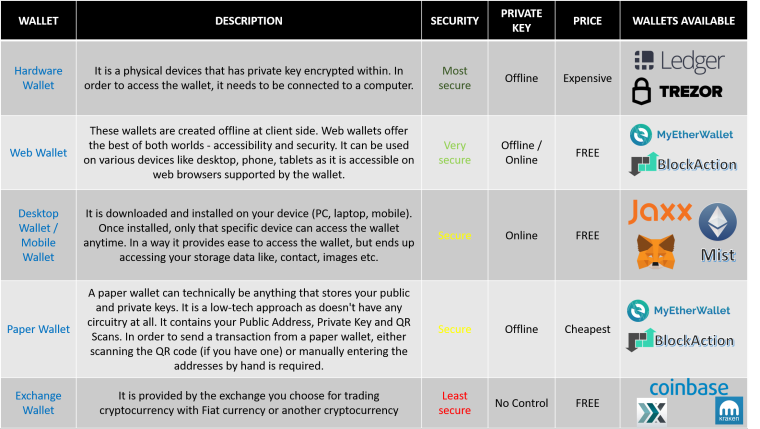
However, the incident also calls into question whether the industry is doing enough to stop these defects from ever reaching users. Since all other security features rely on seed generation, it is perhaps the most important feature of any hardware wallet. Years of meticulous self-custody can be reversed without the user making a single error if a vulnerability is present at that point. Because of this, manufacturers should approach crucial elements like entropy generation as areas that need ongoing external assessment rather than merely internal testing.
A communication issue was also revealed by the exploit. After setting up their wallet, many long-term Bitcoin users hardly ever check the manufacturer's blog or keep up with firmware changes. It is easy to overlook crucial security alerts until it is too late. If hardware wallets are supposed to keep users safe for years, businesses must also find better ways to make sure consumers receive important security notifications before attackers do.
🚨URGENT COLDCARD SECURITY UPDATE
— COLDCARD (@COLDCARDwallet) July 31, 2026
Read carefully before acting.
👉Mk3 seed generated on 4.0.1+ without ≥50 private, independent dice rolls: begin a careful migration now.
👉Mk4/Mk5 <5.6.0 or Q <1.5.0Q: update first, generate a new seed, then migrate.https://t.co/HshUxevCl3 https://t.co/zrkUuACRyE
What Crypto Users Should Learn from This Exploit?
The COLDCARD exploit serves as a stark reminder that self-custody involves continuing obligations, but it is not a reason to give up on hardware wallets. Many of the impacted individuals had transferred their Bitcoin from exchanges to cold storage, as the cryptocurrency community has long advocated. The issue wasn't that they opted for self-custody; rather, a lot of them thought their involvement ended once the wallet was established.
This incident demonstrates that staying informed is just as important to long-term security as selecting the appropriate device. Official advisories, security announcements, and firmware updates are required reading. They contribute to the defence of digital assets. Ignoring them because money is kept offline can result in hazards that go unnoticed until a vulnerability is found years later.
Carrot's shutdown after the Drift exploit is another reminder that the effects of a single security incident can spread far beyond its original target.
Additionally, the attack highlights a point that the industry occasionally overlooks: no security product is impervious to inspection. Although hardware wallets are still among the safest ways to store cryptocurrency, they should never be considered perfect. The fundamental tenets of cryptography, where verification has always been more important than assumption, are violated by blind faith in any gadget, regardless of its repute.
The industry has shown before that it can come together after major security incidents. The recent Aave-led rsETH recovery effort, backed by organizations including Golem Foundation, demonstrated how coordinated action can help restore confidence after an exploit.
🚨 LIKELY 4TH ORGANIZED WAVE COLDCARD ATTACK OCCURRING RIGHT NOW
— Alex Thorn (@intangiblecoins) August 3, 2026
THERE ARE STILL SIMILAR TXS IN THE MEMPOOL WAITING TO BE CONFIRMED AND THE PREVIOUSLY-CONFIRMED TXS SIGNAL RBF OPT-IN, CHECK YOUR FUNDS AND YOU MAY BE ABLE TO RBF YOUR WAY OUT OF THIS
pattern identified:
blocks…
In the end, the COLDCARD exploit is more significant than the 594 BTC loss or the vulnerability found in a specific firmware version. It calls into question the long-standing presentation of self-custody to users. Although purchasing a hardware wallet is simply the first step toward security, the industry sometimes suggests that it is the last. Manufacturers need to keep refining their testing, auditing, and communication processes, and consumers need to understand that safeguarding digital assets necessitates ongoing care long after a wallet is created.
The recent investigation into the $285 million Drift Protocol hack, which linked the attack to North Korean hackers, is another reminder that the threat landscape is constantly evolving, making proactive security practices and timely communication more important than ever.
One thing that may be learned from this tragedy is that security is ever-changing. The best protection comes from combining trustworthy tools with wise choices and being ready to take action when new threats arise, not from relying just on a single product. Although the COLDCARD hack has undermined trust in hardware wallets, it should eventually reinforce something even more crucial: the cryptocurrency community's realisation that self-custody is a continuous commitment rather than a one-time purchase.
If you find any issues in this article or notice missing information, please feel free to reach out at team@etherworld.co for clarifications or updates.
To promote your Web3 articles, events, and projects, you may reach out anytime via EtherWorld PR for submissions and collaboration.
Related Articles
- Tether Launches USA₮ Stablecoin on Celo Blockchain
- Aave Shuts Low-Performing Markets to Reduce Risk
- Russia's Largest Bank to Launch Crypto Trading by Dec 2026
- Ethereum Institutional Secures Funding From 100+ Ecosystem Supporters
- Vitalik Buterin Explains Diamond iO for Ethereum
To follow blockchain news, track Ethereum protocol progress, and read our latest stories, subscribe to our weekly today.
Join the EtherWorld & Avarch Internship Program and build your career in blockchain, content, social media, video, podcast editing, or operations. Send your resume and brief introduction to contact@etherworld.co.
Disclaimer: The information contained in this website is for general informational purposes only. The content provided on this website, including articles, blog posts, opinions, & analysis related to blockchain technology & cryptocurrencies, is not intended as financial or investment advice. The website & its content should not be relied upon for making financial decisions. Read full disclaimer & privacy policy.
To stay updated on blockchain news, Ethereum protocol progress, and our latest stories, subscribe to our weekly digest and YouTube channel for ELI5 content.
To promote your Web3 articles, events, project updates, and Press Releases, reach out anytime via EtherWorld PR for submissions and collaboration. For other queries, email contact@etherworld.co.
If you’d like to support our work, share the content and consider donating at avarch.eth.
Join our community on Discord and follow us on Twitter, Facebook, LinkedIn & Instagram.

 ×
×

Author

Nidhi Kumari is a Web3 content writer at EtherWorld.co, tracking ecosystem developments, funding activity, and market trends shaping the crypto space.