Proving Ethereum: 9 ZK Projects to Watch in 2026
Discover 9 leading zero-knowledge (ZK) projects shaping Ethereum's proof economy in 2026, from zkVMs and prover networks to privacy, interoperability, and scalable proof infrastructure.
For years, Ethereum's scaling discussion has been centred on execution, including more throughput, lower costs, and the rapid expansion of Layer 2 networks. That narrative is evolving right now. As rollups become more important to Ethereum's long-term scalability, a new obstacle has emerged, i.e., proving. Ultimately, each transaction made on a zero-knowledge rollup must be reduced to a cryptographic proof that Ethereum can verify. Rollups' capacity to grow sustainably while upholding Ethereum's security guarantees depends more and more on how quickly, cheaply, and effectively these proofs are produced.
This change has led to the emergence of an infrastructure layer that many developers now refer to as the "proof economy," which aims to make zero-knowledge proofs more rapid, affordable, decentralised, and programmable. Building a new zkEVM is no longer the only challenge. Rather, it focuses on creating specialised proving systems, recursive proof structures, decentralised prover networks, zk virtual machines (zkVMs), and privacy-preserving execution environments that can support hundreds of decentralised apps and millions of users.
The increasing significance of this layer is reflected in the speed of innovation. Projects are striving to provide cross-rollup interoperability, lower proving latency, enhance the developer experience, and make verifiable computing feasible outside of blockchain. As Ethereum intensifies its rollup-centric plan and developers look for infrastructure that can handle increasingly sophisticated applications without sacrificing scalability or security, these developments are becoming more crucial.
The projects covered in this article go beyond just attempting to develop an alternative zero-knowledge or Layer 2 protocol. Each is addressing a distinct obstacle inside Ethereum's proving stack, whether it is reducing proving costs, improving developer accessibility, decentralising evidence creation, enabling privacy, or making verifiable computation possible at scale. Knowing how each project fits into this rapidly evolving ecosystem makes it easier to forecast Ethereum's next level of scalability.
- The Proving Bottleneck Ethereum Must Solve
- 1. Succinct
- 2. Scroll
- 3. Linea
- 4. zkSync Era
- 5. Starknet
- 6. Polygon zkEVM
- 7. RISC Zero
- 8. Aztec
- 9. Brevis
- 10. Beyond Scaling: Building Ethereum's Proof Economy
The Proving Bottleneck Ethereum Must Solve
Ethereum's approach to scalability has altered significantly. Instead of boosting Layer 1 throughput, the network is stepping up its rollup-centric strategy, in which Ethereum serves as the settlement and verification layer and Layer 2s carry out transactions off-chain. According to Ethereum.org, rollups are already 5–20× less expensive than the Ethereum Mainnet, indicating that this strategy has already significantly lowered transaction costs. Future enhancements are anticipated to further lower costs through increased data availability.
However, one crucial procedure is necessary for this design to succeed, i.e., proof creation. Before being accepted by Ethereum, each zero-knowledge rollup must produce cryptographic validity proofs proving that dozens or possibly millions of off-chain state transfers have been completed correctly. Proof generation is computationally demanding, requiring specialised hardware, sophisticated proving systems, and substantial processing resources, in contrast to transaction execution. The effectiveness of evidence generation is now one of the main performance limitations influencing scalability, as ZK-rollups research has demonstrated.
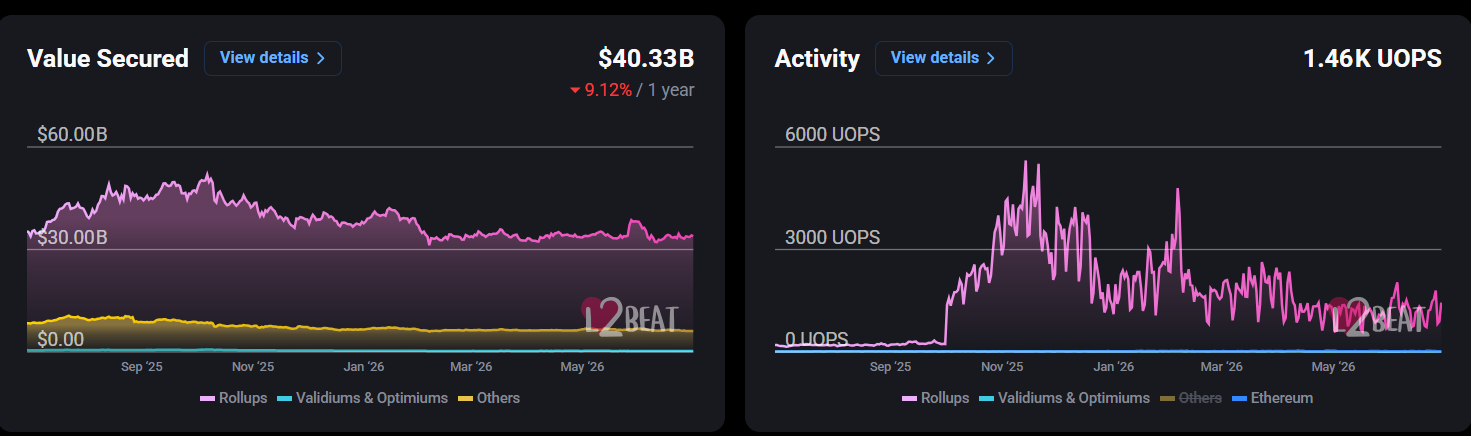
This is no longer a theoretical issue. According to L2BEAT, Ethereum's Layer 2 ecosystem currently safeguards around $40 billion in total value, including over $33 billion across rollups, with 23 active rollups performing over 1,460 user operations per second (UOPS). As more programs migrate to Layer 2s, each additional transaction eventually leads to an increase in proving demand, which strains proving infrastructure rather than execution capacity.
The proof economy, a completely new infrastructural layer, has emerged as the industry's response. Developers are creating general-purpose zkVMs, decentralised prover networks, recursive proving systems, and verifiable coprocessors that can significantly lower proving costs while enhancing scalability and developer accessibility, rather than treating proof generation as a task managed independently by each rollup. These developments are changing the focus of competition from merely creating quicker Layer 2s to improving the infrastructure necessary to make such Layer 2s profitable.
This article's projects showcase several components of this proving stack. While some are improving privacy, interoperability, and verifiable computation, others are rethinking the generation of proofs and making zero-knowledge development programmable. Together, they are constructing the infrastructure that will determine whether Ethereum's rollup-centric vision can grow from its current user base of millions to a global computing platform in the coming years.
1. Succinct
The largest bottleneck in the network is now proof generation rather than transaction execution as Ethereum grows through rollups. Before transactions are confirmed on Ethereum, each zk-rollup must generate cryptographic proofs. As transaction volumes and application complexity increase, provisioning becomes more costly. Succinct is creating the infrastructure that enables evidence generation to be quicker, less expensive, and available to all developers, rather than creating another Layer 2.
Its flagship product, SP1, is an open-source zkVM that eliminates the need to create unique arithmetic circuits by enabling users to produce zero-knowledge proofs straight from regular Rust programs compiled for the RISC-V architecture. This broadens the scope of zero-knowledge applications to include interoperability, AI, light clients, bridges, and verifiable off-chain processing in addition to rollups. The project's documentation claims that SP1 is one of the most adaptable zkVMs available since it can handle complex workloads, such as Type-1 zkEVMs constructed with Reth and Tendermint light clients.
Succinct's speed of execution is equally impressive. Over 1,700 GitHub stars, more than 660 forks, and more than 60 public releases have been added to the SP1 repository. Subsequent upgrades have added network capabilities, GPU optimisations, compressed proof verification, private proving APIs, and SDK enhancements. A persistent focus on lowering proving latency and enhancing the developer experience is demonstrated by the addition of features like NetworkMode, network signing, multi-shard compressed proof verification, and private proving support in recent releases.
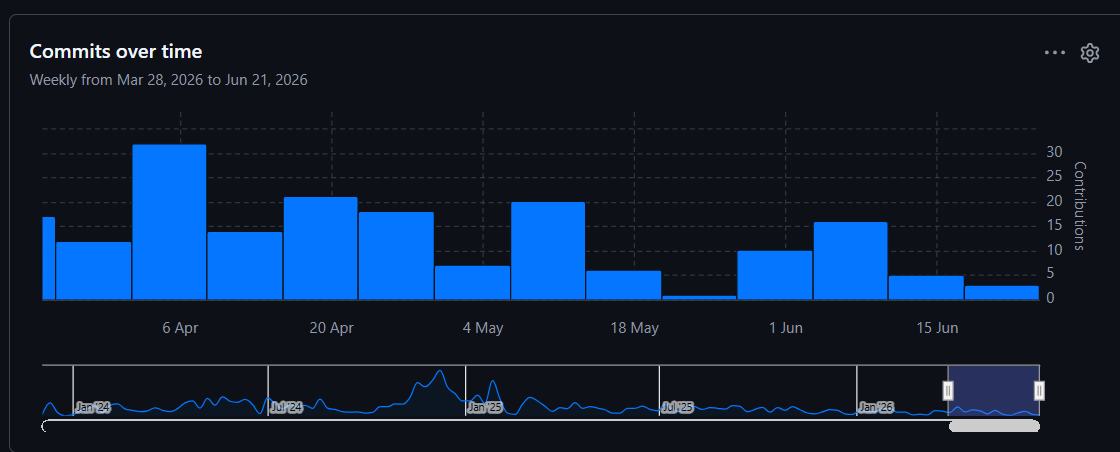
This momentum is further reinforced by the accompanying GitHub commit activity graph. Development continued to be robust between late March and June 2026, with several weeks seeing 20–30+ commits, suggesting an aggressive release cycle as opposed to irregular updates. Continuous engineering output, as opposed to short-term user metrics, is frequently a better measure of long-term progress in infrastructure projects.
Source: SP1
In addition to SP1, Succinct is developing a decentralised Prover Network that will allow developers to contract out the creation of proofs to a distributed marketplace rather than keeping specialised proving hardware. This shared infrastructure approach may become a key component of the network's rollup-centric future as Ethereum's proving demands increase.
2. Scroll
Scroll has adopted a more Ethereum-centric strategy, in contrast to many Layer 2 networks that concentrate on increasing throughput or lowering transaction costs. Building a bytecode-equivalent zkEVM is its main goal, which will enable Ethereum apps, developer tools, and smart contracts to function with almost no changes. Because of its focus on EVM equivalence, Scroll is less about developing a new execution environment and more about expanding Ethereum, a design philosophy that has made it one of the most technically aligned zk-rollups in the ecosystem.
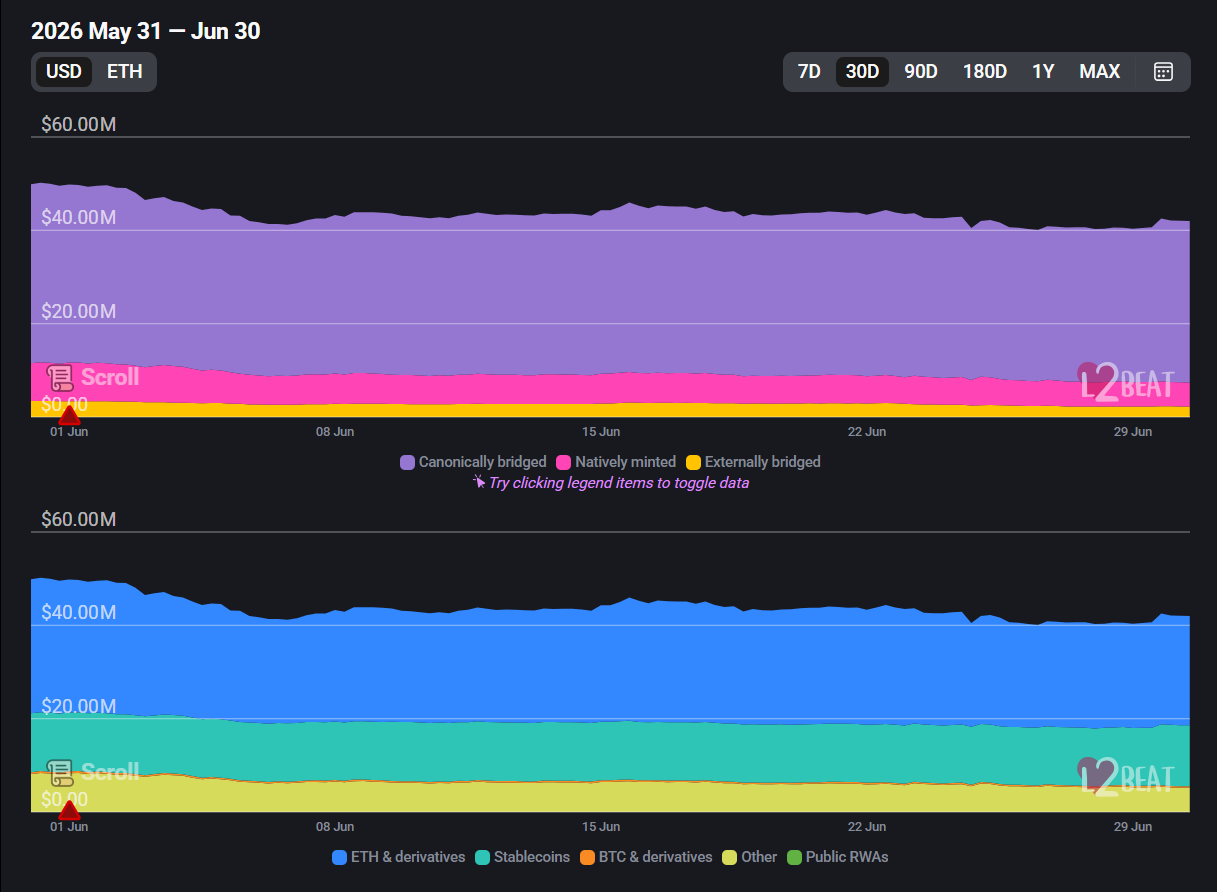
Over the past year, Scroll's engineering focus has been on lowering costs, increasing prover efficiency, and getting the network ready for higher throughput. The Euclid upgrade, which substituted a new prover based on OpenVM for Scroll's initial Halo2-based proving system, was the largest milestone. Scroll claims that this transfer eliminates the circuit-capacity checker that had previously limited sequencer performance, simplifies prover architecture, lowers proving delay and operational costs, and permits support for arbitrarily complicated transactions.
Along with enhancing compatibility and Stage-1 decentralisation preparedness, the patch brought Scroll closer to Ethereum's growing execution layer by introducing Merkle-Patricia Trie (MPT) state commitments, optimised rollup processing, and support for EIP-7702 and RIP-7212.
Beyond Euclid, Scroll has continued to evolve. Launched in late 2025, the Galileo upgrade brought about one of the biggest proving enhancements to date while also adapting the network to Ethereum's Fusaka modifications. Through prover optimisations, the project reports a 50% reduction in zkVM cycles and a revised fee system that lowers transaction costs while enhancing anti-spam safeguards. In keeping with the team's long-term goal of enhancing execution performance without compromising Ethereum compatibility, Galileo also gets ready for Scroll's transition from l2-geth to l2-reth.
Source: Scroll
Scroll stands out because it prioritizes prover speed at the protocol level instead of just optimising infrastructure. Every decrease in proving latency directly enhances batch finalisation, reduces operational expenses, and boosts the rollup's economic efficiency. Scroll's regular protocol updates show that sustainable scalability requires both faster transaction execution and more effective proofing, while Ethereum's roadmap increasingly focuses on zero-knowledge proofs. Scroll is one of the most strategically significant zkEVM projects to keep an eye on in 2026, thanks to its deep Ethereum compatibility, ongoing protocol improvement, and aggressive prover optimisation.
3. Linea
While some zkEVMs prioritise creating novel proving architectures, Linea has focused on progressively boosting the efficacy of an Ethereum-equivalent execution environment. ConsenSys designed the network to preserve EVM compatibility while progressively reducing proving costs, boosting transaction throughput, and simplifying deployment for Ethereum-native applications. Instead of pursuing architectural divergence, Linea has decided to optimise the present zkEVM stack without sacrificing developer compatibility.
Over the past year, a number of mainnet updates have reflected this strategy. In order to enable greater transaction throughput while preserving deterministic proof production, Linea has improved prover performance, sequencer efficiency, state synchronisation, calldata compression, and node dependability. Because proving continues to be one of the highest operating costs for zk-rollups, these protocol improvements are especially important. Every increase in prover efficiency immediately lowers infrastructure costs and shortens Ethereum batch finalisation times, increasing the network's economic scalability.
Ecosystem expansion has been robust in tandem with development. The Linea Ecosystem Investment Alliance (LEIA), a $100 million project backed by over 30 venture capital firms, was established in 2025 by Linea and ConsenSys to expedite infrastructure, DeFi, AI, consumer applications, gaming, and real-world asset initiatives building on the network. Instead of operating as a conventional grants program, LEIA creates an organised pipeline for builders going from development to production by combining finance, technical support, liquidity help, and go-to-market resources.
Source:Linea
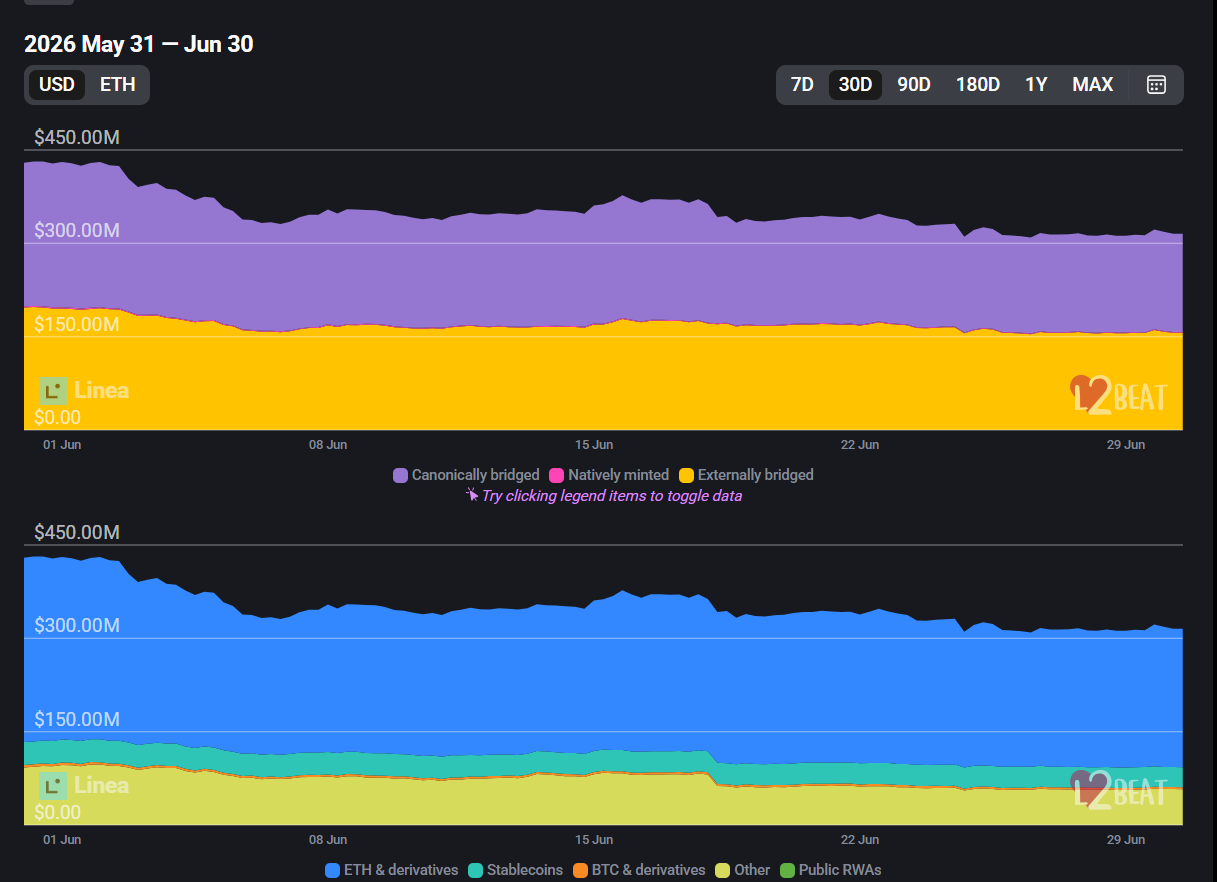
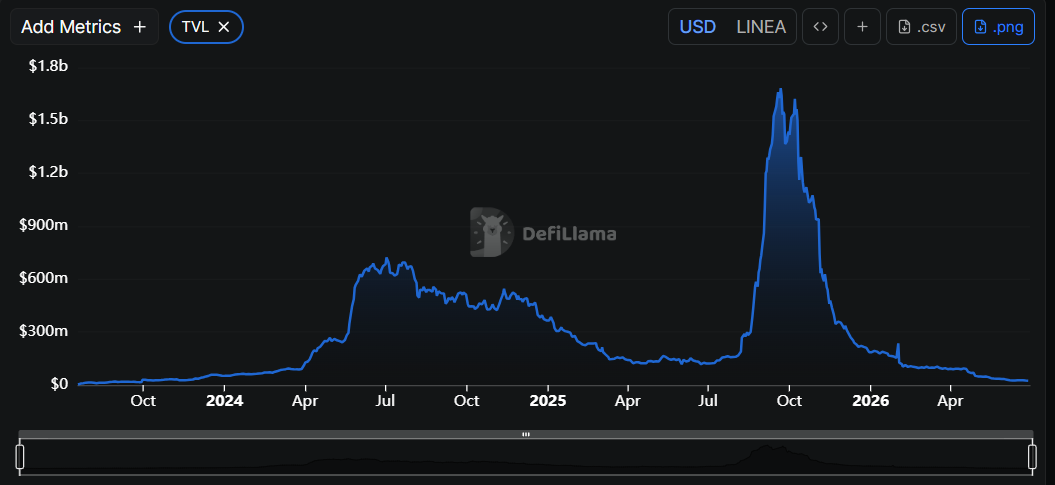
This approach is reflected in the network's adoption. While DefiLlama reports hundreds of millions of dollars in Total Value Locked (TVL) throughout its DeFi ecosystem, Linea protects more than $500 million in assets, according to L2BEAT. For Ethereum, Linea embodies a different scaling philosophy; rather than depending on revolutionary architectural redesigns, it is methodically increasing prover efficiency while concurrently investing in the development of developers. As of 2026, Linea is one of the most closely observed zkEVM initiatives due to its combination of ongoing protocol optimisation and persistent ecosystem expansion.
Source:Linea
4. zkSync Era
In contrast to many zkEVM initiatives that prioritise transaction throughput, zkSync Era is extending Ethereum's proving infrastructure into a more comprehensive modular ecosystem. Constructed by Matter Labs, zkSync integrates a Type-4 zkEVM with its Elastic Network concept, allowing several ZK chains to collaborate via shared settlement, messaging, and proof verification while retaining Ethereum's security. ZkSync is positioning zero-knowledge proofs as the basis for a linked network of application-specific chains, as opposed to treating a zk-rollup as a stand-alone product.
Over the past year, the technical roadmap for the project has accelerated considerably. In order to replace the current Boojum prover, Matter Labs unveiled Airbender, a next-generation proving device, in 2025. The company claims that Airbender offers significantly reduced proving latency, enhanced GPU utilisation, and a modular architecture that can accommodate different proving backends, resulting in faster and significantly more economical proof generation. By lowering the processing cost needed to complete transactions, these innovations directly address one of Ethereum's biggest scaling restrictions.
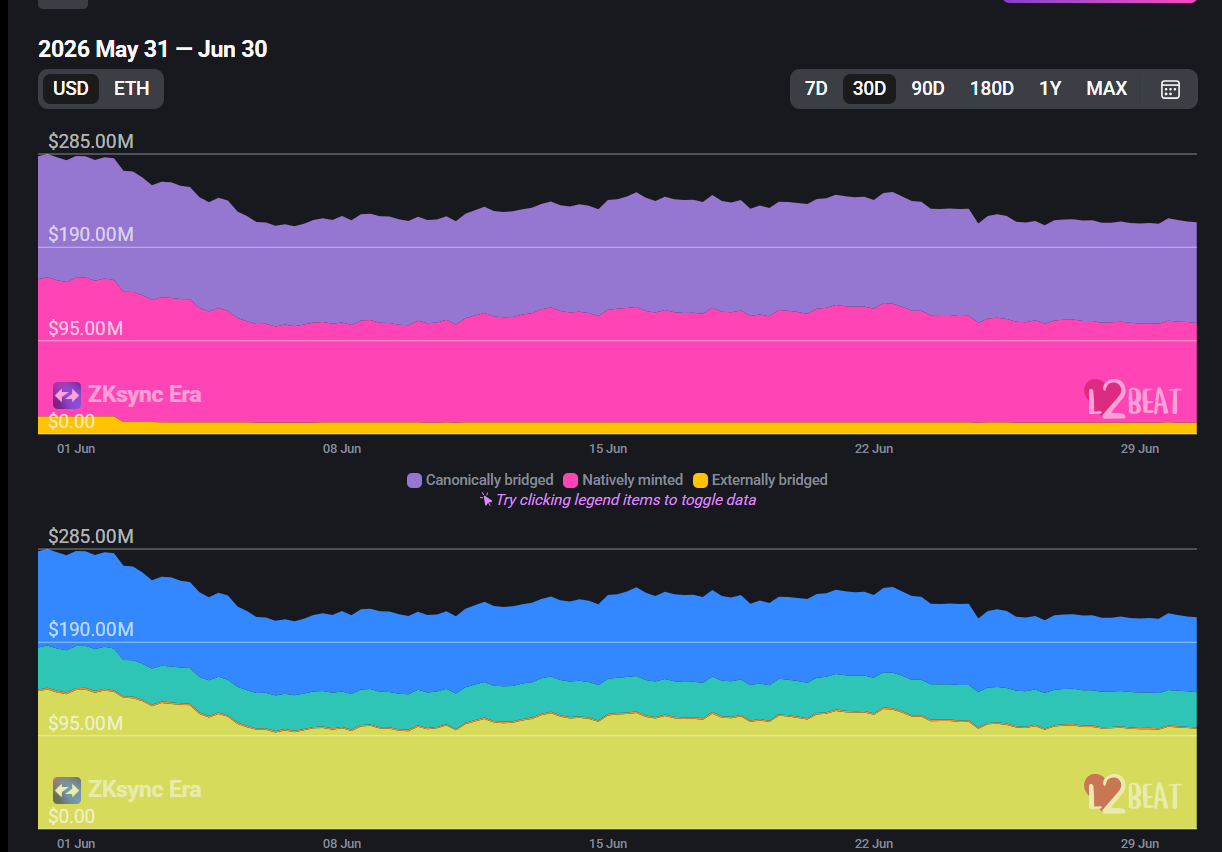
L2BEAT's 30-day Total Value Secured (TVS) chart shows zkSync Era's capital base declining from roughly $280 million at the beginning of June to approximately $210–220 million by the end of the month, representing a 22–25% decrease. While overall liquidity softened during the period, the composition of TVS remained largely unchanged, with canonically bridged assets and natively minted assets continuing to account for the majority of capital. This suggests that the decline reflected broader market outflows rather than a deterioration in zkSync Era's underlying infrastructure or security model.
Source: zkSync Era
Protocol engineering is only one aspect of zkSync's ecosystem strategy. Independent ZK Chains can now share inherent interoperability, liquidity, and cross-chain connectivity without the need for external bridges due to the introduction of the Elastic Network. By using this method, zkSync is transformed from a single Layer 2 into a common infrastructure that can support an ecosystem of independent but connected rollups. Despite increasing competition among Ethereum Layer 2s, the network has handled hundreds of millions of transactions since mainnet launch, indicating continued acceptance.
5. Starknet
Starknet differs among Ethereum's zero-knowledge scaling projects since it is built on zk-STARK proofs instead of zk-SNARKs. The network was developed by StarkWare utilizing a proving design that prioritizes scalability without relying on dependable setups using the Cairo programming language. Instead of merely reducing transaction costs, Starknet's long-term objective is to improve the effectiveness of evidence creation itself. This will maintain cryptographic security while enabling Ethereum to support ever-more complex applications.
The introduction of Stwo, StarkWare's next-generation prover, has been a significant step in this direction. Through increased parallelization and recursive proof aggregation, Stwo greatly enhances proof creation when integrated into the SHARP (Shared Prover) infrastructure. SHARP significantly reduces verification costs and proving time by combining several Cairo runs into a single proof that is submitted to Ethereum rather than creating separate proofs for each computation. As Ethereum transitions to a rollup-centric future, this architecture is crucial because it allows numerous applications to share proof-generation costs while boosting throughput.
Efficiency of execution has also been a subject of recent protocol improvements. With the addition of dynamic Layer-2 gas pricing, quicker block production, and reduced target gas consumption per block, Starknet v0.14.3 enhances network responsiveness while maximizing resource usage for consumers and developers.
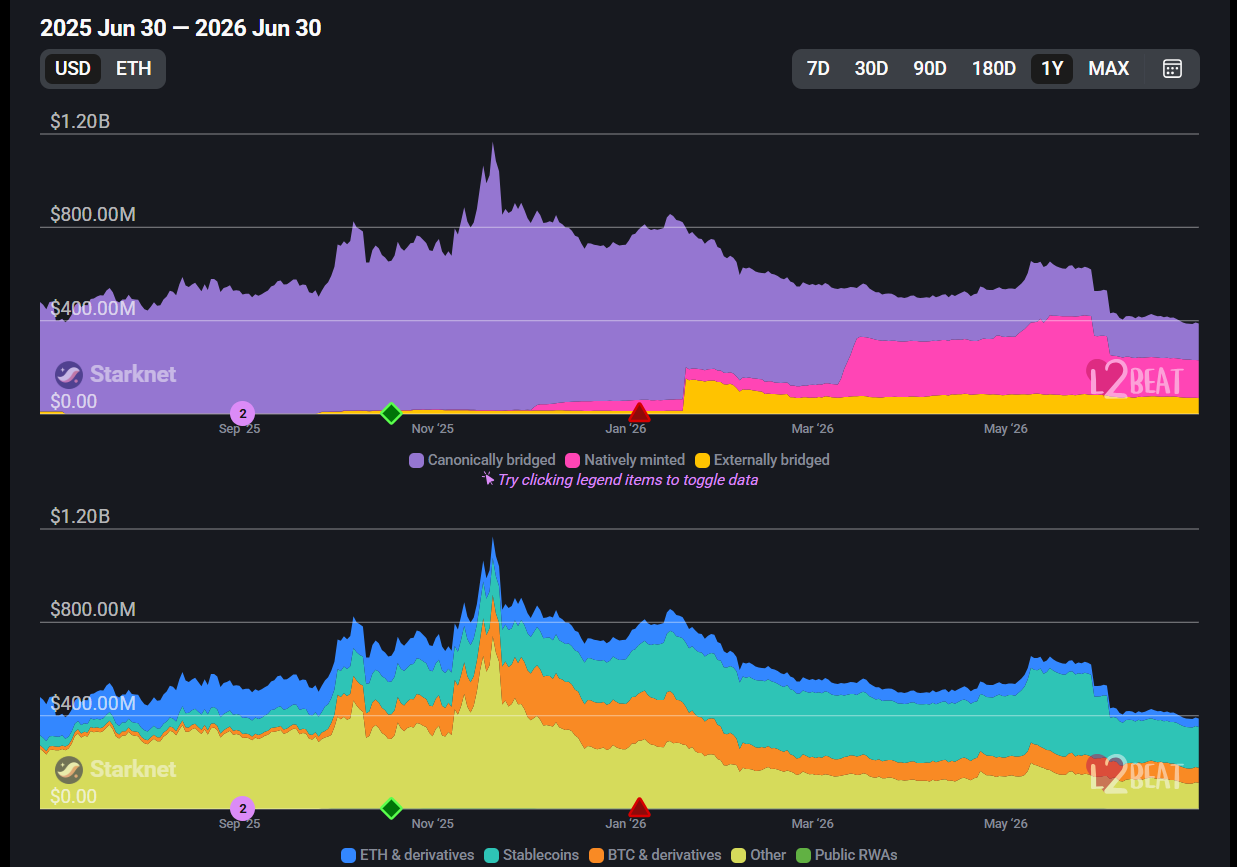
The network's increasing technological maturity is reflected in its adoption. StarkWare claims that Starknet supports about $406 million in Total Value Locked (TVL), has handled over 304 million transactions in total, serves about 24,000 active users every day, and has a peak throughput of about 992 TPS. Despite a brief 15-hour liveness anomaly in mid-June, L2BEAT states that Starknet has maintained an average status update interval of roughly 33 minutes with 97% normal uptime for the last 30 days.
Source: Starknet
Starknet is especially significant since it goes beyond simply creating another zk-rollup. One of Ethereum's most challenging engineering issues is addressed by its investments in Cairo, Stwo, and the shared SHARP proving infrastructure, which makes zero-knowledge proof generation scalable, affordable, and production-ready for a much larger on-chain economy.
6. Polygon zkEVM
Polygon is no longer focused on running a single zkEVM. In its most recent roadmap, AggLayer is positioned as the centre of a more complete interoperability scheme where independent chains can settle using shared zero-knowledge proofs instead of distributed bridge infrastructure. This shows that Polygon's Ethereum scaling technique has advanced significantly. Instead of focusing only on transaction processing optimisation, the project is investing in the provisioning infrastructure required to link several rollups while upholding Ethereum settlement guarantees.
AggLayer, which combines proofs from linked chains into a single settlement layer, serves as the technical cornerstone of this concept. The architecture is intended to lower proving latency, enhance modularity, and make proof generation far more hardware-efficient than previous implementations when combined with Plonky3, Polygon's next-generation proving system created in Rust. By improving batch processing, prover performance, and interoperability through protocol revisions, Polygon has continued to refine this stack, indicating that shared proving rather than isolated rollup performance is its long-term priority.
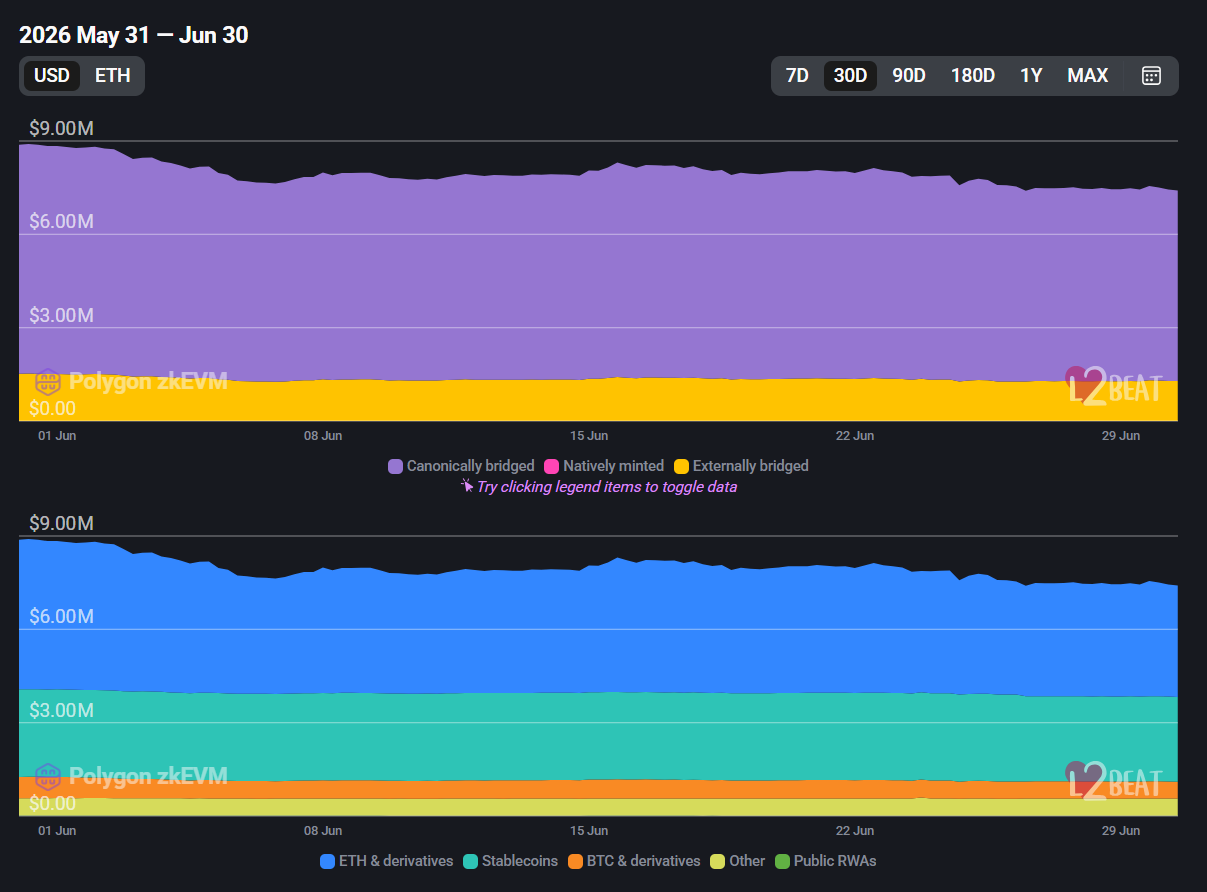
Network data show that Polygon zkEVM is still an active proving environment. According to L2BEAT, the network secured about $67 million in Total Value Secured (TVS) since the mainnet's launch. The nearby 30-day TVS chart also shows fairly consistent capital retention, fluctuating between about $65 million and $70 million across the month. Crucially, canonically bridged assets continue to comprise the great majority of secured value despite overall market volatility, suggesting that Ethereum remains the foundation of liquidity.
Source: Polygon zkEVM
Therefore, Polygon's importance in 2026 goes beyond just being another zkEVM. Infrastructure that can aggregate proofs across several chains will become more crucial if Ethereum's future is made up of hundreds of interoperable rollups. Instead of being just another execution environment, Polygon is pitching itself as one of the initiatives creating that shared proving layer with AggLayer and Plonky3.
7. RISC Zero
RISC Zero is developing infrastructure for verifiable computing, allowing developers to produce zero-knowledge proofs for any program running on a RISC-V zkVM, whereas the majority of ZK initiatives concentrate on verifying Ethereum transactions. This greatly broadens Ethereum's proving ecosystem beyond rollups into identity, AI, cross-chain verification, and intricate off-chain computation.
The switch from Bonsai to Boundless, a decentralized proving marketplace that enables developers to source proof generation from a permissionless network rather than centralized proving services, has been the project's largest milestone. This change improves scalability and lessens reliance on infrastructure while turning proving into a shared computational resource.
RISC Zero's advancement is further reinforced by engineering activity. With more than 2,200 GitHub stars, 720 forks, and 85 public releases, its flagship risc0 repository has one of the fastest development speeds among general-purpose zkVM projects. Updates on recursive proving, GPU acceleration, Ethereum integration, and the effectiveness of proof verification are still being added to the repository.
Measurable performance improvements are also shown in recent Boundless Proving Node v2.0 benchmarks. The official release notes state that the upgrade introduces multi-chain proving from a single node and offers roughly 2× quicker proving for light workloads, 1.5× faster performance for medium workloads, 100% lock-fulfillment, and up to 5× lower RPC traffic. With these enhancements, RISC Zero is positioned as one of the major infrastructure initiatives propelling Ethereum's upcoming generation of decentralized proving networks.
8. Aztec
Aztec is concentrated on creating programmable privacy production-ready, while the majority of zero-knowledge initiatives are vying to increase proving efficiency for Ethereum scalability. The project's focus has switched over the past month from long-term research to demonstrating execution readiness; its most recent roadmap update to the completion of the essential elements needed for a decentralized Layer 2 that preserves anonymity. The upgrade indicates that the network is about to enter its next deployment phase and showcases significant advancements in the execution layer, proving system, Noir language, and decentralization stack.
The maturity of Aztec's proving architecture is the biggest technological breakthrough. According to the most recent roadmap, client-side proof generation is now powered by CHONK (Client-side Highly Optimized PLONK), which significantly lowers the memory and proving time requirements while allowing proofs to be generated directly on consumer devices.
Developers can now create apps where public logic runs on the Aztec Virtual Machine (AVM) and private execution happens locally when combined with the Private Execution Environment (PXE). Additionally, the release verifies the availability of Aztec.js, native account abstraction, note discovery, and token standards for the Alpha Network, advancing the project from research to implementable infrastructure.
Over the previous month, development activity has continued to be high. While community updates highlighted ongoing ecosystem expansion, including the resolution of 34 audit findings, the deployment of a multi-asset fee payment contract, the governance dashboard, mainnet explorer support, and additional developer tooling, Aztec declared that the protocol is feature-complete for Alpha. Aztec's continued engineering pace was further supported by Santiment's ranking of the project as the top Layer 2 project by GitHub developer activity, surpassing both Starknet and Optimism.
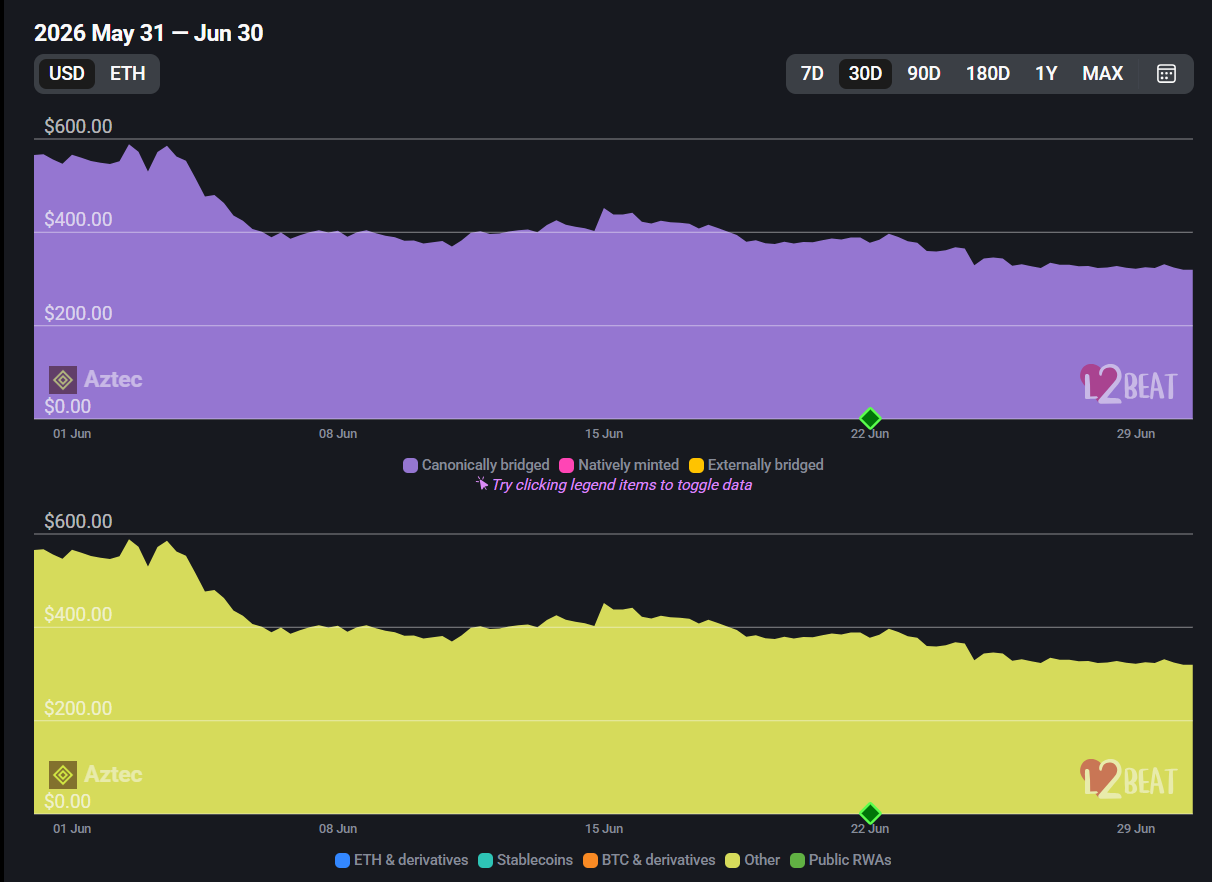
Aztec's TVS fell from over $550 million to roughly $300 million over the last 30 days, but the asset composition stayed mostly unchanged, suggesting that capital outflows took place without significantly altering the network's fundamental asset balance.
Source: Aztec
Aztec is creating the proving infrastructure needed for private smart contracts instead than competing on throughput or transaction costs. The network is getting close to production with a full privacy stack that includes AVM, PXE, CHONK, Noir, and decentralized sequencing, according to its most current roadmap, making it one of the most technically unique zero-knowledge projects to keep an eye on in 2026.
9. Brevis
Confirming computation, as opposed to only transactions, is the next Ethereum proof problem. As DeFi protocols, AI applications, governance systems, and intent-based architectures rely more and more on historical blockchain data, doing those calculations directly on Ethereum becomes prohibitively expensive. Brevis is building the infrastructure to specifically address this problem with its Zero-Knowledge Coprocessor, which allows developers to do complex activities off-chain while giving succinct proofs that Ethereum smart contracts can validate.
Over the previous month, the project's development speed has stayed steady. Throughout June, the Brevis SDK GitHub repository saw consistent contributor activity and frequent contributions, indicating ongoing enhancements to developer infrastructure, SDK tooling, and proof creation rather than discrete feature releases. Because Brevis is promoting itself as basic middleware that can support any Ethereum application requiring verifiable computing, this engineering momentum is noteworthy.
Brevis stands out among proving projects in that it prioritizes programmatic proof production over transaction execution. It extends Ethereum's proving capabilities into areas like governance snapshots, reward distribution, cross-chain verification, AI inference, and on-chain analytics rather than competing in the congested zkEVM industry.
Brevis is one of the most strategically significant proving projects to keep an eye on in 2026 as Ethereum advances toward more modular application architectures and infrastructure that can produce trust-minimized proofs for arbitrary computation may become as crucial as rollups themselves.
Beyond Scaling: Building Ethereum's Proof Economy
The quality of Ethereum's proving infrastructure may start to matter just as much as the apps that are developed on top of it. The ecosystem is confronted with a new set of engineering issues as rollups continue to grow: producing proofs more quickly, lowering proving costs, enabling privacy-preserving execution, validating increasingly complicated calculations, and guaranteeing smooth chain interoperability. Infrastructure that goes well beyond standard Layer 2 scalability is needed to address these issues.
The projects discussed in this article show various methods for resolving that issue. While some are developing programmable privacy layers, decentralized proving marketplaces, or verifiable computation engines, others are increasing the effectiveness of proof generation. Despite the differences in their technological structures, they both aim to make zero-knowledge proofs feasible, scalable, and accessible enough to serve Ethereum's upcoming applications.
The fact that these programs are developing technologies with long-term value rather than short-term market appeal is what makes them especially important. Rather than being discrete breakthroughs supporting a single protocol, faster provers, modular zkVMs, privacy-focused execution environments, and proof coprocessors are evolving into fundamental elements that developers may include into a variety of applications.
As Ethereum moves farther along its rollup-centric route, the discussion is quickly shifting from where transactions are executed to how those transactions, and increasingly arbitrary computations be validated. In addition to making Ethereum more scalable, the projects driving this change are reconsidering how trust is established across the network.
How successfully Ethereum supports everything from cross-chain infrastructure and privacy-preserving systems to financial applications and artificial intelligence will depend on how they grow over the coming years. The networks that perform computation and the proving technologies that allow each computation to be confirmed will have a significant impact on Ethereum's future.
If you find any issues in this article or notice missing information, please feel free to reach out at team@etherworld.co for clarifications or updates.
To promote your Web3 articles, events, and projects, you may reach out anytime via EtherWorld PR for submissions and collaboration.
Related Articles
- Base Mainnet Temporarily Halts Block Production After Invalid Block
- Ethereum's 1% Issuance Plan Sparks Staking Debate
- India FIU Targets Crypto OTC Trades Above $10K
- Taiko Halts Network After Security Breach
- Bengaluru Crypto Firms Under Scrutiny Over Alleged ₹2,500 Crore
To follow blockchain news, track Ethereum protocol progress, and read our latest stories, subscribe to our weekly today.
Disclaimer: The information contained in this website is for general informational purposes only. The content provided on this website, including articles, blog posts, opinions, & analysis related to blockchain technology & cryptocurrencies, is not intended as financial or investment advice. The website & its content should not be relied upon for making financial decisions. Read full disclaimer & privacy policy.
To stay updated on blockchain news, Ethereum protocol progress, and our latest stories, subscribe to our weekly digest and YouTube channel for ELI5 content.
To promote your Web3 articles, events, project updates, and Press Releases, reach out anytime via EtherWorld PR for submissions and collaboration. For other queries, email contact@etherworld.co.
If you’d like to support our work, share the content and consider donating at avarch.eth.
Join our community on Discord and follow us on Twitter, Facebook, LinkedIn & Instagram.

 ×
×

Author

Nidhi Kumari is a Web3 content writer at EtherWorld.co, tracking ecosystem developments, funding activity, and market trends shaping the crypto space.