Why Institutions Are Suddenly Taking Ethereum Seriously?
Discover why institutions are turning to Ethereum for staking, ETFs, stablecoins and tokenisation, and whether its growing influence can last.

Institutions no longer see Ethereum as just a blockchain for crypto trading. Its increasing involvement in decentralised finance, tokenised assets, stablecoins, and on-chain settlement is bringing it considerably closer to the centre of the financial infrastructure. Because Ethereum's architecture is still developing and the network already supports a sizable and vibrant economic ecosystem, major financial institutions are becoming more interested in the platform. Institutions' interest in Ethereum is evolving, but so is their perception of the network as a potential infrastructure for the upcoming financial markets.
Why Ethereum, Why Now?
When three factors improve, i.e., access, regulation, and a strong investment case, institutional investors typically enter new markets. All three are simultaneously advantageous to Ethereum.
Professional investors now have a familiar path into ETH due to the US's approval of spot Ether exchange-traded funds. They no longer need to create a specialised custody system, manage private keys, or employ offshore exchanges. Although it does not eliminate all legal ambiguities of the broader Ethereum ecosystem, the SEC's approval order created a regulated exchange-traded structure for goods holding spot ether.
Additionally, the investment case has grown. As a limited digital asset, Bitcoin is comparatively simple to explain. Ethereum is a settlement network for digital currency, decentralised apps, tokenised funds, and other financial products; it is more difficult to describe, but may be more beneficial.
This intricacy is becoming more and more advantageous. Because they anticipate ETH replacing conventional currency, institutions aren't necessarily purchasing it. They are looking into the possibility that Ethereum could serve as a platform for future financial transactions.
This explains why the interest in cryptocurrencies now differs from previous cycles. The question of "How high can ETH go?" is giving place to "What financial activity will require this network?"
ETH as a Yield-Bearing Asset
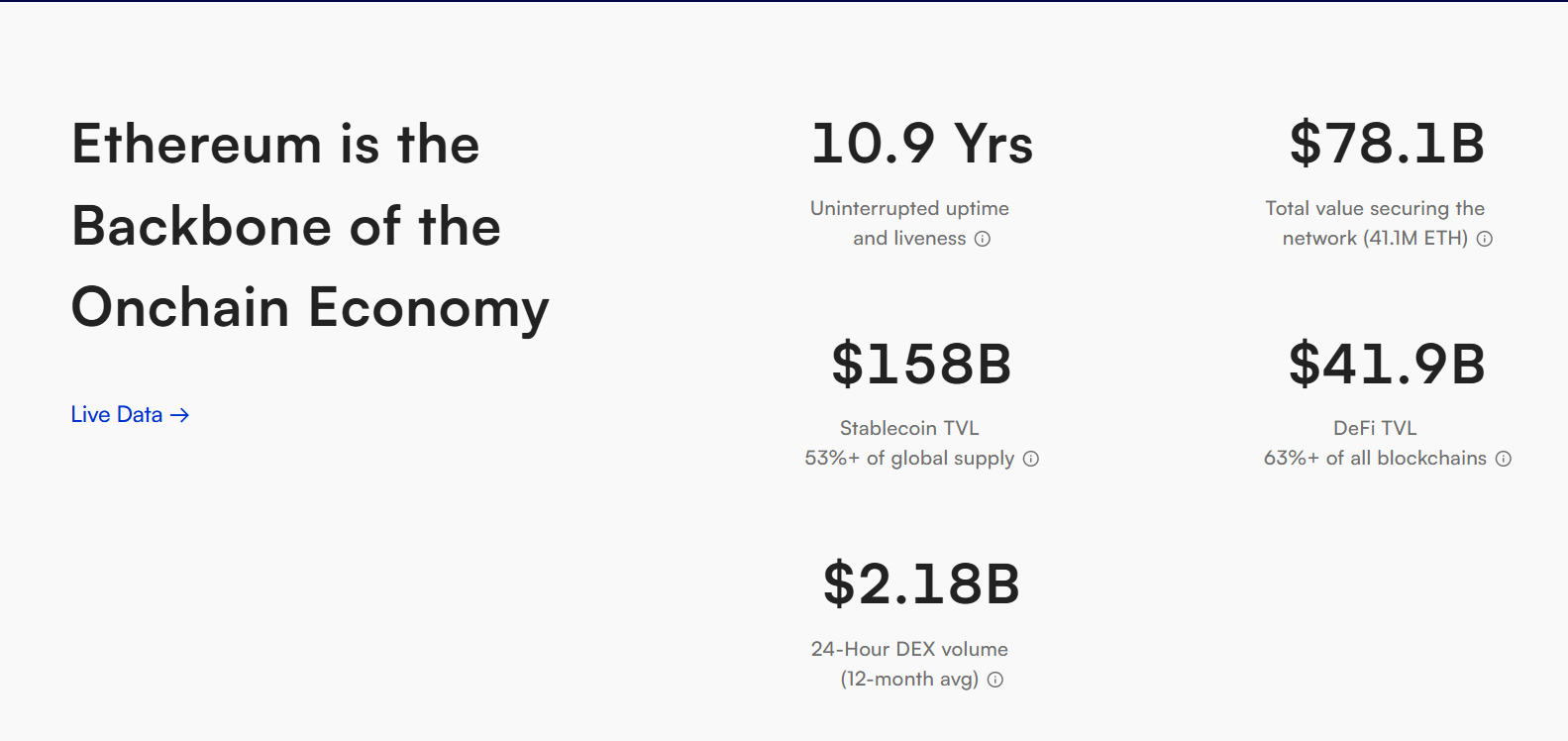
The adoption of proof-of-stake by Ethereum altered investors' perceptions of the cryptocurrency. Rewards are available to holders who stake their coins to help safeguard the network. To put it simply, ETH may offer both an income stream and exposure to the asset's price.
Compared to a non-yielding digital asset, this makes it more recognisable to institutions. The income from other alternative investments, money-market returns, bond rates, and staking rewards can all be compared by portfolio managers. According to Consensys' analysis of the staking ecosystem, investors see staking as more than just a technical feature; they also consider practical issues, including custody, liquidity, counterparty risk, and operational dependability.
However, staking is not the same as a dividend guarantee. In times of stress, the reward rate may fluctuate, the market price of ETH may decline, and staked assets could not be instantly accessible. Because investors rely on a middleman or protocol to represent their staked ETH, liquid-staking solutions introduce an additional level of risk.
Additionally, there is a regulatory issue. The ease with which banks and funds can provide staking services will depend on whether they are seen as investment goods, technological services, or something else. The allure of yield is genuine, but institutions will favour a little lower return with well-defined regulations over a larger return shrouded in legal ambiguity.
Rise of Ethereum Treasury Companies
ETH is being considered as a corporate treasury asset by a new class of publicly traded firms. These companies raise money, purchase ETH, and frequently stake a sizable portion of their holdings. For instance, SharpLink Gaming stated that since implementing its treasury strategy in 2025, it has amassed hundreds of thousands of ETHs and produced staking payouts.
Additionally, Bit Digital has stated that it is not just a traditional cryptocurrency miner but also a treasury and staking organisation with an emphasis on ETH. These companies provide investors a stock-market path to Ethereum exposure, occasionally with extra leverage or an income-generating plan.
Their growth is significant because it makes ETH ownership a corporate capital-allocation choice. A business may claim that owning ETH provides it with an asset with native network utility, staking income, and prospective appreciation. Its shares can be purchased by investors using a regular brokerage account.
Treasury firms, however, can fabricate the appearance of greater demand than is actually present. By issuing shares, convertible debt, or other instruments, many finance these acquisitions. The business might be able to raise more funds and purchase more coins if the stock trades at a significant premium to the value of its ETH. The model loses much of its appeal if that premium is eliminated.
In other words, some of this demand may be reflexive. Rising stock prices enable more ETH purchases, while more purchases support the stock narrative. That cycle can work in a bullish market, but it can reverse quickly.
ETFs & Easier Institutional Access
For institutions, ETFs provide a solution to a significant issue, i.e., operational discomfort. Although they are unable or unwilling to hold ETH directly, a wealth manager or pension fund might be prepared to own an exchange-traded product. An ETF complies with current regulations, reporting frameworks, custody agreements, and compliance procedures.
According to early ownership statistics, the number of institutions participating in Ether ETFs appears to be rising. According to Coinbase Institutional, between two quarterly reporting periods, institutional ownership of US Ether ETF shares jumped from 13.7% to 23.0%. The number of institutional investors also increased. That is not proof of a lasting conviction; rather, it is evidence of increasing participation.

Source: Coinbase
ETFs also facilitate the allocation of portfolios. A small ETH position can be suggested by an advisor without requesting that a client register a cryptocurrency account. Within a well-known market infrastructure, a hedge fund is able to trade the product. Before creating its own custody and staking capabilities, an asset management firm can test demand.
However, access operates both ways. Selling is made easy by the same ETF that facilitates buying. If a blockchain becomes more appealing, rules change, or volatility increases, institutions can lower their exposure with a few orders.
Therefore, rather than providing a guarantee of long-term demand, the ETF is a distribution breakthrough. Both the entry and exit barriers are lowered by it.
Stablecoins, RWAs & Tokenisation
It's possible that Ethereum itself isn't the best institutional case for it. It might be the network activity taking place.
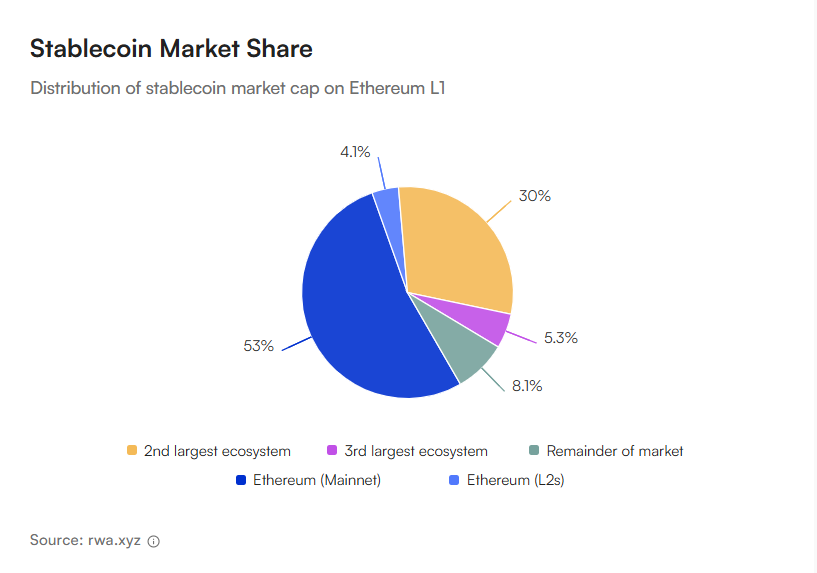
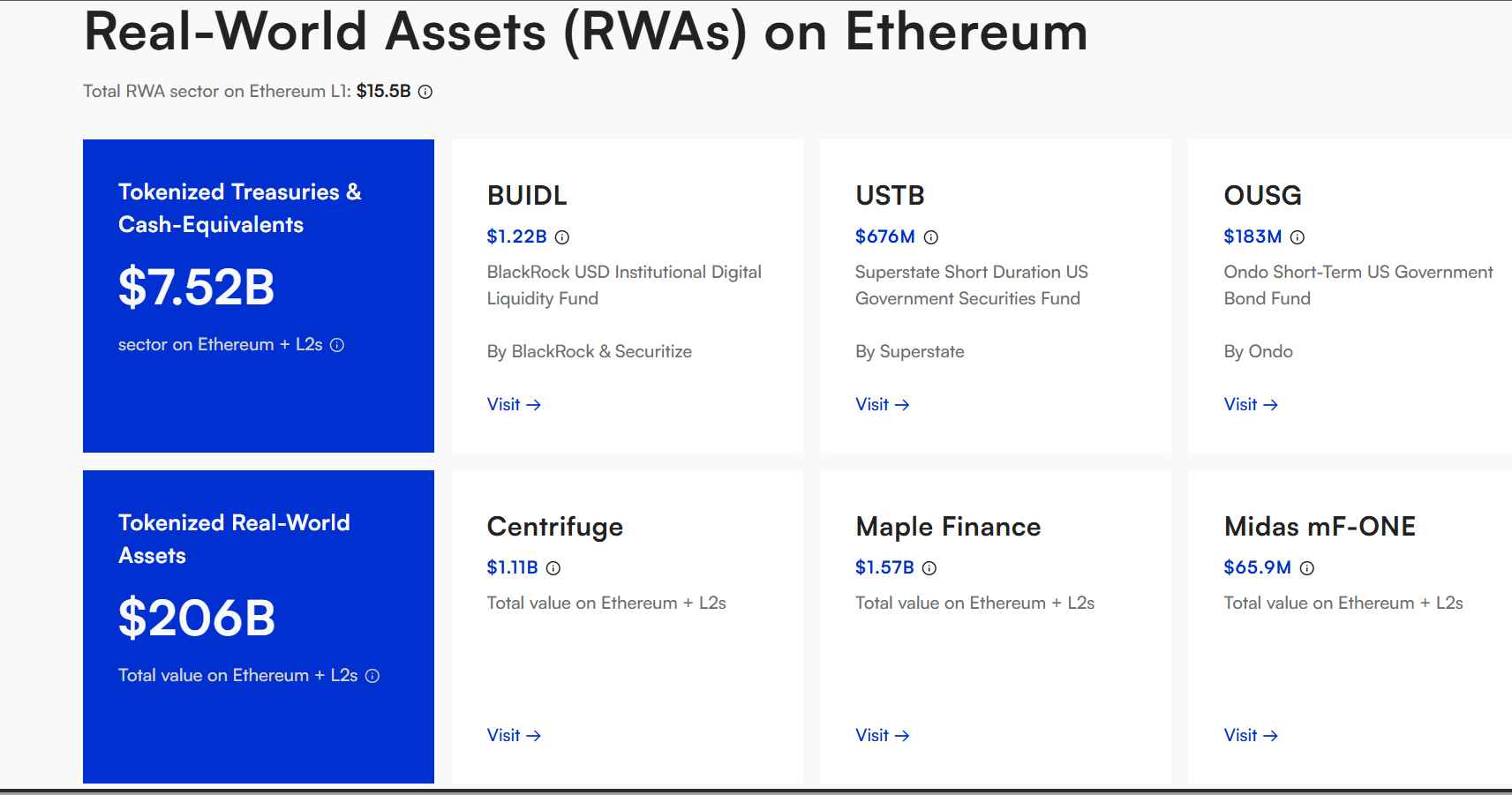
For trading, payments, and transferring funds between platforms, stablecoins, digital tokens created to track currencies like the US dollar, are increasingly crucial. Even though competing networks are rapidly offering lower prices and quicker transactions, Ethereum is still a significant hub for stablecoin activity.
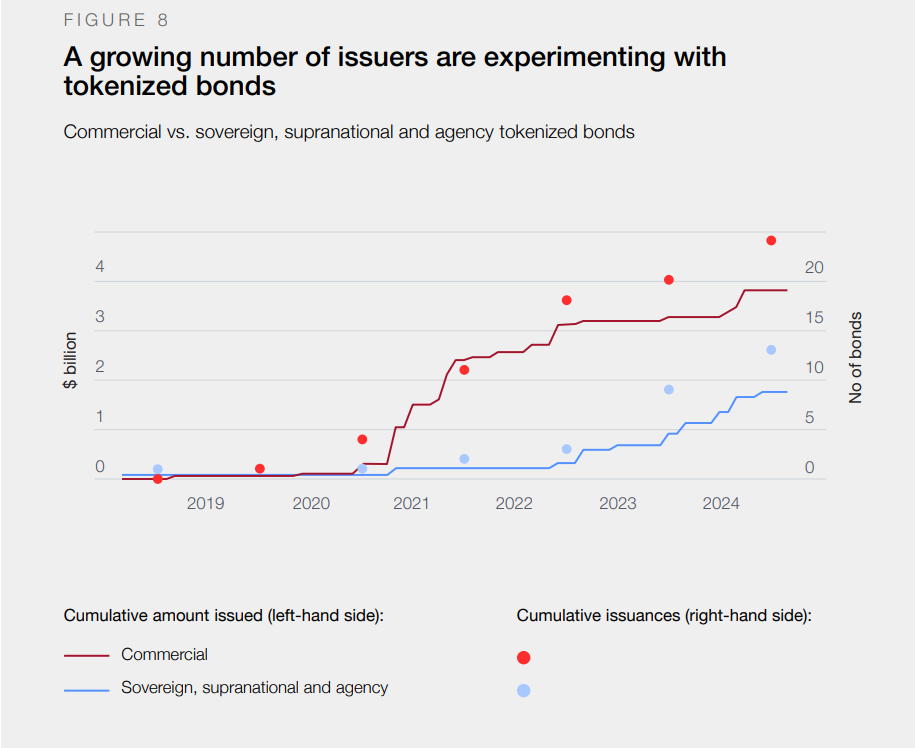
Creating a digital representation of an asset, such as a government bond, fund, or private loan, is known as tokenisation. The promise is simple; assets may be broken into smaller pieces, settlement can occur with fewer middlemen, and ownership records can be updated more quickly.
Source: WEF
According to a study by the World Economic Forum, tokenisation could lead to a redesign of financial-market procedures like asset management, securities financing, and issuing. In a similar vein, the BIS has looked into how tokenised assets and money might alter financial activities and payments while posing new policy issues.
This does not imply that every tokenised asset will reside on Ethereum. Issuers may employ multiple public chains, and banks may favour private or permissioned networks. Ethereum's established developer base, substantial liquidity pool, and extensive ecosystem of wallets, custodians, and apps are its advantages.
One of its weaknesses is that increased ETH value is not an outcome of network activity. Ethereum may be used by a tokenised fund, although end users may need to contribute relatively little. Thus, the relationship between "more use" and "more demand for ETH" is crucial, but it is not guaranteed.
Are Institutions Buying ETH or Ethereum Infrastructure?
The key question is this. Without purchasing significant quantities of ETH, institutions can demonstrate confidence in Ethereum.
A tokenised deposit product can be developed by a bank on an Ethereum-compatible platform. A regulated intermediary may be used by an asset management firm to issue a token fund. Stablecoins can be used by a payments provider that doesn't own much Ethereum. Although the institution is investing in the Ethereum ecosystem in each instance, its financial exposure to ETH may be minimal.
Some companies are purchasing ETH directly because they think network expansion will help the token. Custodians, exchanges, staking companies, analytics companies, layer-two networks, and compliance technologies are among the infrastructure companies that others are purchasing.
For investors, this distinction is important. Even in the case of flat ETH prices, infrastructure firms may receive fees. In contrast, ETH holders are still subject to market sentiment, competition, and the ambiguous relationship between token value and usage.
Therefore, "Ethereum will be useful" rather than "ETH must rise" may be the most enduring institutional assumption. Although such assertions are similar, they are not the same. Without offering outstanding returns to each native token holder, a successful network can sustain profitable enterprises.
Risks to the Institutional Ethereum Thesis
Competition is the first risk. While competing blockchains and layer-two networks fight for users, stablecoins, and apps, Ethereum's primary network may be costly or slow during times of high demand. Ethereum can continue to be significant without maintaining its dominance.
Value capture comes in second. Ethereum may secure the ecosystem while generating less direct economic value than investors anticipate if activity shifts to private systems or scalable networks. Users may benefit from lower fees; however, the quantity of ETH lost due to transaction costs is decreased.
Regulation comes in third. Rules about decentralised finance, tokenised securities, staking, stablecoins, and custody are currently being developed. If compliance costs increase, a product that seems appealing to institutions now might be more difficult to deliver.
Leverage is the fourth. Treasury firms can increase their exposure to ETH by issuing new shares or taking on debt. In a rise, that might lead to more purchases, but in a downturn, it might compel people to make tough choices.
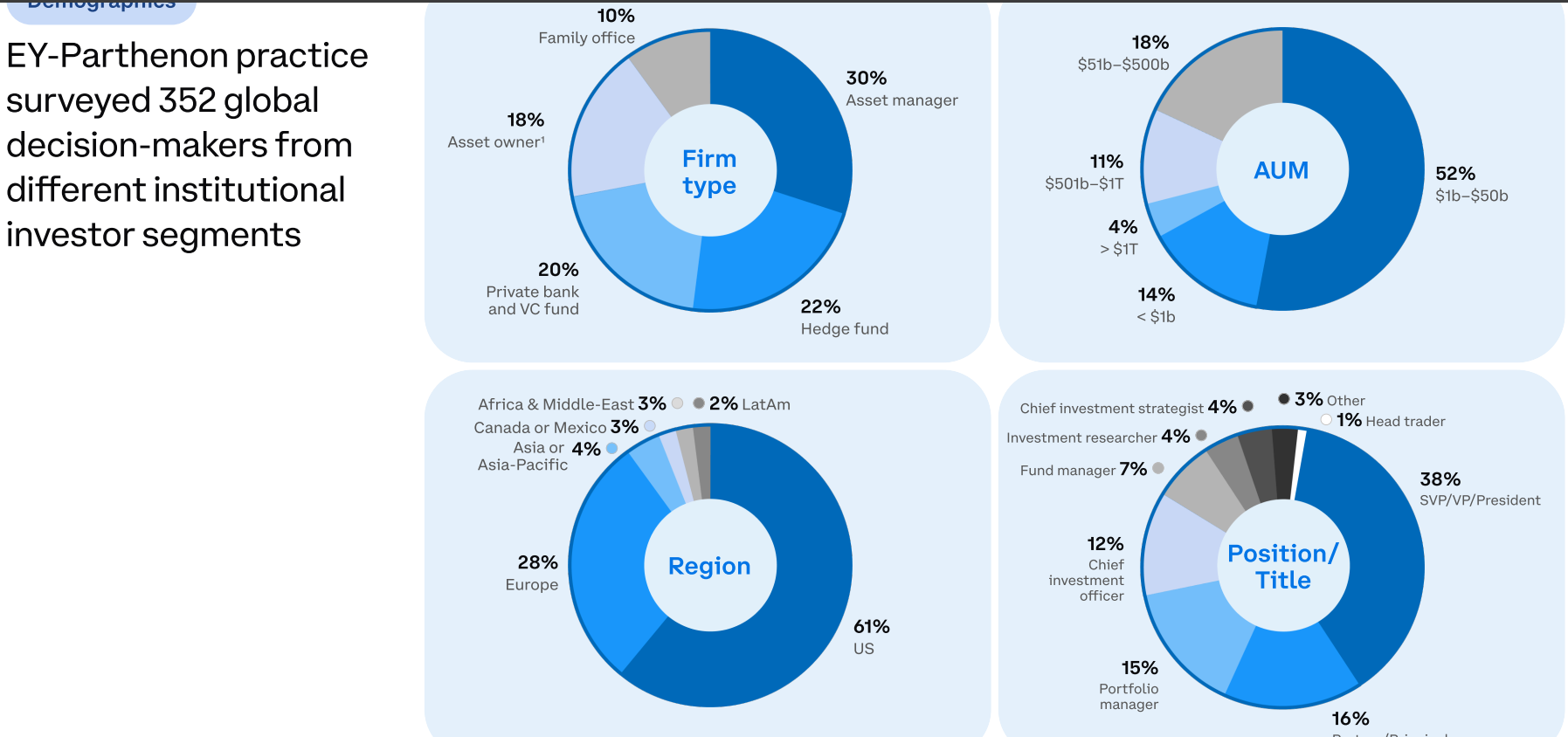
Lastly, institutional interest could change. According to a Coinbase and EY-Parthenon study, a large number of professional investors expressed a great interest in tokenisation and planned to expand their allocations of digital assets. Although they are helpful indications, survey intentions and committed capital are not the same. When interest rates, liquidity, or risk appetite shift, allocations may decrease.
Source: Coinbase & EY-Parthenon study
What Comes Next?
Instead of just growing faster, Ethereum's institutional story is probably going to mature. The next stage will determine if tokenised assets reach significant scale, whether ETH catches enough of that activity to support its worth, and whether experiments become profitable ventures.
Institutions will likely enter through a number of ways, including blockchain infrastructure for practical usage, ETFs for direct exposure, custodians for direct ownership, and staking providers for revenue. Many will stay one step away from ETH, while some will purchase it.
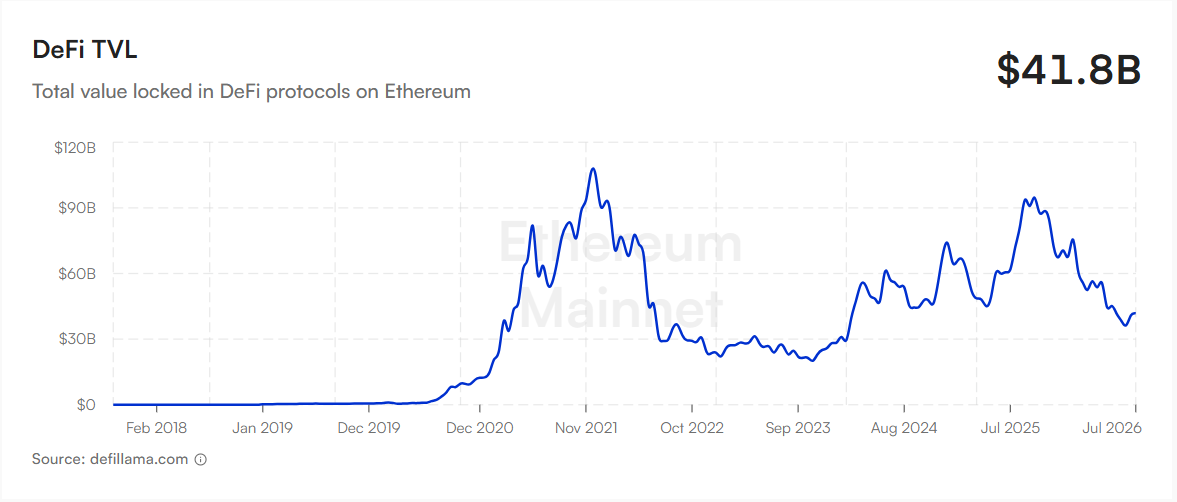
Ethereum's long-term viability is based on its use, liquidity, and trust rather than on reports about corporate purchases. Investors should keep an eye on fee economics, ETF ownership, tokenised asset growth, stablecoin settlement, and staking participation. Adoption is not proven by a single metric.
Because Ethereum now looks more like a market infrastructure project than a coin, it is being taken seriously. That's a higher standard, but it's also a firmer foundation than just guesswork. Institutions will only remain if the network generates consistent economic value and if that value extends beyond the companies that are based on it to ETH.
If you find any issues in this article or notice missing information, please feel free to reach out at team@etherworld.co for clarifications or updates.
To promote your Web3 articles, events, and projects, you may reach out anytime via EtherWorld PR for submissions and collaboration.
Related Articles
- Ethereum’s Issuance Debate: Could Staking Rewards Fall to Zero?
- Why Enterprises Prefer Ethereum Over Private Chains?
- Ethereum Institutional Secures Funding From 100+ Ecosystem Supporters
- Ethereum Foundation Adds Security Expert pcaversaccio to Its Board
- Former EF Privacy Team Launches EthSystems for Institutional Ethereum
To follow blockchain news, track Ethereum protocol progress, and read our latest stories, subscribe to our weekly today.
Join the EtherWorld & Avarch Internship Program and build your career in blockchain, content, social media, video, podcast editing, or operations. Send your resume and brief introduction to contact@etherworld.co.
Disclaimer: The information contained in this website is for general informational purposes only. The content provided on this website, including articles, blog posts, opinions, & analysis related to blockchain technology & cryptocurrencies, is not intended as financial or investment advice. The website & its content should not be relied upon for making financial decisions. Read full disclaimer & privacy policy.
To stay updated on blockchain news, Ethereum protocol progress, and our latest stories, subscribe to our weekly digest and YouTube channel for ELI5 content.
To promote your Web3 articles, events, project updates, and Press Releases, reach out anytime via EtherWorld PR for submissions and collaboration. For other queries, email contact@etherworld.co.
If you’d like to support our work, share the content and consider donating at avarch.eth.
Join our community on Discord and follow us on Twitter, Facebook, LinkedIn & Instagram.

 ×
×

Author

Nidhi Kumari is a Web3 content writer at EtherWorld.co, tracking ecosystem developments, funding activity, and market trends shaping the crypto space.