Is Ethereum Becoming the Internet's Financial Backend?
Ethereum is evolving beyond crypto. Discover how stablecoins, tokenized assets, Layer 2s, and institutional adoption are shaping the internet's financial backend.
Ethereum's potential to become the "world computer" has been a topic of discussion for years. Even though that idea sparked many conversations, something even more significant has been developing, i.e., Ethereum is subtly emerging as the cornerstone of the digital economy. It drives experiences without needing attention, much like the unseen infrastructure of the internet. Billions of dollars' worth of stablecoins are currently in circulation on Ethereum, Layer 2 networks are scaling transactions, financial institutions are tokenising real-world assets, and DeFi is still driving on-chain innovation. All of these changes point to Ethereum's transition from a blockchain to a reliable financial settlement layer. But is it really becoming the financial backbone of the internet?
Let's Explore!
Ethereum Is No Longer Just a Blockchain
Imagine describing to someone how a merchant receives an online payment. You would most likely bring up your payment gateway or banking app, but you wouldn't discuss the intricate architecture that operates in the background. This is due to the fact that users are more interested in experiences than in the technology that makes them possible.
Ethereum is subject to the same stipulation.
Gas fees, NFTs, and speculative markets dominated discussions about Ethereum for years. Even if such subjects are still relevant, the network has gradually grown into something much more. Ethereum is being seen more and more as a digital financial infrastructure, a reliable settlement layer that can support entire economies, institutions, and applications.
Furthermore, this story isn't merely optimistic. The fundamentals of the network tell an interesting narrative.
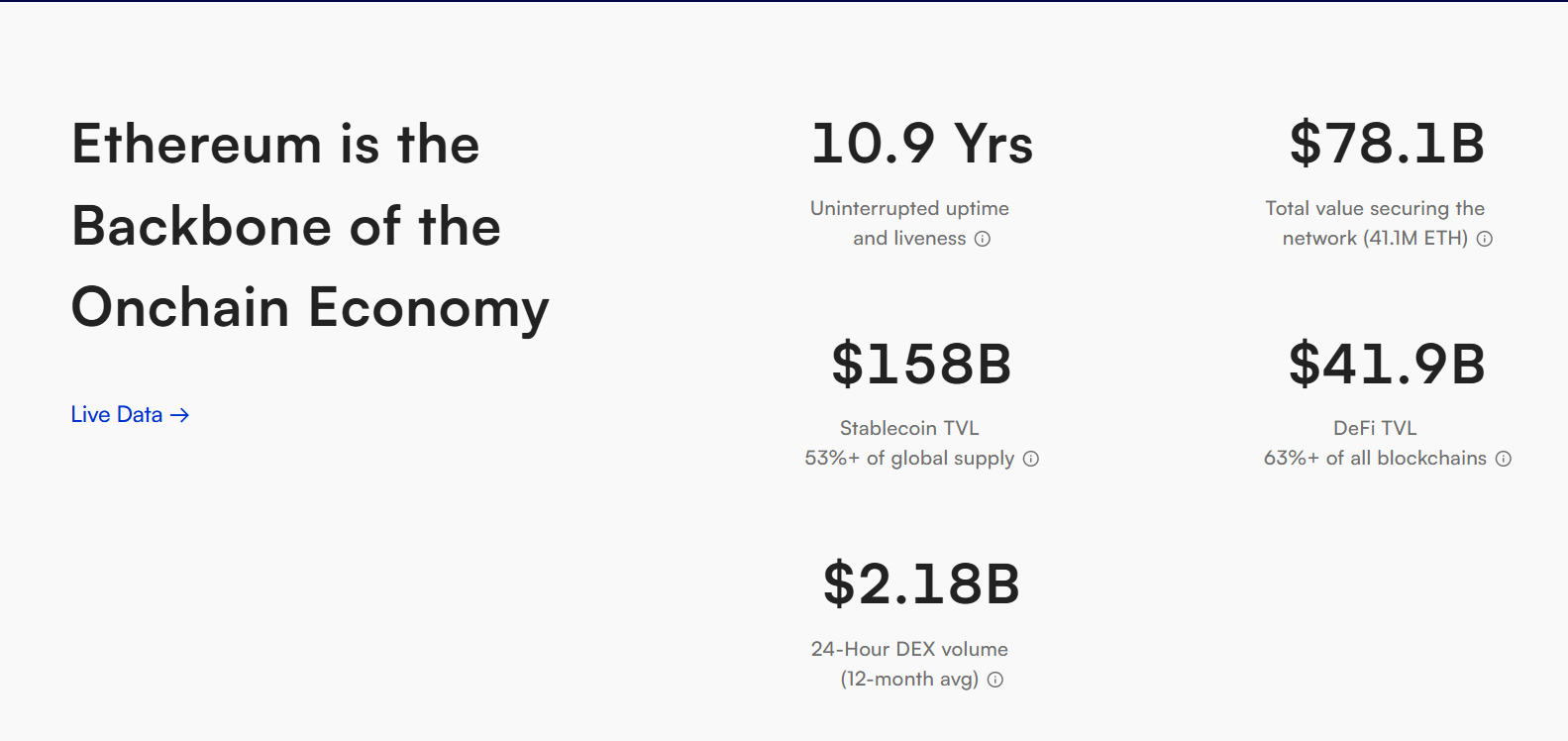
As of this writing, Ethereum has a market capitalisation of $235 billion and a total value of $267 billion. More significantly, the network is currently secured by more than 41.1 million ETH, or around $79.1 billion. Ethereum now has a security ratio of 3.4x, which strengthens the blockchain's financial stability.
Its reliability is arguably the most disregarded metric. Over 10.9 years of continuous uptime and liveness have been provided by Ethereum. That track record has grown to be one of Ethereum's greatest competitive advantages in a market where resilience is just as important as innovation.
Source: Ethereum
These figures demonstrate why companies are becoming more comfortable with Ethereum. Financial infrastructure gains trust by demonstrating its ability to function safely, reliably, and at scale; it is not picked because it is exciting. For the past 10 years, Ethereum has done just that.
A larger change in ecosystems is also reflected in this transition. As we covered in Ethereum Foundation Redraws the Map Between L1 & L2, putting every transaction onto a single blockchain is no longer the goal of Ethereum's plan. Rather, it's about building a safe base that permits the growth of an entire network and application ecosystem while maintaining a common trust layer.
That's a very different, and possibly more significant, role than the one Ethereum began with.
Why Stablecoins Changed Everything?
Don't start by examining token prices if you want to know where finance is going. Rather, follow the actual flow of money.
Stablecoins have quietly emerged as one of blockchain's most useful developments during the past few years. Their value is not influenced by speculation, in contrast to many cryptocurrency-based assets. They are being utilised more frequently to support on-chain financial services, settle payments, enable cross-border transfers, and supply liquidity. In many respects, stablecoins have emerged as the link between blockchain infrastructure and conventional finance.
In the middle of that bridge is Ethereum.
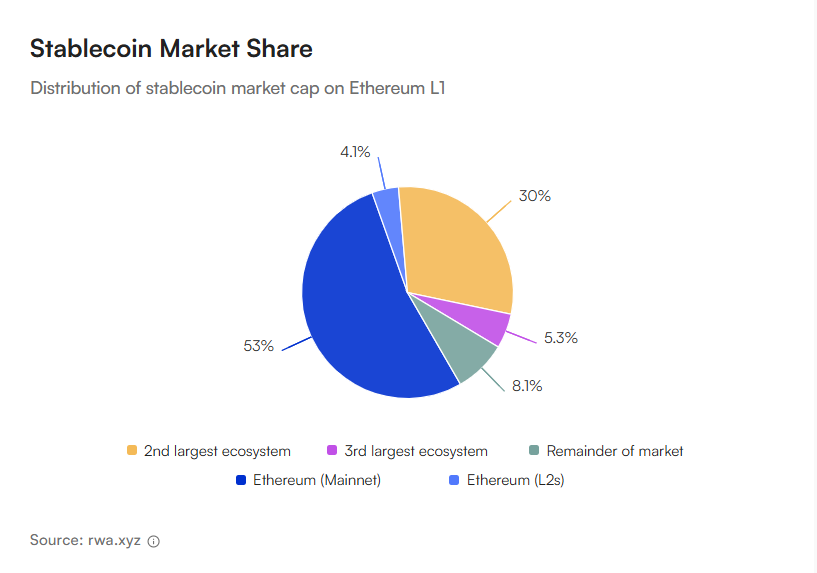
Ethereum's institutional data indicates that the Ethereum Mainnet now holds about $158 billion in stablecoins, with an additional $12.2 billion coming from its Layer 2 ecosystem. The Ethereum ecosystem is the largest digital currency settlement network, accounting for about 53% of the global stablecoin supply.
Source: Ethereum
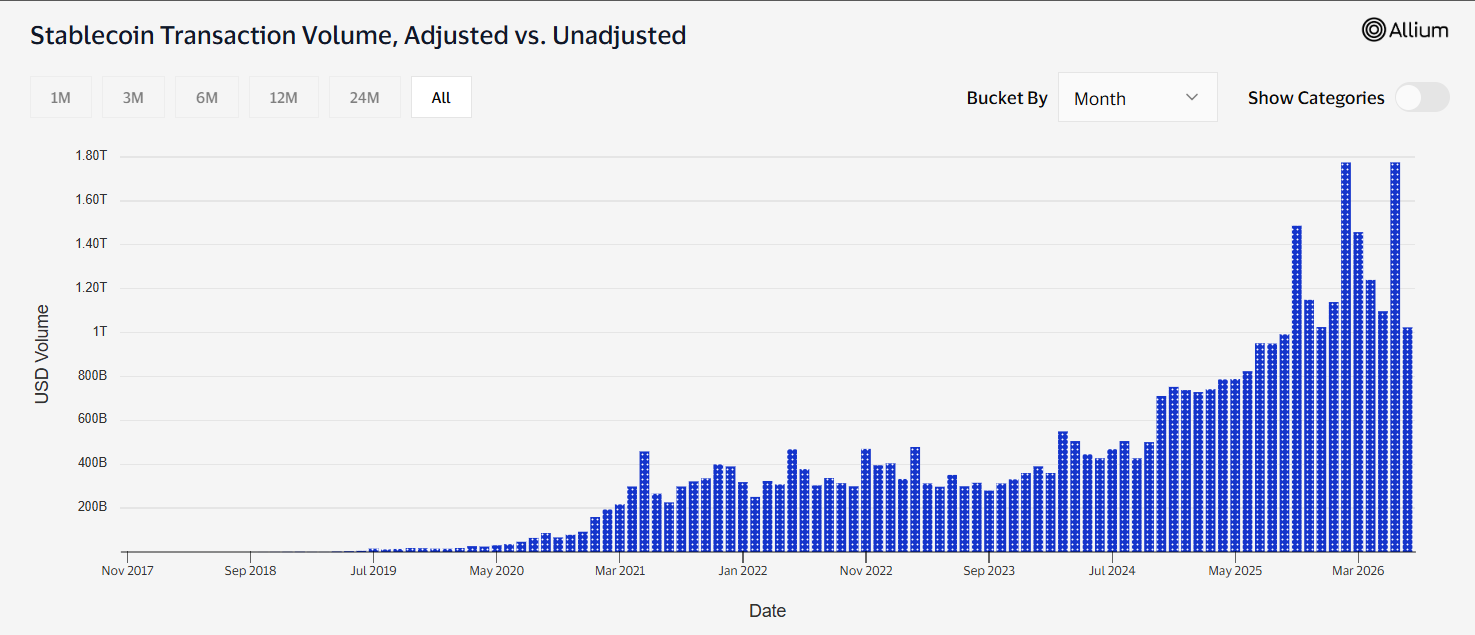
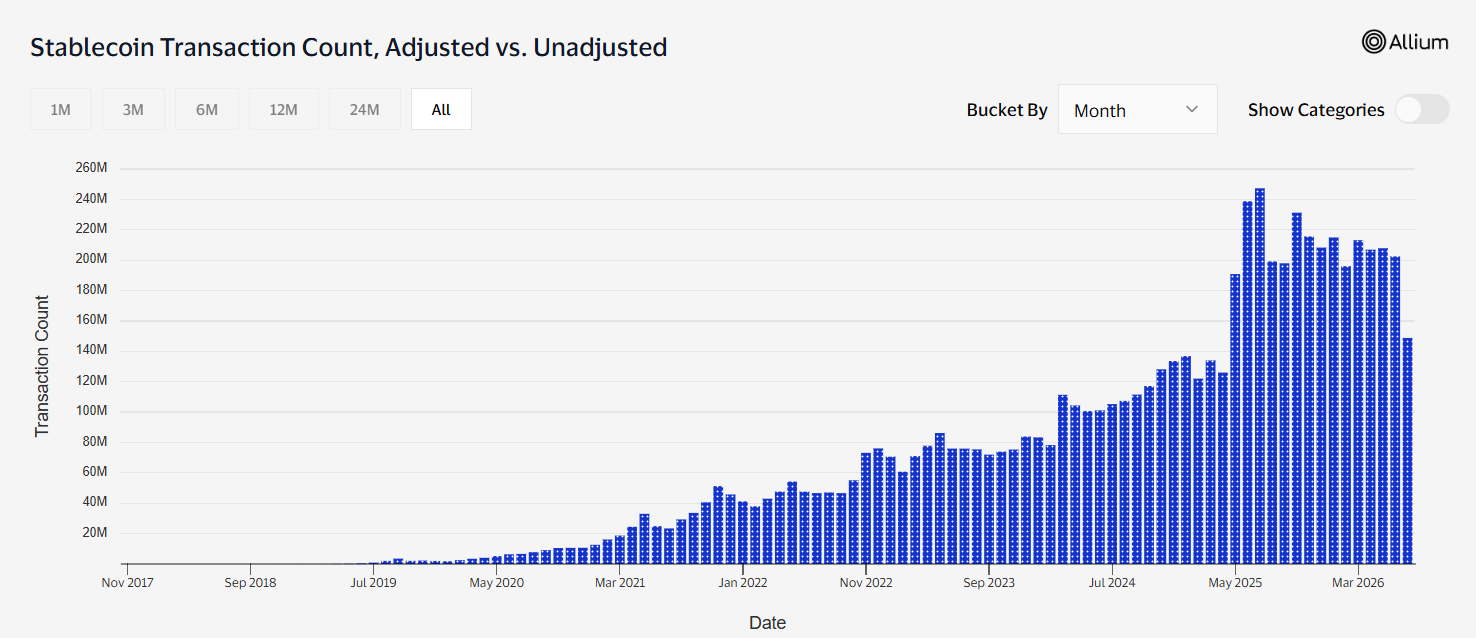
When you look beyond the supply numbers and concentrate on execution, that leadership takes on even greater significance. Over the past few years, stablecoin transaction volumes have increased significantly, regularly surpassing a trillion dollars in monthly adjusted volume. Simultaneously, the number of transactions has increased gradually, indicating an increase in engagement from decentralised applications, companies, users, and payment providers.
The above trends imply that stablecoins are no longer considered a niche cryptocurrency. They are increasingly acting as real financial infrastructure, facilitating everything from decentralised financing and on-chain payments to remittances and international trade. Additionally, Ethereum is frequently the network that provides the settlement layer underneath those digital dollars whenever they are transferred.
In our blog Does India Need Stablecoins When UPI Already Works?, we looked at one aspect of this change. The topic of discussion was not which payment method to choose. Rather, it demonstrated how stablecoins enable programmable, borderless, and always-on financial transactions that enhance rather than replace the current payment infrastructure.
Ethereum's increasing dominance in the stablecoin market is crucial because of this. It indicates that companies are increasingly depending on blockchain to move value effectively throughout a global digital economy rather than just experimenting with it.
The Secret Behind Ethereum's Scalability
Scalability has been a major point of criticism for Ethereum over the years. Many questioned if Ethereum could ever sustain widespread adoption as network activity rose along with congestion and transaction costs.
Ethereum used a different strategy rather than attempting to address every issue on a single chain.
Layer 2 networks, independent execution environments that effectively process transactions while depending on Ethereum for security and final settlement, are the foundation of its long-term goal. These networks expand Ethereum's capabilities rather than taking its place, enabling the ecosystem to grow without compromising the confidence that the main chain has worked so hard to build.
This approach is no longer theoretical.
There are currently 109 active Layer 2 networks in the Ethereum ecosystem, which together secure more than $34 billion in value. Rollups make up the majority of this activity. While continuing back to Ethereum, these Layer 2s are managing a growing portion of blockchain activity, from games and payments to decentralised exchanges and enterprise applications.
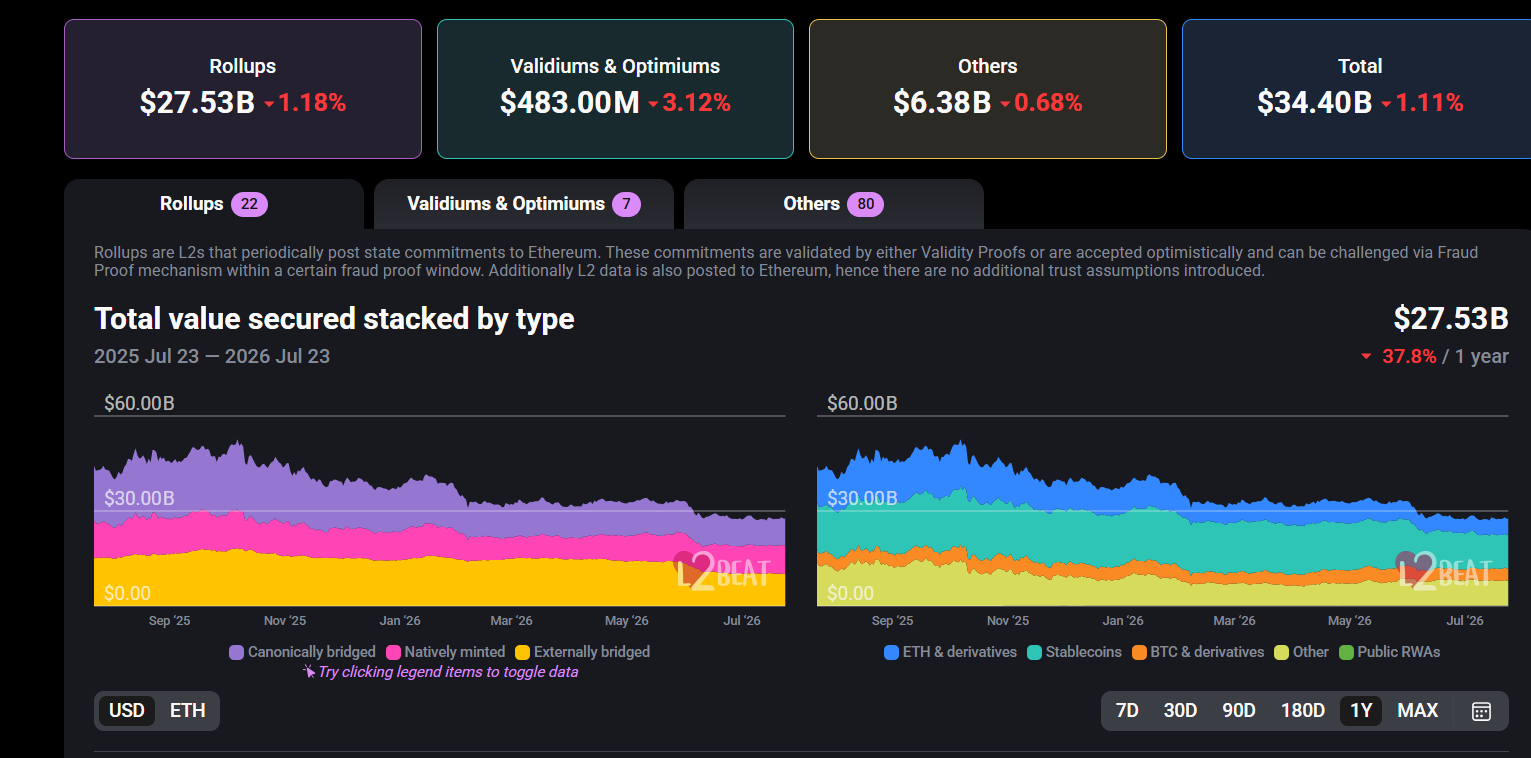
Similar changes were made to the internet itself. The web is powered by numerous websites, services, and applications that rely on common protocols to enable interoperability. Ethereum is starting to emulate that design. It's evolving into the standard settlement layer that many networks rely on rather than attempting to be the sole blockchain that people use.
Although it might seem like a small difference, it has a significant impact on how we view Ethereum's future. The number of transactions that take place directly on the main chain will not necessarily be used to gauge its success. Rather, the number of ecosystems, apps, and users that silently depend on Ethereum's security without ever having to think about it will be the increasingly important metric.
When Traditional Finance Meets Ethereum
Blockchain was once thought to be an experiment taking place outside of traditional finance. Regulators maintained caution, banks watched from the sidelines, and the majority of institutional discussion focused on whether blockchain technology would ever be beneficial.
The last two years have seen a significant shift in that dialogue.
Some of the biggest financial organisations in the world are now investigating how to develop financial products on top of blockchain rather than questioning whether it has a future. Real-world assets (RWAs) are continuously flowing on-chain, from tokenised government funds to money market instruments and private credit, and Ethereum has become the favoured destination for a large portion of that activity.
The reason isn't difficult to understand.
Financial organisations don't just pick the blockchain with the fastest speed. They require infrastructure that has proven long-term reliability, safety, decentralisation, and developer support. Ethereum has been developing those attributes for a decade or more.
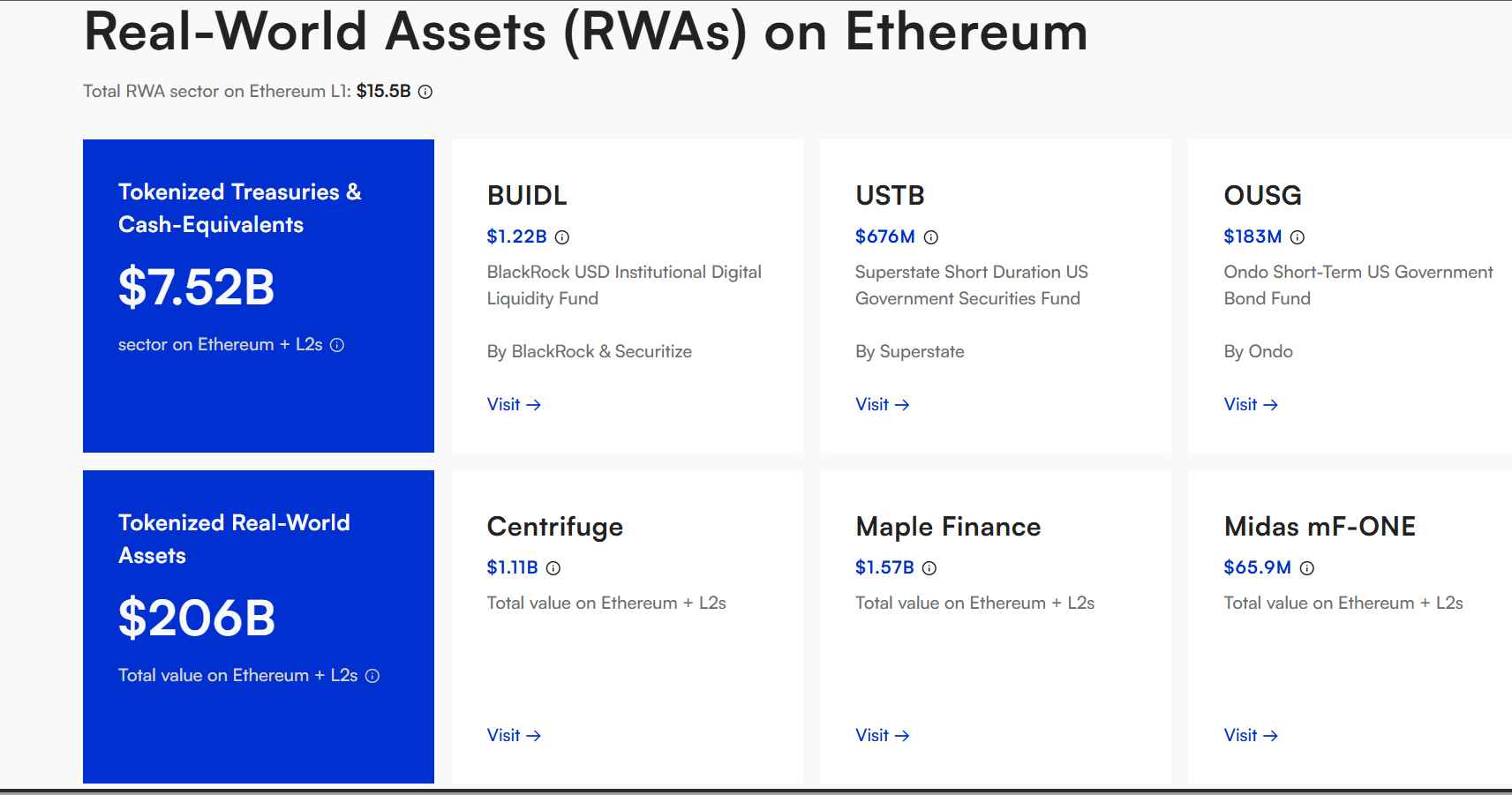
The figures show an increase in confidence. Over $7.5 billion worth of real-world assets are currently tokenised on Ethereum, accounting for over 75% of the entire tokenised RWA market, according to Ethereum's institutional dashboard. Hundreds of tokenised assets are also included in the ecosystem, including commodities, private credit, institutional funds, and U.S. Treasury instruments.
Looking at the growth over time gives it even greater significance. The value of tokenised assets on public blockchains has increased significantly in recent years due to the growing involvement of financial institutions and global asset managers. What was before seen as a specialised effort is now playing a significant role in the larger financial system.
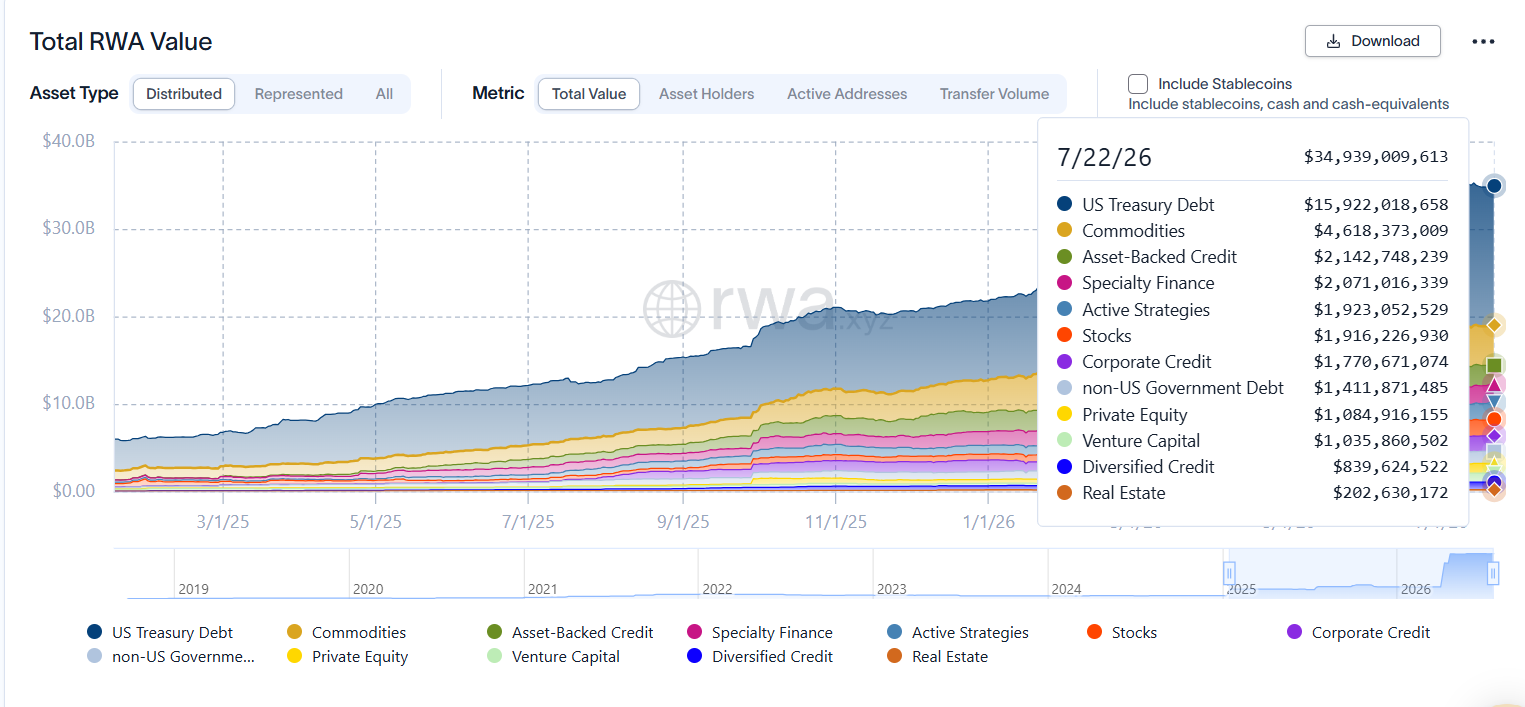
In our previous article on Real-World Asset (RWA) Tokenisation, we examined this change and talked about how tokenisation is more than simply adding current assets to a blockchain. The goal is to build a financial system that allows assets to settle rapidly, move faster, and work in sync with other digital apps. Ethereum's increasing prominence in this sector indicates that it is becoming the infrastructure for digital capital markets rather than just a cryptocurrency platform.
Why Developers & Capital Keep Choosing Ethereum?
Infrastructure is only useful if people use it. Ethereum continues to set itself apart from numerous other blockchain ecosystems in this regard.
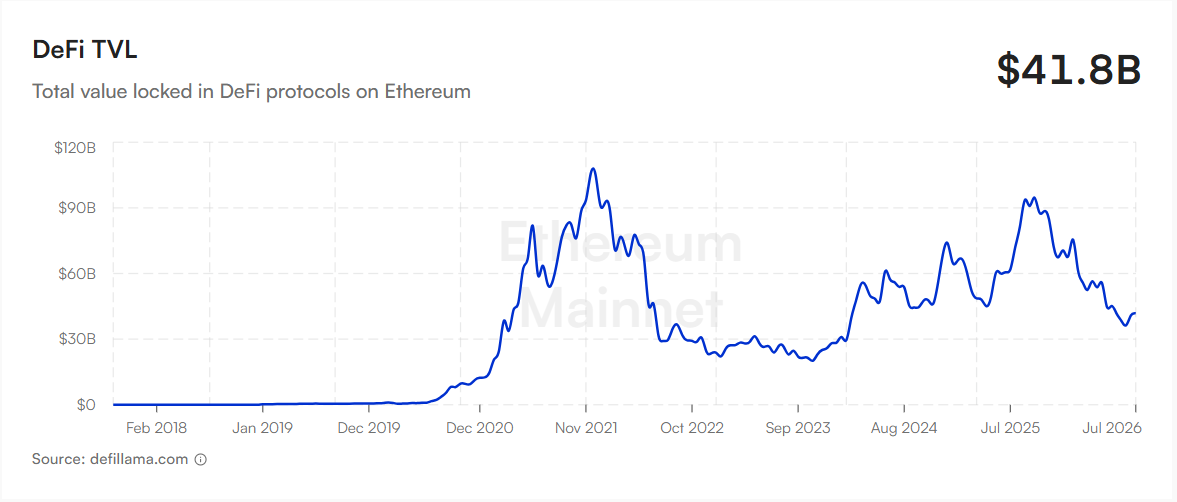
The network presently secures $41.9 billion in Total Value Locked (TVL) across DeFi protocols, making up more than 63% of the entire DeFi market across all blockchains, according to Ethereum's most recent institutional data. Furthermore, Ethereum is the most active decentralised financial ecosystem in the sector, processing about $2.18 billion in decentralised exchange (DEX) trade volume per 24 hours.
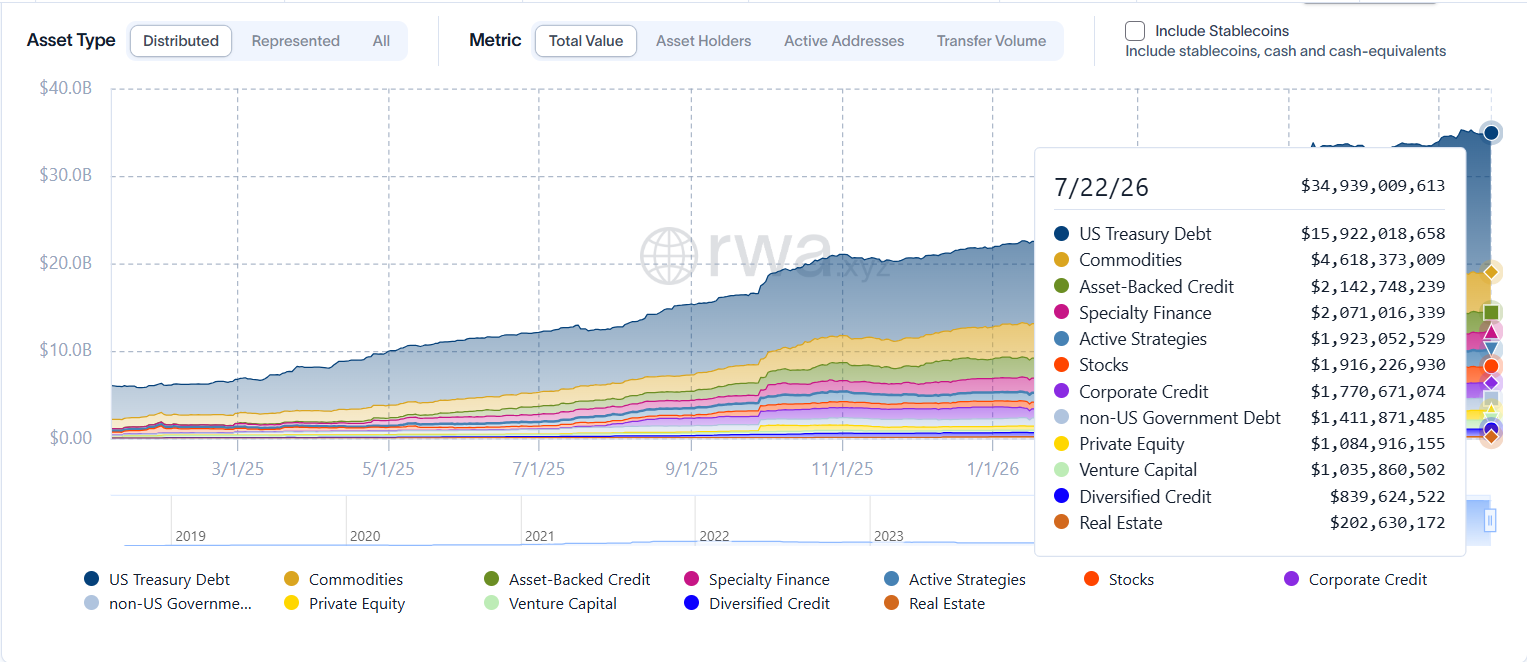
These figures are significant because they show network effects, which go beyond adoption.
Since Ethereum already has liquidity, developers keep expanding on it. Because the applications are on Ethereum, users are still using it. Since Ethereum is where developers, infrastructure providers, and financial tools have developed over the last ten years, institutions are experimenting with it.
This produces an effective feedback loop.
For the next builder, the ecosystem is strengthened by each new application. The network becomes more useful with every dollar of added liquidity. The security of the larger ecosystem is further strengthened by each Layer 2 that returns to Ethereum.
The evolution of the internet is strikingly comparable to this. Because everyone else was using the same standards, developers built on HTTP, not because HTTP was exciting. Ethereum seems to be pursuing digital banking similarly.
Making Blockchain Feel Like the Internet
Ethereum still has one obstacle to mainstream adoption. The majority of individuals have little or no interest in learning how blockchain operates.
They don't want to find out which network they are linked to, worry about gas fees, or maintain a seed phrase. They just want functional apps.
Fortunately, Ethereum is concentrating its next wave of innovation there.
Account Abstraction, one of the most promising innovations, seeks to make blockchain wallets as user-friendly as contemporary mobile apps. Much of the complexity that has historically deterred new users can be eliminated with features like programmable permissions, sponsored gas fees, transaction batching, passkey logins, and social recovery.
This was covered in our article on Account Abstraction, where we talked about how enhancing the user experience might ultimately be more crucial than boosting transaction speed. After all, it wasn't because networking protocols were widely known that the internet became popular; rather, it was because browsers caused the technology to disappear.
Ethereum seems to be operating under the same tenets.
Future users won't even be aware that Ethereum is operating in the background when they use stablecoins for payments, invest in tokenised assets, borrow money through decentralised apps, or communicate with AI-powered financial assistants.
Paradoxically, that might end up being Ethereum's biggest success.
So, Is Ethereum Becoming the Internet's Financial Backend?
Nobody can give a definitive answer to that question.
The blockchain sector is still developing quickly, and Ethereum has to deal with competition from other high-performance networks, evolving laws, and the ongoing difficulty of growing to accommodate billions of users. The future is yet unknown.
However, a distinct pattern starts to show if we assess Ethereum based on its trajectory rather than the headlines it makes.
The network protects itself with $79.1 billion worth of staked ETH, has provided 10.9 years of continuous uptime, hosts $158 billion in stablecoins on Layer 1 and another $12.2 billion across Layer 2s, supports 109 active Layer 2 networks, powers over $41.9 billion in DeFi liquidity, facilitates $2.18 billion in daily decentralized exchange volume, and holds more than 75% of the tokenized real-world asset market.
Each of these figures, taken separately, reveals a captivating story. When combined, they convey a far greater message.
They contend that Ethereum is becoming an ecosystem that developers, financial institutions, and other apps depend on more and more, rather than just a blockchain competing for customers.
Maybe that's what the financial backend of the internet will look like.
Not a single application. Not a single company. Not even a technology that the majority of people actively utilise.
Rather, it will be a reliable infrastructure that connects markets, assets, payments, and applications in a transparent manner.
It remains to be seen if Ethereum will eventually become that layer. However, it's getting harder to rule out the possibility after seeing where the capital is going, where institutions are developing, and where developers are still coming up with new ideas.
And if Ethereum does achieve that vision, its greatest success won't be that everyone knows its name.
It will be that billions of people benefit from it without ever realising it's there.
If you find any issues in this article or notice missing information, please feel free to reach out at team@etherworld.co for clarifications or updates.
To promote your Web3 articles, events, and projects, you may reach out anytime via EtherWorld PR for submissions and collaboration.
Related Articles
- Ethereum Foundation Completes Five-Year Argot Funding Deal
- Proving Ethereum: 9 ZK Projects to Watch in 2026
- Tracking the Glamsterdam Upgrade on EIPsInsight
- Vitalik Buterin Explains Cryptography’s “Final Boss”
- Ethereum's 1% Issuance Plan Sparks Staking Debate
To follow blockchain news, track Ethereum protocol progress, and read our latest stories, subscribe to our weekly today.
Join the EtherWorld & Avarch Internship Program and build your career in blockchain, content, social media, video, podcast editing, or operations. Send your resume and brief introduction to contact@etherworld.co.
Disclaimer: The information contained in this website is for general informational purposes only. The content provided on this website, including articles, blog posts, opinions, & analysis related to blockchain technology & cryptocurrencies, is not intended as financial or investment advice. The website & its content should not be relied upon for making financial decisions. Read full disclaimer & privacy policy.
To stay updated on blockchain news, Ethereum protocol progress, and our latest stories, subscribe to our weekly digest and YouTube channel for ELI5 content.
To promote your Web3 articles, events, project updates, and Press Releases, reach out anytime via EtherWorld PR for submissions and collaboration. For other queries, email contact@etherworld.co.
If you’d like to support our work, share the content and consider donating at avarch.eth.
Join our community on Discord and follow us on Twitter, Facebook, LinkedIn & Instagram.

 ×
×

Author

Nidhi Kumari is a Web3 content writer at EtherWorld.co, tracking ecosystem developments, funding activity, and market trends shaping the crypto space.