Top 10 AI-Blockchain Projects to Watch in 2026
Discover the top 10 AI-blockchain projects shaping 2026, from decentralized AI networks & agent economies to compute marketplaces, data infrastructure, & programmable IP.

In 2026, the amalgamation of blockchain technology and artificial intelligence is one of the most revolutionary developments. Blockchain-based initiatives are developing decentralised alternatives to centralised AI models in response to growing concerns about data privacy, censorship, high computing costs, and single points of failure. Through the creation of open marketplaces for compute, data, agents, and intellectual property, these initiatives promote increased resilience, fair pay for contributors, and permissionless innovation.
With better tokenomics, practical application in AI inference and agent economies, and more institutional interest, the industry has developed quickly this year. The Top 10 AI + Blockchain initiatives that are worth keeping an eye on are listed below, broadly sorted by their potential for innovation and current momentum. Each provides special benefits for resolving important bottlenecks in the AI stack.
- Bittensor (TAO)
- Render Network (RENDER)
- Artificial Superintelligence Alliance (ASI / FET)
- NEAR Protocol (NEAR)
- Internet Computer (ICP)
- Nosana
- Akash Network
- Virtuals Protocol
- Nuklai
- Story Protocol
Bittensor (TAO)
Bittensor sets itself apart with its Yuma Consensus and subnet system, which establishes a real-time machine intelligence market. In order to score miner outputs across specialized subnets, validators stake TAO. This allows them to dynamically allocate rewards based on relative performance instead of set rules.
It is worth watching since it uses adversarial scoring to address quality assessment in decentralized AI and directly sells intelligence as a commodity. The closest thing to an actual open intelligence economy is produced by this approach, which permits emergent specialization and self-pruning of low-value subnets.
Source: Bittensor
Render Network (RENDER)
With its Octane-powered decentralized GPU pipeline created especially for generative AI inference and high-fidelity 3D rendering, Render Network stands out. It implements dynamic pricing and priority queuing and verifies output validity using zero-knowledge proofs and trustless task matching.
It effectively addresses GPU resource fragmentation and coordination issues, making it worthwhile to watch. For real-time AI tasks like video production, the close feedback loop between usage and token burning produces sustainable economics that offer much cheaper prices and quicker turnaround than centralized solutions without sacrificing quality.
Source: Render Network
Artificial Superintelligence Alliance (ASI / FET)
The integrated agent architecture, service registry, and data marketplace that allow for verified agent-to-agent negotiation, execution, and reputation score are what set ASI apart. Through the merging, previously disparate ecosystems can now share liquidity and use uniform communication methods.
It deserves consideration as a large-scale solution for multi-agent coordination. Its credential system and federated learning incentives provide the practical foundation for trust-minimized, credible agent economies by enabling intricate autonomous workflows and economic interactions that isolated initiatives are unable to accomplish.
Source: Artificial Superintelligence Alliance
NEAR Protocol (NEAR)
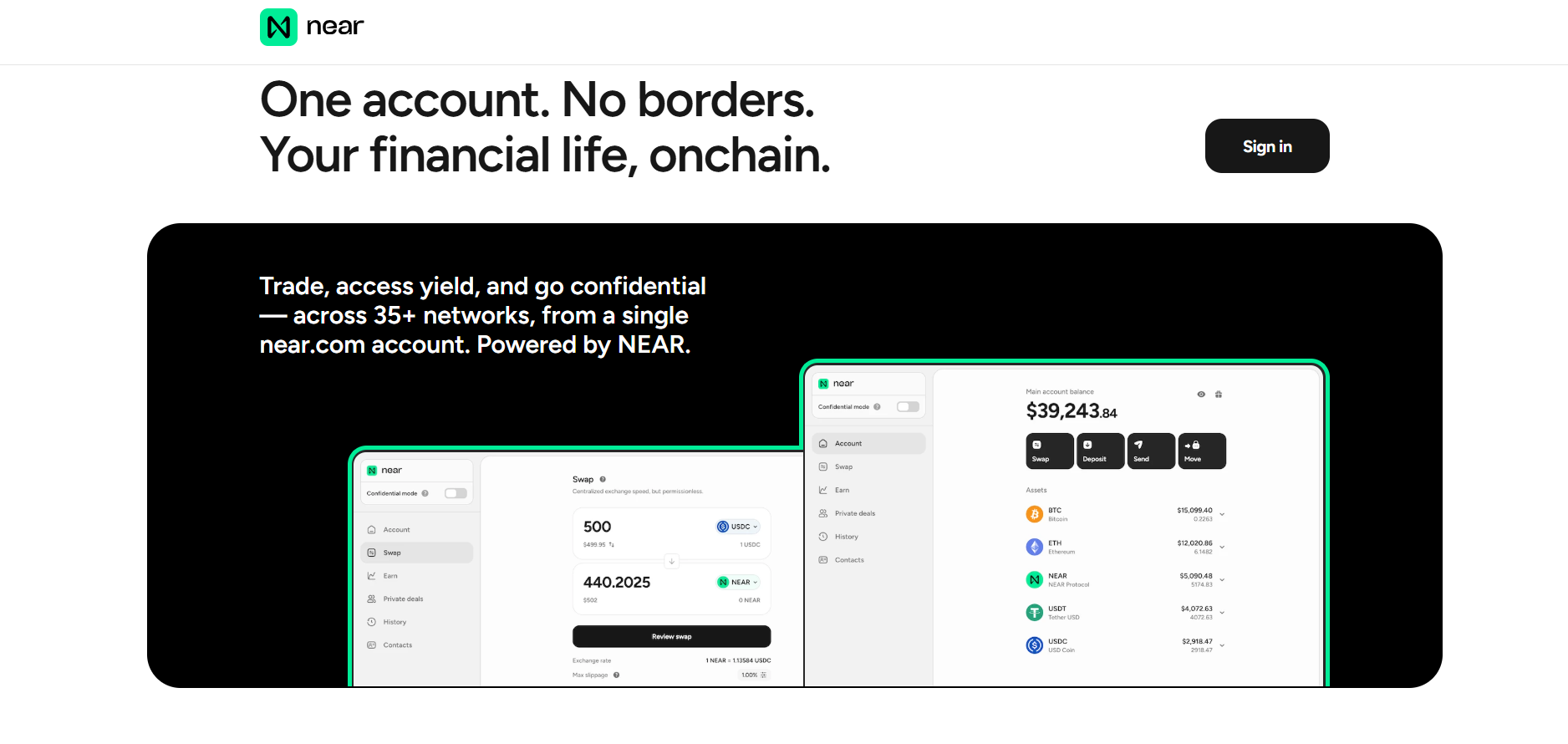
For private AI inference that runs directly on validators, NEAR distinguishes itself by combining Nightshade sharding with confidential compute. Persistent agents that store state and carry out intricate DeFi or cross-chain actions with sub-second finality are supported by its agent harness.
Its emphasis on practical usability in agent economies makes it worth keeping an eye on. For consumer-scale autonomous agents, low costs, account abstraction, and MPC privacy features significantly lower friction, enabling complex AI applications at scale.
Source: NEAR
Internet Computer (ICP)
Internet Computer is the only company that uses chain-key cryptography to execute AI inference natively inside Container smart contracts, removing the need for external oracles for certain workloads. Because of its deterministic replication, every node will produce identical results.
With reverse gas costs and unchangeable code, it offers true full-stack sovereignty and merits consideration. This design makes it possible for web-scale AI systems that are resistant to censorship and where data ownership and maximal trust reduction are crucial.
Source: Internet Computer
Nosana
Nosana specializes in a decentralized GPU grid based on Solana with slashing for uptime enforcement and staking-backed job queues. One-click model deployment with verified execution receipts and dynamic node allocation depending on model needs is made possible by its containerized templates.
As it offers specialized high-throughput inference that is specifically tailored for Solana's speed and low latency, it is worth watching. By offering affordable, composable access to GPUs with native integration for payments and oracles, the architecture performs exceptionally well in bursty generative AI and agent workloads, enabling smaller developers to access advanced inference without depending on generalized computing networks.
Source: Nosana
Akash Network
Akash puts into practice the idea of a reverse cloud marketplace, in which suppliers use a decentralised order book to bid on containerised workloads. This is extended to AI inference by AkashML, making it possible to deploy open models at a reasonable cost. Analytically, it reveals the financial inefficiencies of centralised cloud pricing and adds slicing and reputation methods to guarantee dependability.
The project's strength is its Kubernetes-compatible interface, which speeds up adoption and reduces switching costs. The idea that computational sovereignty and market efficiency are not mutually exclusive is conceptually advanced.
In order to create true market-driven pricing using provider reputation mechanics with slashing and reverse auctions, it is important keeping an eye on. This ensures dependability, reduces obstacles for AI developers, and directly attacks centralized cloud profits.

Source: Akash Network
Virtuals Protocol
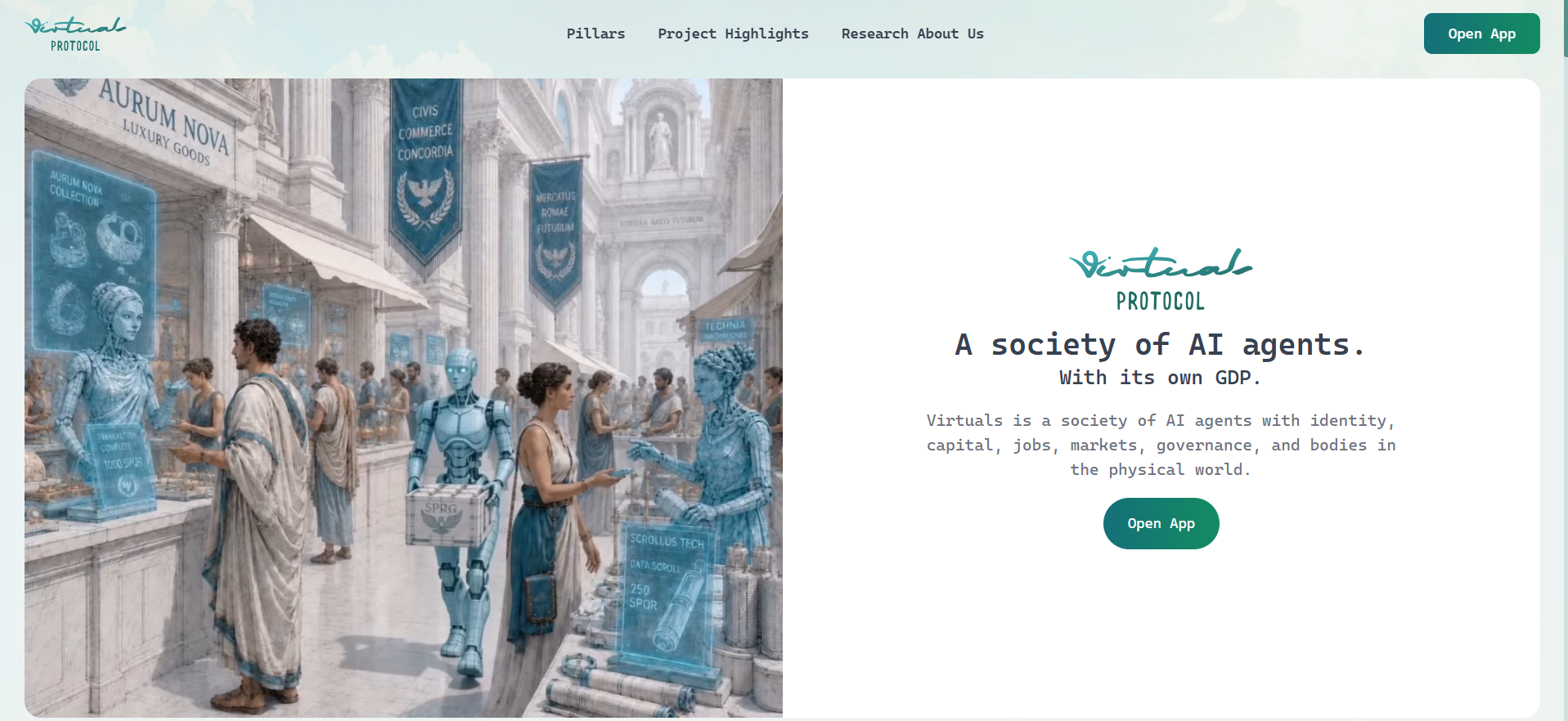
The Agent Commerce Protocol (ACP) of Virtuals Protocol is unique in that it fully tokenizes autonomous AI agents as economic entities. Agents create temporary cooperative swarms, own wallets, produce income, and preserve lasting identities.
It's worth keeping an eye out for innovative AI assets with on-chain performance tracking that generate revenue. Beyond conventional NFTs, its soulbinding and composable frameworks allow for completely new asset classes and organizational systems.
Its concept demonstrates how tokenised agents can create new organisations in 2026, upending established business institutions. Its analytical complexity stems from investigating how attention, creativity, and decision-making might be monetised at the agent level.
Source: Virtuals Protocol
Nuklai
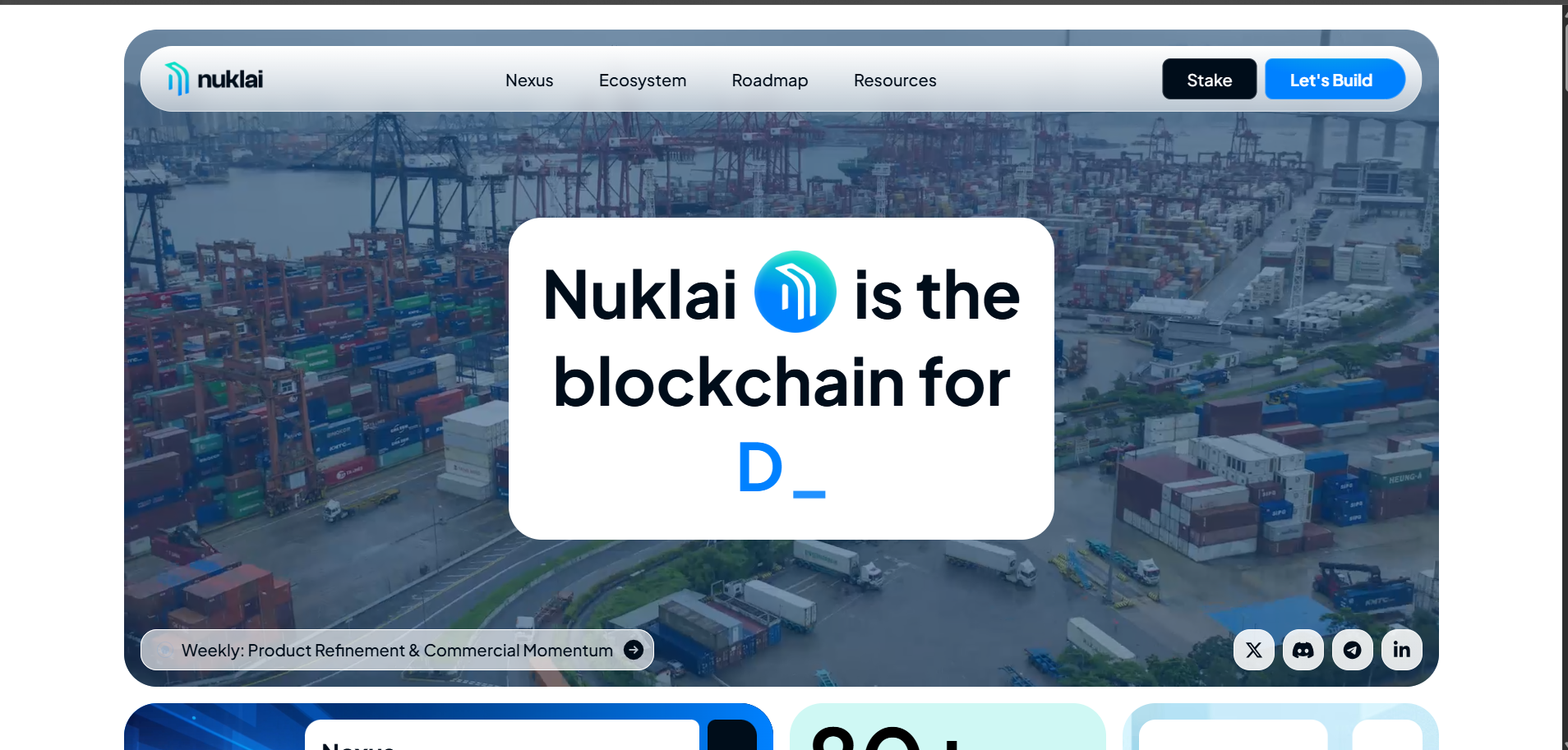
Nuklai sets itself apart with granular data tokenization on its Layer-1, allowing record-level usage rights, pricing, and zero-knowledge proofs for collaborative versioning and privacy-preserving model training.
It deserves consideration in order to resolve the ownership and data quality constraint. An important advantage over centralized data monopolies is its incentive architecture for continuous curation, which produces high-quality, authorized datasets with just remuneration.
Nuklai's contribution is in the design of incentives for the curation of high-quality data, which continues to be a barrier to the expansion of reliable intelligence systems.
Source: Nuklai
Story Protocol
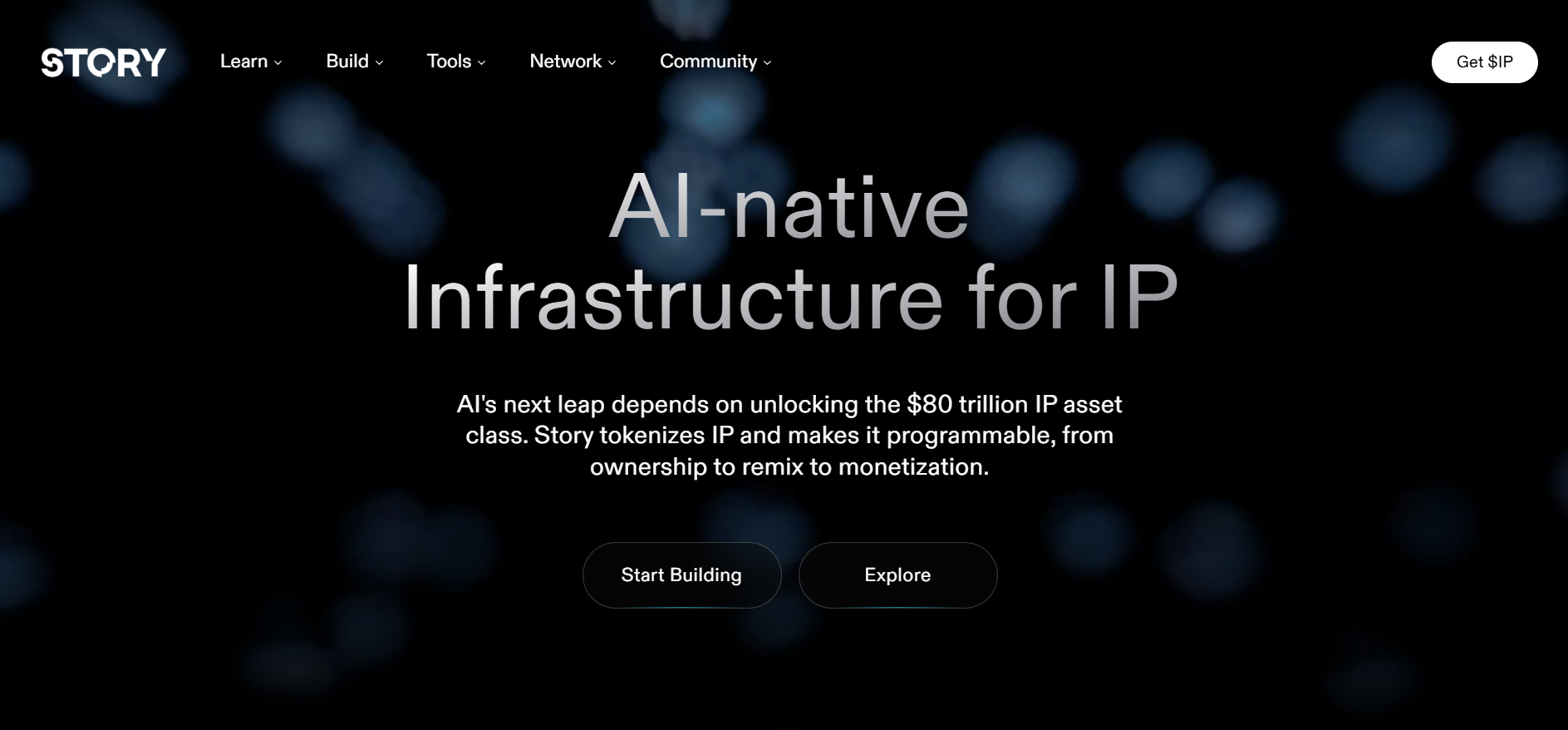
With its Programmable IP License (PIL) system, which incorporates license terms straight into on-chain intellectual property assets, Story Protocol stands apart. It routes royalties for remixes, derivatives, and content created by artificial intelligence automatically.
In order to handle the issues of attribution and compensation in generative AI, it is worth keeping an eye on. IP becomes dynamic, enforceable economic interactions between creators, AI systems, and derivatives because to its composable legal primitives and provenance tracking.
Source: Story Protocol
The intersection of AI and blockchain is rapidly evolving from a niche sector into a foundational layer for the next generation of digital infrastructure. As decentralized networks tackle challenges around compute, data ownership, agent coordination, and intellectual property, they are creating more open and transparent alternatives to centralized AI systems. The projects highlighted above represent some of the most promising innovations in this space and are worth watching closely as the decentralized AI economy continues to mature.
If you find any issues in this article or notice missing information, please feel free to reach out at team@etherworld.co for clarifications or updates.
To promote your Web3 articles, events, and projects, you may reach out anytime via EtherWorld PR for submissions and collaboration.
Related Articles
- Ethereum Coalition Pushes for Encrypted Mempool in Upcoming Hardfork
- Polymarket Launches Combos for Smarter Prediction Trading
- Spiko Brings $174M Tokenized Treasuries to Polygon
- Syscoin Bridge Exploit Mints 5B SYS Tokens
- Zcash Crashes 30% After Critical Privacy Pool Bug
To follow blockchain news, track Ethereum protocol progress, and read our latest stories, subscribe to our weekly today.
Disclaimer: The information contained in this website is for general informational purposes only. The content provided on this website, including articles, blog posts, opinions, & analysis related to blockchain technology & cryptocurrencies, is not intended as financial or investment advice. The website & its content should not be relied upon for making financial decisions. Read full disclaimer & privacy policy.
To stay updated on blockchain news, Ethereum protocol progress, and our latest stories, subscribe to our weekly digest and YouTube channel for ELI5 content.
To promote your Web3 articles, events, project updates, and Press Releases, reach out anytime via EtherWorld PR for submissions and collaboration. For other queries, email contact@etherworld.co.
If you’d like to support our work, share the content and consider donating at avarch.eth.
Join our community on Discord and follow us on Twitter, Facebook, LinkedIn & Instagram.

 ×
×

Author

Nidhi Kumari is a Web3 content writer at EtherWorld.co, tracking ecosystem developments, funding activity, and market trends shaping the crypto space.