Polygon Plans Hard Fork to Recover 70.49M POL
Polygon proposes a hard fork to recover 70.49 million stolen POL from five attacker addresses linked to Binance and Polymarket, without changing total supply.
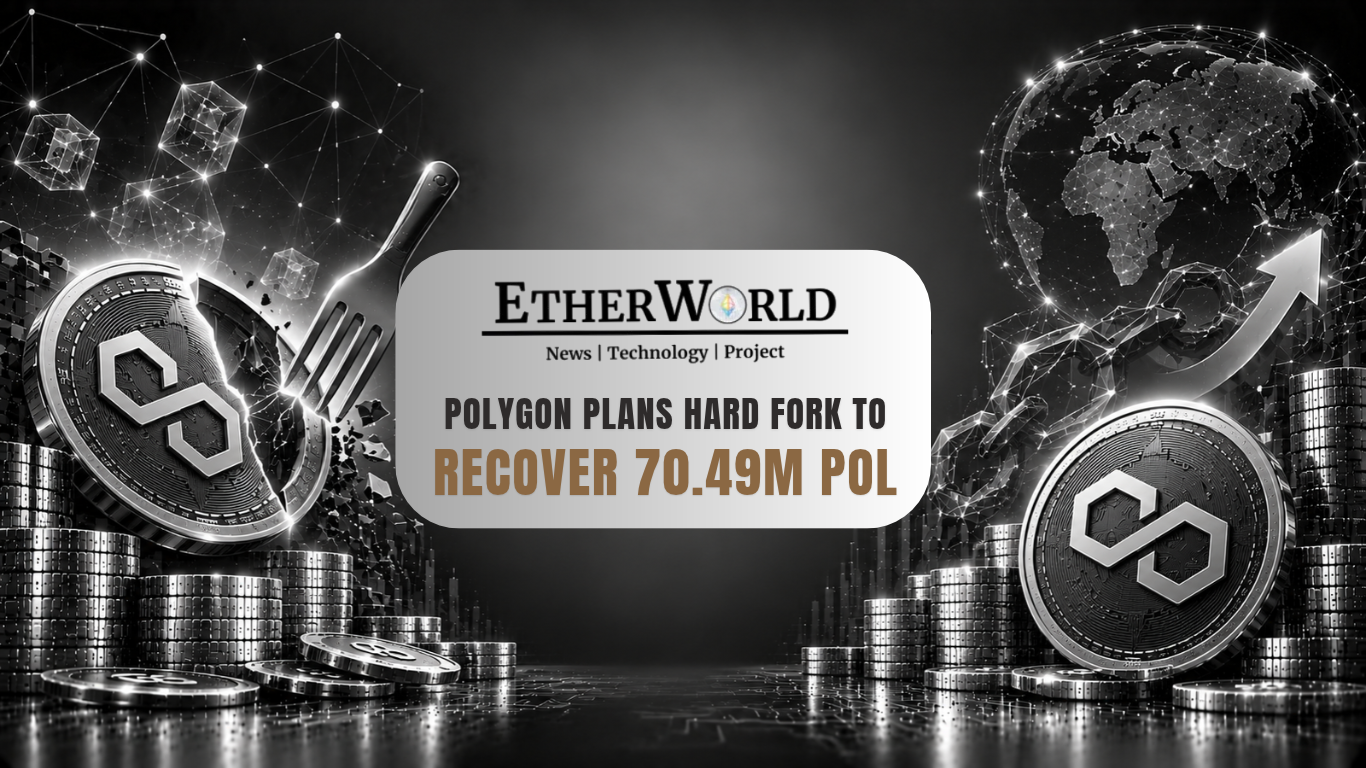
Polygon is considering a hard fork of its Proof of Stake mainnet to recover approximately 70.49 million POL tokens linked to security incidents involving Polymarket and Binance. A Polygon Improvement Proposal published on November 4 outlines a plan to remove these balances from five attacker controlled addresses and transfer them to verified recovery wallets belonging to the affected platforms.
The proposed intervention would recover approximately $6.8 million in stolen assets without increasing or reducing POL’s total supply.
Polygon Proposal Targets Five Attacker Addresses
The proposal identifies five addresses holding approximately 70.49 million native POL. Four addresses linked to the Polymarket incident contain around 23.86 million POL, while another address associated with Binance holds approximately 46.63 million POL.
The incidents occurred on October 29 and 30, with stolen POL transferred to addresses on Polygon PoS. Polymarket and Binance subsequently requested intervention from Polygon’s block producers, which added the attacker addresses to the Bor transaction block list.
Under the proposed recovery mechanism, the balances would be transferred to designated wallets verified by the respective platforms. Polymarket’s recovery wallet and Binance’s recovery wallet are separately identified in the proposal.
Hard Fork Would Transfer Frozen POL to Recovery Wallets
The Polygon Improvement Proposal calls for a coordinated hard fork at a predetermined block. At activation, the native POL balances of the five listed attacker addresses would be reduced to zero, with equivalent amounts credited to the recovery wallets.
The mechanism would apply exclusively to the specified native POL balances. Other tokens would remain outside its scope, and the total POL supply would remain unchanged because the operation involves transferring existing balances rather than creating new tokens.
The proposal also requires Binance and Polymarket to verify ownership of their recovery addresses before activation. This verification could involve a signed message or a small test transfer, followed by written confirmation that the wallets belong to the respective platforms.
We've identified & fixed an issue impacting our international platform, Polymarket.com. One of our 3rd party providers was compromised, and we have referred this to relevant law enforcement.
Anyone who has been impacted will be made whole.
Out of an abundance of caution, we have temporarily halted trading & are working to bring the platform back online.
— Polymarket Traders (@PolymarketTrade) October 29, 2026
Existing Blocklist Cannot Return Stolen POL
Polygon block producers have already prevented the identified attacker addresses from transferring their funds. However, the proposal argues that the existing restrictions cannot return assets to their rightful owners.
The blocklist also has operational limitations. Each producer loads its list at startup, meaning updates require deployments, Bor restarts or span rotations. Entries do not automatically expire, and the restrictions do not cover every possible transaction mechanism.
The proposal also documents attempts to circumvent the restrictions. An attacker reportedly submitted a pending transaction involving a fee of approximately 219,450 POL and contacted validators offering payments in exchange for assistance in unblocking transactions.
Polymarket also attempted to establish an on chain recovery channel through the SEAL Safe Harbor Recovery safe, but reportedly received no response.

Polygon Governance to Discuss Recovery Plan on November 5
The proposal is scheduled for presentation during the Polygon Protocol Governance Call on November 5 at 14:30 UTC. The discussion will address the recovery mechanism and its potential implementation.
If approved, developers would begin client development, deployment and testing on the Amoy testnet. The proposal considers approximately two weeks after approval a workable preparation period, while one week would be difficult.
Before mainnet activation, validators, RPC providers and blockchain explorers would receive advance notification. Polygon validator operations expects approximately 70% to 80% of stake to adopt the required software version quickly following its release.
The proposal describes the hard fork as an exceptional intervention rather than a routine recovery mechanism. Its justification rests on publicly acknowledged incidents, funds traceable through on chain transfers, requests from the affected platforms and restrictions already applied across Polygon’s block producers.
If you find any issues in this article or notice missing information, please feel free to reach out at team@etherworld.co for clarifications or updates.
To promote your Web3 articles, events, and projects, you may reach out anytime via EtherWorld PR for submissions and collaboration.
Related Articles
- Meta Launches Stablecoin Creator Payouts on Polygon
- Polygon Crosses $200M in Intent-Driven Payment Volume
- Polygon Introduces sPOL to Unlock Staked Liquidity
- Polygon Records 625M Stablecoin Transactions Surge
- Polygon's Stablecoin Activity Soars to New Highs in 2026
To follow blockchain news, track Ethereum protocol progress, and read our latest stories, subscribe to our weekly today.
Join the EtherWorld & Avarch Internship Program and build your career in blockchain, content, social media, video, podcast editing, or operations. Send your resume and brief introduction to contact@etherworld.co.
Disclaimer: The information contained in this website is for general informational purposes only. The content provided on this website, including articles, blog posts, opinions, & analysis related to blockchain technology & cryptocurrencies, is not intended as financial or investment advice. The website & its content should not be relied upon for making financial decisions. Read full disclaimer & privacy policy.
To stay updated on blockchain news, Ethereum protocol progress, and our latest stories, subscribe to our weekly digest and YouTube channel for ELI5 content.
To promote your Web3 articles, events, project updates, and Press Releases, reach out anytime via EtherWorld PR for submissions and collaboration. For other queries, email contact@etherworld.co.
If you’d like to support our work, share the content and consider donating at avarch.eth.
Join our community on Discord and follow us on Twitter, Facebook, LinkedIn & Instagram.

 ×

Author

Nidhi Kumari is a Web3 content writer at EtherWorld.co, tracking ecosystem developments, funding activity, and market trends shaping the crypto space.