India’s SEBI Plans to Tokenised Corporate Bonds
India studies global crypto regulation models as lawmakers raise concerns over rising crypto investments, capital outflows & future oversight frameworks.

India’s securities market regulator is preparing to test one of the most important blockchain based experiments in the country’s capital markets. The Securities and Exchange Board of India is exploring a pilot for tokenised corporate bonds, with the goal of testing whether distributed ledger technology can improve settlement speed, transparency, traceability, servicing automation, liquidity, & investor participation in India’s debt market.
SEBI has clarified that the pilot will not be rushed. The regulator plans to study operational, technological, & risk related aspects before moving toward a wider market structure. The process may take around six to nine months as different stages, stakeholders, & technology solutions are evaluated. This measured approach is important because tokenisation can improve efficiency, but it also introduces new questions around cybersecurity, legal enforceability, custody, governance, interoperability, & investor protection.
- Why Tokenised Corporate Bonds Matter For India
- Faster Settlement, Traceability & Automated Servicing
- How DLT Could Improve Liquidity & Investor Access
- Regulatory Caution, Risks & The Road Ahead
Why Tokenised Corporate Bonds Matter For India
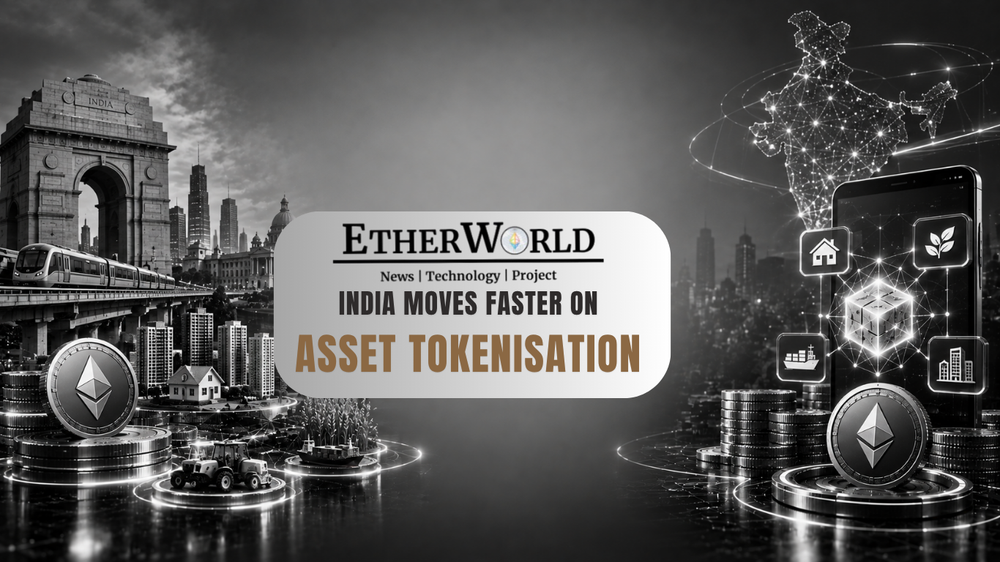
Tokenisation refers to the process of representing a real world or financial asset as a digital token on a distributed ledger. In the case of corporate bonds, the token would represent ownership or economic rights linked to a debt security issued by a company. Instead of relying only on conventional record keeping systems, a tokenised bond structure can use DLT to create a shared, verifiable, & tamper resistant record of ownership & transaction history.
For India, the timing of this pilot is significant. The country has already built strong digital public infrastructure across payments, identity, banking, & market systems. However, the corporate bond market still has room for deeper participation. Large institutions dominate much of the activity, while retail investors often remain cautious because of complexity, liquidity concerns, & limited visibility into bond related information.
Tokenised corporate bonds could help simplify this experience. If designed properly, tokenisation may allow investors to see ownership records, settlement status, coupon payments, maturity events, & transfer history more clearly. This can make the bond market easier to understand & potentially more trustworthy for a wider investor base.
The pilot also fits into a larger global trend. Financial regulators, banks, exchanges, & market infrastructure providers across several jurisdictions are testing tokenised versions of bonds, funds, deposits, & other traditional assets. The core idea is not to replace regulation, but to modernise the rails on which regulated assets move.
SEBI’s approach appears to follow this logic. The focus is not on speculative crypto tokens. It is on applying blockchain inspired infrastructure to existing regulated securities. That distinction is important because it places tokenisation inside a compliance driven framework rather than outside the financial system.
If the pilot succeeds, India could develop a practical model for regulated tokenised debt securities. This would support transparency, market efficiency, & better investor participation without abandoning the safeguards expected in traditional capital markets.
BREAKING: 🇮🇳 SEBI to launch pilot for tokenised corporate bonds to improve transparency and increase investor participation. pic.twitter.com/G6ogMUmcW2— Crypto India (@CryptooIndia) May 27, 2026
Faster Settlement, Traceability & Automated Servicing
One of the biggest promises of tokenised corporate bonds is faster settlement. In traditional securities markets, settlement requires coordination between multiple intermediaries, record keeping systems, clearing processes, custodians, depositories, & banking channels. While India’s market infrastructure is already advanced, tokenisation could further reduce delays by allowing ownership transfer & settlement instructions to be processed through a shared digital ledger.
In a DLT based model, transaction records can be updated in near real time across authorised participants. This can reduce reconciliation issues because all stakeholders work from a common source of truth. Instead of maintaining separate records that need to be matched later, market participants can rely on ledger based verification.
Traceability is another major benefit. Corporate bond transactions involve multiple lifecycle events, including issuance, trading, coupon payments, ownership transfers, pledge creation, redemption, & maturity settlement. Tokenisation can make these events more transparent by recording them on a structured digital ledger. This could help regulators, issuers, investors, & intermediaries track movement of securities with greater accuracy.
Automated servicing is equally important. Corporate bonds require periodic interest payments, redemption processing, corporate action handling, & compliance checks. Smart contract based workflows could automate certain parts of this lifecycle. For example, once predefined conditions are met, coupon payment instructions or ownership updates could be triggered automatically.
For investors, these improvements could translate into better confidence. Faster settlement reduces uncertainty. Better traceability improves visibility. Automated servicing reduces operational friction. Together, these features can make corporate bonds more attractive, especially for investors who currently view the market as complex or institution heavy.
How DLT Could Improve Liquidity & Investor Access
Investor participation depends heavily on trust. When investors can clearly verify asset ownership, settlement completion, & payment flows, they may be more willing to enter the market. DLT based systems can also reduce information asymmetry by creating more transparent records for authorised participants.
For issuers, tokenised bonds could open the door to a wider investor base. Companies may benefit from more efficient issuance processes, improved investor reach, & potentially lower operational costs over time. For intermediaries, tokenisation could create new roles around digital custody, compliance verification, smart contract operations, investor onboarding, & regulated market access.
However, liquidity requires more than technology. It also needs market makers, investor demand, regulatory clarity, credit quality, pricing transparency, & efficient dispute resolution. Tokenisation can improve the plumbing, but the broader market structure must also evolve.
This is why SEBI’s pilot is important. It can help test whether DLT improves actual market outcomes or only creates technological novelty. The pilot can examine settlement performance, operational reliability, investor response, system resilience, & legal enforceability in a controlled environment.
If successful, tokenised corporate bonds could become part of India’s broader capital market modernisation strategy. They may support a more inclusive debt market where participation is not limited mainly to large institutions.
Regulatory Caution, Risks & The Road Ahead
SEBI’s cautious tone is important. Tokenisation offers benefits, but it also comes with risks that must be carefully managed. A tokenised bond market would require clarity on legal ownership, custody, investor rights, dispute handling, technology standards, cybersecurity, data privacy, & interoperability with existing depository systems.
Cybersecurity is one of the biggest concerns. Any DLT based infrastructure handling regulated securities must be resilient against attacks, system failures, private key compromise, operational errors, & unauthorised access. Since bonds represent real financial claims, even a small technical weakness could create serious market consequences.
There are also governance questions. Who controls the ledger? Who validates transactions? Which entities can participate? How are errors reversed? How are investors protected if a smart contract malfunctions? These questions must be answered before tokenised securities can move beyond pilot stage.
SEBI will also need to consider how tokenised bonds interact with current market infrastructure. India already has depositories, clearing corporations, exchanges, trustees, registrars, banks, & regulated intermediaries. A tokenised model must either integrate with these institutions or define new roles for them.
The pilot’s six to nine month evaluation period gives SEBI time to bring stakeholders together & test a practical model. Market participants, technology providers, bond issuers, depositories, legal experts, & investor protection bodies will likely need to contribute to the framework.
The key challenge will be balancing innovation with safety. Moving too slowly could cause India to miss an opportunity to modernise its debt market. Moving too quickly could expose investors to untested infrastructure risks. SEBI’s current stance suggests a middle path: remain open to useful innovation while carefully evaluating risks.
For India’s financial market, this pilot could become a landmark moment. If tokenised corporate bonds prove successful, they may encourage similar experiments in other securities, including government bonds, mutual fund units, structured products, or private market instruments.
The larger message is clear. Blockchain based infrastructure is no longer being discussed only in the context of crypto trading. Regulators are now examining how tokenisation can improve traditional finance itself. SEBI’s corporate bond pilot could become an important step in that direction, offering India a chance to build a more transparent, efficient, & inclusive debt market.
If you find any issues in this article or notice missing information, please feel free to reach out at team@etherworld.co for clarifications or updates.
To promote your Web3 articles, events, and projects, you may reach out anytime via EtherWorld PR for submissions and collaboration.
Related Articles
- KelpDAO Exploit Triggers $290M Crisis Across DeFi
- DeFi Unites After KelpDAO $292M Hack
- Drift Maps a $150M Recovery Path With Tether
- Rhea Finance Exploit Drains $7.6M
- Volo Protocol Confirms $3.5M Exploit, Assures Full Coverage
To follow blockchain news, track Ethereum protocol progress, and read our latest stories, subscribe to our weekly today.
Disclaimer: The information contained in this website is for general informational purposes only. The content provided on this website, including articles, blog posts, opinions, & analysis related to blockchain technology & cryptocurrencies, is not intended as financial or investment advice. The website & its content should not be relied upon for making financial decisions. Read full disclaimer & privacy policy.
To stay updated on blockchain news, Ethereum protocol progress, and our latest stories, subscribe to our weekly digest and YouTube channel for ELI5 content.
To promote your Web3 articles, events, project updates, and Press Releases, reach out anytime via EtherWorld PR for submissions and collaboration. For other queries, email contact@etherworld.co.
If you’d like to support our work, share the content and consider donating at avarch.eth.
Join our community on Discord and follow us on Twitter, Facebook, LinkedIn & Instagram.

 ×
×

Author

Yash Kamal Chaturvedi is a Blockchain Content & Ops Specialist at Avarch LLC, writing on Ethereum & governance since 2021. Covers ACD/ACDE calls, EIPs, upgrades, staking, security & ecosystem trends.