Maharashtra’s DELTA Act Could Bring Real Estate Onchain
Maharashtra’s proposed DELTA Act could enable blockchain-based property tokenisation, unlocking real-estate liquidity while introducing new legal, regulatory and investor-protection challenges.
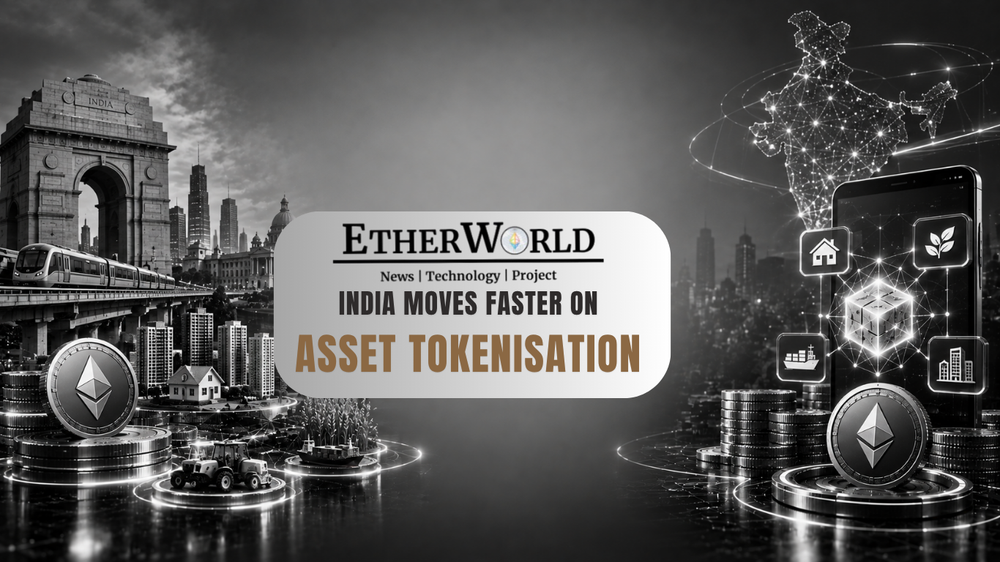
Maharashtra is preparing a first-of-its-kind legal framework for blockchain-based property tokenisation. The proposed DELTA Act could allow land and real-estate interests to be represented through digital tokens, creating new financing opportunities while raising important questions around ownership, regulation and investor protection.
Chief Minister Devendra Fadnavis chaired a meeting in Mumbai on July 20, 2026, to discuss the proposed Maharashtra Digitisation and Exchange of Land Token Asset Act, or DELTA Act. The proposal seeks to unlock the economic value stored in land and real estate by allowing eligible property rights to be digitised and represented through blockchain-based tokens.
Maharashtra Moves Toward Property Tokenisation
The DELTA Act appears to go beyond the basic digitisation of land records. Digitisation usually means converting ownership information, survey numbers, registration documents and property cards into electronic records. Tokenisation goes further by creating a blockchain-based digital asset linked to a legal or economic interest in a property.
Under the proposed framework, land, buildings or property-related rights could potentially be divided into digital units and issued through an approved platform. These tokens may represent ownership, rental income, development rights, debt claims or interests in an entity holding the property.
The state has described the initiative as a way to unlock the latent value of immovable assets. Property owners often hold valuable land or buildings but cannot easily convert a small portion of that value into capital without selling the entire asset or taking a loan.
For example, the owner of a commercial building may be able to tokenise part of its value and offer those units to eligible investors. The owner could raise capital while retaining a majority interest in the property. The proposal also fits into a wider Indian debate around regulated tokenisation.
Rajya Sabha MP Raghav Chadha has previously called for a national framework for tokenised real-world assets, arguing that tokenisation could unlock dormant capital and expand access to investment opportunities. EtherWorld examined the proposal in India Needs Asset Tokenisation Law, Says MP Raghav Chadha.
He later introduced the Asset Tokenisation Regulation Bill, 2026, covering issuance, custody, trading and investor protection, as explained in Indian MP Raghav Chadha Introduces Asset Tokenisation Bill 2026. Chadha has also supported blockchain-based land records as a tool for reducing fraud and improving transparency. EtherWorld covered those arguments in Indian MP Raghav Chadha Pushes Crypto & Blockchain Reforms.
Maharashtra has already experimented with blockchain-backed public administration. Amravati previously announced plans to place government records, including land titles and permits, on Polygon, as covered in Amravati to Put All Government Records on Polygon Blockchain.
How Blockchain-Based Property Tokens Could Work
In a direct ownership model, each token could represent a fractional interest in the underlying land or building. A commercial property worth ₹20 crore could theoretically be divided into thousands or millions of digital units.
A second model could involve placing the property inside a company, trust or special-purpose vehicle. Investors would then purchase tokens representing shares or beneficial interests in that entity rather than receiving direct title to the land.
This structure may be easier to align with existing corporate and securities laws because the property remains registered in the name of a single legal entity. Tokens could also represent only a financial claim. Holders may receive part of the rental income, sale proceeds or interest payments without becoming legal co-owners of the property.
Blockchain could support these structures by maintaining a shared and auditable record of token issuance and transfers. Smart contracts could automate rental distributions, ownership limits, compliance checks and settlement.
Tokenised assets have expanded across government bonds, money-market funds, private credit, equities and commodities. EtherWorld tracked this growth in Tokenized RWAs Surpassed $30 Billion in Early 2026. Major institutions have also entered the sector. BlackRock expanded its blockchain strategy through tokenised Treasury and liquidity products, as covered in BlackRock Expands Ethereum Push With Tokenized Treasury Funds.
Ondo Finance has similarly issued regulated tokenised versions of traditional financial assets, including a BlackRock ETF and Micron shares. EtherWorld covered the development in Ondo Brings BlackRock ETF & Micron Shares Onchain. These projects depend on custodians, legal contracts, transfer agents, regulated issuers and verified reserves. Maharashtra will need a similarly robust structure for property tokens.
Unlocking Property Value through the DELTA Act!
— Devendra Fadnavis (@Dev_Fadnavis) July 20, 2026
Chaired a meeting regarding the draft of 'The Maharashtra Digitisation and Exchange of Land Token Asset Act (DELTA Act)' in Mumbai, today.
As Maharashtra moves towards achieving the goal of becoming a US$1 trillion economy by… https://t.co/SVPXENl9f7
Legal, Regulatory and Investor Protection Challenges
The most difficult part of the DELTA Act will be creating a legally enforceable connection between the digital token and the physical property. Indian property transfers currently depend on registered deeds, stamp duty, title verification and updates to government databases. A blockchain transaction does not automatically replace these requirements.
If tokens represent direct ownership, the blockchain platform would need to remain synchronised with official land records and registration systems. If tokens represent shares in a company or trust, the underlying legal title may remain unchanged while the investment units move between users.
The second approach may be easier to administer, but it would make the tokens closer to securities than digital land certificates. This is why the involvement of SEBI, BSE and NSE is important.
If people purchase tokens expecting rental income, appreciation or profits managed by another party, those assets may fall within securities or collective-investment regulations. India already allows fractional participation in income-generating real estate through REITs and SM REITs. The DELTA Act will need to complement these frameworks rather than create an unregulated parallel market.
SEBI is already examining distributed-ledger infrastructure for traditional assets. EtherWorld reported on the regulator’s interest in tokenised corporate bonds in India’s SEBI Plans to Tokenised Corporate Bonds. BSE and NSE could contribute expertise in listing standards, market surveillance, settlement, valuation disclosures and investor grievance systems.
The state will also need strict title verification before a property can be tokenised. Properties with disputed ownership, pending litigation, mortgages, unauthorised construction or incomplete approvals could expose investors to substantial risks. Tokenisation does not eliminate these problems. It could spread them among a larger number of participants.
Investor protection will therefore be essential. Property valuations must be independent, token rights must be clearly explained and issuers should not be allowed to promise guaranteed liquidity or returns. Cybersecurity and custody will also matter. Most retail investors are unlikely to manage private keys for property assets.
Regulated custodians may be needed to store tokens, verify ownership and provide recovery mechanisms. EtherWorld previously examined the principle that securities rules continue to apply even when assets are issued onchain in SEC Reaffirms Securities Laws Apply to Tokenisation.
What the DELTA Act Could Mean for India
The DELTA Act could become one of India’s most important state-level blockchain experiments. If designed carefully, it could allow property owners to raise capital without selling an entire asset. Investors could gain access to smaller property-linked investments, while blockchain could improve transaction traceability and automate distributions.
The framework could also create new models for commercial real estate, development finance and public-sector asset management. However, tokenisation does not automatically create liquidity. A token may be technically transferable, but investors still need active buyers, reliable valuations and confidence in the legal rights attached to it.
Taxation will also play a major role. Authorities will need to clarify how capital gains, stamp duty, registration charges and rental income will apply to token transactions. Global asset managers increasingly view tokenisation as a major shift in financial infrastructure.
EtherWorld examined Larry Fink’s comments on tokenisation and India in India Spotlighted as BlackRock CEO Larry Fink Calls Tokenization Essential. The wider RWA sector is also moving toward regulated and interoperable infrastructure, as discussed in Where RWAs Go Next: 6 Projects to Watch.
Ethereum and Ethereum-compatible networks have become important platforms for institutional tokenisation. EtherWorld explored this trend in Ethereum’s Institutional & Government Adoption.
Polygon has also attracted major tokenised-asset activity. BlackRock’s BUIDL fund previously moved $500 million in tokenised assets to Polygon, as covered in BlackRock BUIDL Transfers $500 Million to Polygon. The success of DELTA will ultimately depend less on the blockchain and more on the legal framework built around it.
For now, the DELTA Act remains a proposal. Its importance lies in the possibility that Maharashtra may become the first Indian state to formally connect land, blockchain and regulated digital-asset markets.
To promote your Web3 articles, events, and projects, you may reach out anytime via EtherWorld PR for submissions and collaboration.
Related Articles
- India Intensifies Crypto Oversight as ED Freezes ₹4,190 Crore and Sends 44,057 Tax Notices
- India’s RBI Rejects Crypto Legal Status Before Finance Panel
- Parliament Finance Panel to Meet RBI Over Crypto Regulations
- India Needs Clear Crypto Rules, Says GNLU Report
- What Happens If India Bans Crypto?
To follow blockchain news, track Ethereum protocol progress, and read our latest stories, subscribe to our weekly today.
Join the EtherWorld & Avarch Internship Program and build your career in blockchain, content, social media, video, podcast editing, or operations. Send your resume and brief introduction to contact@etherworld.co.
Disclaimer: The information contained in this website is for general informational purposes only. The content provided on this website, including articles, blog posts, opinions, & analysis related to blockchain technology & cryptocurrencies, is not intended as financial or investment advice. The website & its content should not be relied upon for making financial decisions. Read full disclaimer & privacy policy.
To stay updated on blockchain news, Ethereum protocol progress, and our latest stories, subscribe to our weekly digest and YouTube channel for ELI5 content.
To promote your Web3 articles, events, project updates, and Press Releases, reach out anytime via EtherWorld PR for submissions and collaboration. For other queries, email contact@etherworld.co.
If you’d like to support our work, share the content and consider donating at avarch.eth.
Join our community on Discord and follow us on Twitter, Facebook, LinkedIn & Instagram.

 ×
×

Author

Yash Kamal Chaturvedi is a Blockchain Content & Ops Specialist at Avarch LLC, writing on Ethereum & governance since 2021. Covers ACD/ACDE calls, EIPs, upgrades, staking, security & ecosystem trends.