GENIUS Act vs. CLARITY Act: What Is the Difference?
Discover the key differences between the GENIUS Act and the CLARITY Act, their regulatory scope, and why the U.S. crypto industry needs both to thrive.

For many years, the cryptocurrency market in the United States has operated without a clear set of regulations. Investors and businesses have been left in a condition of constant uncertainty as companies have built products while regulators disagreed over who should be in charge of digital assets. To address this, legislators offered two historic measures: the GENIUS Act and the CLARITY Act. Even though they often appear at the same time, they serve separate purposes. The former focuses on creating regulations for stablecoins, while the latter aims to establish a more comprehensive regulatory framework for the cryptocurrency industry. Understanding the distinctions between these Acts is essential because, when considered collectively, they may have an impact on future cryptocurrency regulation in the US.
What Is the GENIUS Act?
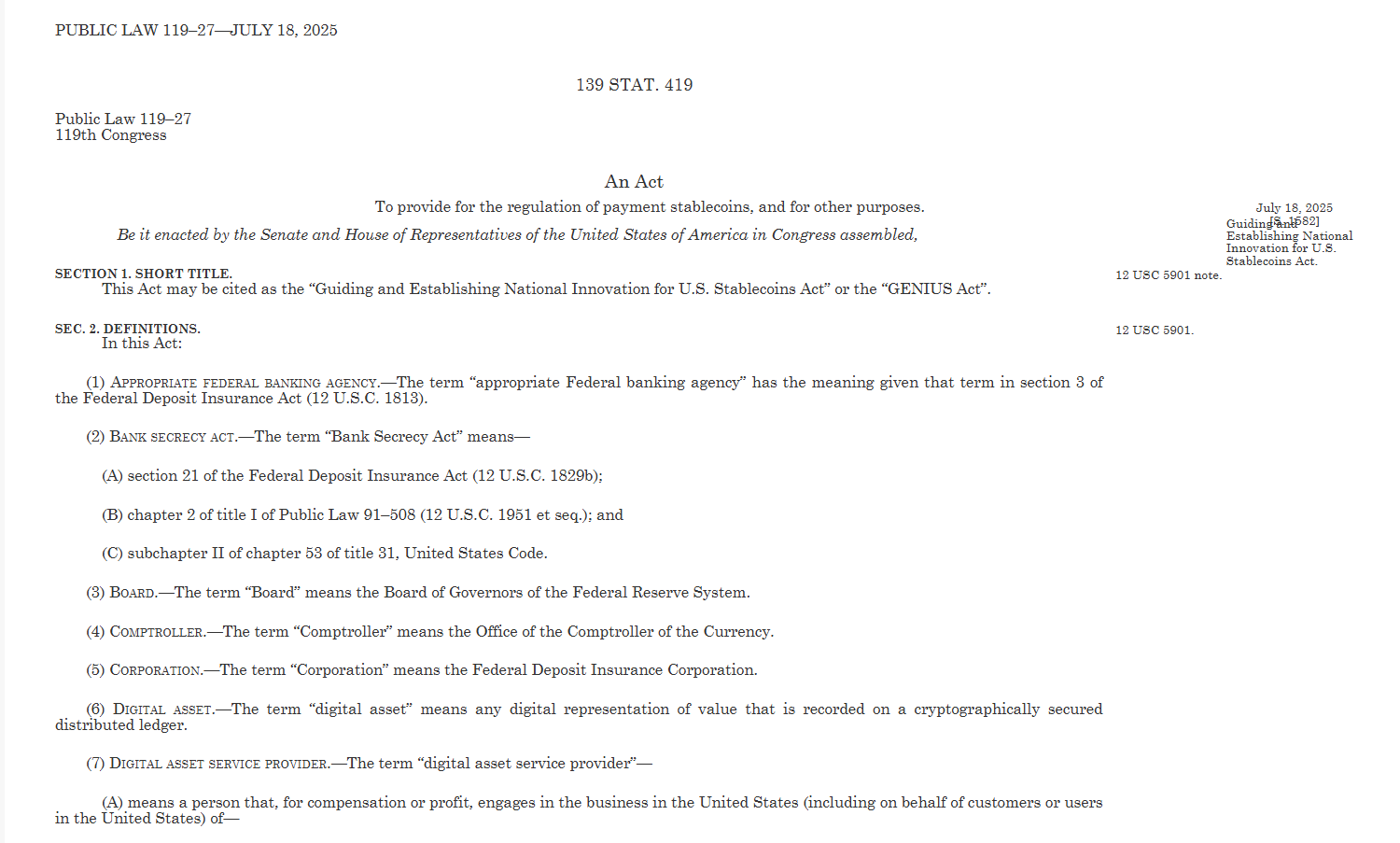
The goal of the GENIUS Act is to give payment stablecoins in the US a clear regulatory framework. Its primary goal is to guarantee the security, transparency, and resilience of stablecoins used for payments. The legislation establishes guidelines for reserve management, issuer licensing, disclosures, and regulatory supervision in order to accomplish this. The objective is to increase public trust so that consumers and companies can utilise dollar-backed stablecoins with more assurance.
The GENIUS Act is distinct due to its limited scope. It doesn't try to control decentralised finance, cryptocurrency exchanges, Ethereum, or Bitcoin. Rather, it focuses only on stablecoins, acknowledging their expanding significance in digital commerce, remittances, and cross-border payments.
Although this focused strategy helps in resolving one of the major issues facing the sector, it also raises more general concerns. As we covered in our blog post entitled GENIUS Act Rules Still Await Final Approval, the law represents a significant turning point for stablecoin regulation, but before its full effects are realised, several implementation rules must be approved.
What Is the CLARITY Act?
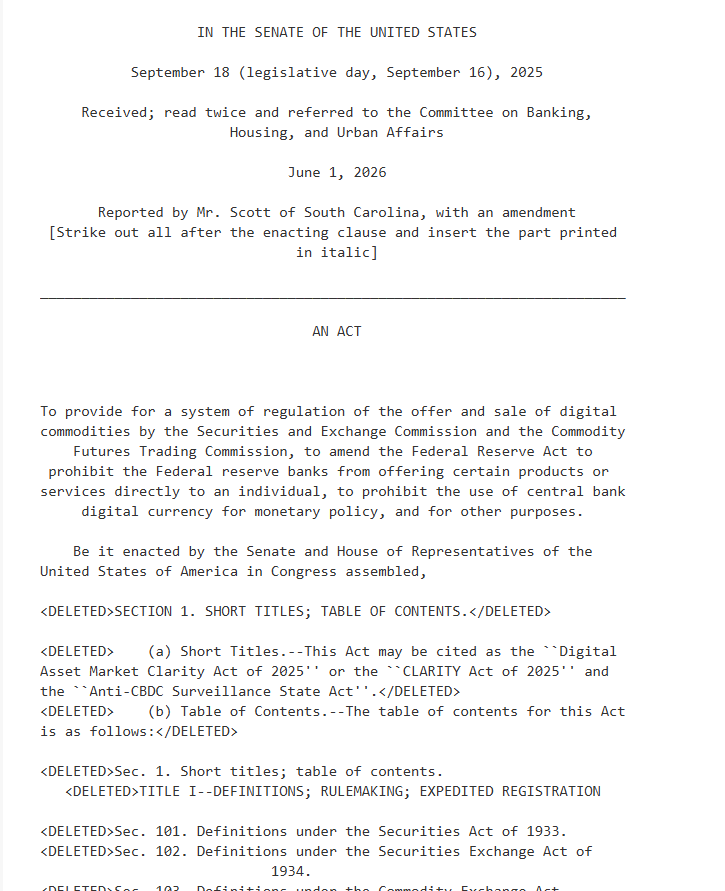
Compared to the GENIUS Act, the CLARITY Act adopts a far more comprehensive strategy. It seeks to provide a regulatory framework for the larger cryptocurrency industry rather than concentrating on a particular kind of digital asset. Clarifying which digital assets are subject to commodities regulations, which are regulated as securities, and which organisations are in charge of monitoring various aspects of the sector is one of its main objectives.
This is significant since one of the main obstacles to cryptocurrency innovation in the US has been regulatory ambiguity. Many businesses have spent years navigating ambiguous regulations, which makes it challenging to confidently introduce goods or draw in investment.
The CLARITY Act aims to create a more predictable market structure in place of that ambiguity. If put into practice, it might give exchanges, token issuers, developers, custodians, and other cryptocurrency companies more precise guidelines.
As we covered in our article, CLARITY Act Explained: Inside America's New Crypto Rulebook, the plan focuses more on providing the industry with a uniform legal framework that fosters long-term innovation and expansion than it does on enacting new regulations.
Dichotomy of GENIUS Act & CLARITY Act
Although both Acts aim to bring more certainty to the U.S. crypto industry, they solve different problems. Rather than replacing one another, they address separate parts of the digital asset ecosystem.
- Scope of Regulation: The GENIUS Act only applies to payment stablecoins and the companies that issue them. The broader bitcoin market is not under its control; whereas, The CLARITY Act has a far broader scope and covers digital assets, cryptocurrency companies, exchanges, and the overall market structure.
- Objective: The GENIUS Act focuses on making stablecoins safer through reserve requirements, disclosures, and issuer oversight; on the other hand, the CLARITY Act focuses on defining regulatory responsibilities and creating clear rules for how the broader crypto industry should operate.
- Primary Focus: The GENIUS Act addresses trust in digital payment assets by ensuring stablecoins are properly backed and regulated. On the other hand, the CLARITY Act tackles regulatory uncertainty, helping businesses understand which rules apply before they build or launch products.
Which Act Is More Important for Crypto?
The CLARITY Act may seem more significant if you were to pick just one law because it impacts a much wider range of the cryptocurrency ecosystem. It might provide exchanges, token issuers, developers, investors, and other market players with long-needed regulatory stability. Unambiguous regulations could incentivise innovation to stay in the United States rather than relocate to countries with more precise restrictions.
Nevertheless, this does not mean that the GENIUS Act is less important. The foundation of on-chain finance, cross-border payments, and cryptocurrency trading is now stablecoins. Regardless of how clear other regulations become, wider market adoption would remain challenging in the absence of a reliable framework for these assets.
In fact, comparing the two is akin to contrasting several components of one system. One strengthens the foundation for digital payments, while the other provides a roadmap for the wider crypto industry.
As we covered in our blog post, CLARITY Act Moves to Senate Legislative Calendar, the legislation is still gaining traction as more people realise that stablecoin regulation is not as crucial as full market structure reform. The combined value of the two Acts is substantially greater than that of either Act alone.
Why Stablecoin Rules Alone Are Not Enough?
Although stablecoins are just one component of the digital asset ecosystem, the GENIUS Act is a significant advancement. Many of the most important questions in the sector would remain unresolved even if all stablecoin issuers adhered to stringent reserve, disclosure, and licensing criteria. How should utility tokens be categorised, for instance? Which regulatory body is in charge of cryptocurrency exchanges? How should protocols for decentralised finance (DeFi) be handled? These problems go well beyond stablecoins.
The CLARITY Act closes a significant gap in this regard. It aims to provide a more comprehensive market structure that specifies how various kinds of digital assets and cryptocurrency enterprises ought to be governed. Despite having explicit stablecoin regulations, businesses may still encounter ambiguity in the absence of that framework.
To put it simply, the CLARITY Act seeks to provide confidence throughout the whole industry, whereas the GENIUS Act fosters confidence in a specific area of digital assets. Both are necessary for the U.S. cryptocurrency sector to promote innovation and protect investors. While the other gives the legal clarity required for the rest of the market to grow responsibly, the first builds trust in digital currencies.
Impact on Crypto Companies, Investors and DeFi
The cumulative impact of both Acts might be felt throughout the entire crypto ecosystem if they are eventually passed into law. Clearer standards would make it simpler for blockchain startups to raise money, introduce products, and grow their businesses without having to worry about continuously changing regulatory interpretations. Increased transparency may also inspire more blockchain companies to establish themselves in the US.
Improved transparency and a better understanding of the regulations governing various digital assets would be advantageous to investors, lowering uncertainty and boosting market trust. Standardised reserve and disclosure rules should strengthen consumer safeguards for stablecoin users in the meantime.
For DeFi, the result is more complex. Although the CLARITY Act advances the discussion beyond enforcement-based regulation, since many decentralised protocols function without conventional middlemen, they will probably need more guidance.
Legislators are increasingly concentrating on developing a comprehensive framework rather than regulating cryptocurrency one enforcement action at a time, as we covered in our blog post, Senate Advances CLARITY Act for Crypto Regulation. The industry has been looking for predictability for years, and that change might bring it.
Way Forward
As the GENIUS Act and the CLARITY Act deal with two aspects of the same issue, they are frequently discussed in juxtaposition. While the CLARITY Act aims to provide long-overdue clarity to the larger crypto sector, the GENIUS Act establishes a legislative framework for stablecoins. In my opinion, neither Act is enough by itself. Without a market structure, stablecoin regulations would leave significant regulatory holes, and more comprehensive cryptocurrency laws would be lacking if there were no reliable payment system.
As we covered in our blog post, Ripple CEO Sees 80% Chance CLARITY Act Passes by April 2026, industry optimism keeps rising. The U.S. cryptocurrency business may finally have the balanced framework it needs to innovate with more assurance and clarity if both Acts are approved.
If you find any issues in this article or notice missing information, please feel free to reach out at team@etherworld.co for clarifications or updates.
To promote your Web3 articles, events, and projects, you may reach out anytime via EtherWorld PR for submissions and collaboration.
Related Articles
- Trump Reports $100M Crypto, Vance Owns Bitcoin
- US Admiral Samuel Paparo Calls Bitcoin a National Security Tool
- SEC Redraws Crypto Boundaries in Major Policy Shift
- US Banking Regulators Clarify Capital Treatment for Tokenized Securities
- Mastercard Gets New York BitLicense for Digital Assets
To follow blockchain news, track Ethereum protocol progress, and read our latest stories, subscribe to our weekly today.
Join the EtherWorld & Avarch Internship Program and build your career in blockchain, content, social media, video, podcast editing, or operations. Send your resume and brief introduction to contact@etherworld.co.
Disclaimer: The information contained in this website is for general informational purposes only. The content provided on this website, including articles, blog posts, opinions, & analysis related to blockchain technology & cryptocurrencies, is not intended as financial or investment advice. The website & its content should not be relied upon for making financial decisions. Read full disclaimer & privacy policy.
To stay updated on blockchain news, Ethereum protocol progress, and our latest stories, subscribe to our weekly digest and YouTube channel for ELI5 content.
To promote your Web3 articles, events, project updates, and Press Releases, reach out anytime via EtherWorld PR for submissions and collaboration. For other queries, email contact@etherworld.co.
If you’d like to support our work, share the content and consider donating at avarch.eth.
Join our community on Discord and follow us on Twitter, Facebook, LinkedIn & Instagram.

 ×
×

Author

Nidhi Kumari is a Web3 content writer at EtherWorld.co, tracking ecosystem developments, funding activity, and market trends shaping the crypto space.