SEC Redraws Crypto Boundaries in Major Policy Shift
SEC Chair Atkins clarifies crypto rules, stating most digital assets are not securities under a new interpretive framework.
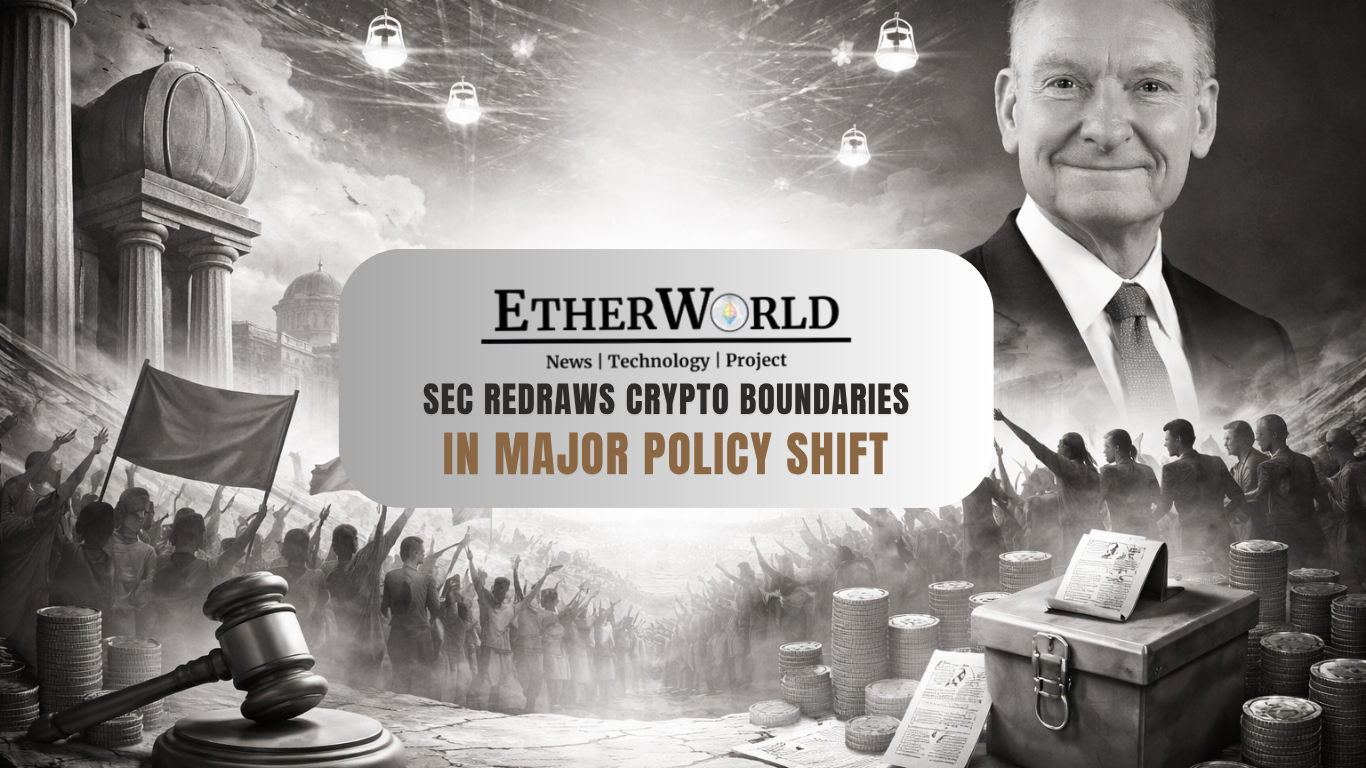
The U.S. Securities and Exchange Commission has made one of its clearest crypto statements yet, and it could reshape how the industry thinks about regulation in the years ahead. In a fresh interpretive release, the SEC has now formally stated that four categories of digital assets, digital commodities, digital tools, digital collectibles, and stablecoins, are not securities.
For builders, investors, exchanges, infrastructure teams, and token issuers, the question of whether an asset is a security has always been one of the most important and most frustrating issues in crypto. Entire businesses have operated under the shadow of unclear classification.
Founders have had to guess whether launching a token, issuing an NFT, or building a stablecoin-based product might later trigger securities concerns. The industry has long argued that innovation cannot scale properly when legal definitions remain vague, inconsistent, or dependent on after-the-fact enforcement.
- The Four Digital Asset Categories the SEC Says Are Not Securities
- Why the Howey Test Still Matters
- What This Means for NFTs, Meme Coins & Digital Collectibles
- Why Stablecoins Could Be One of the Biggest Winners
For years, one of the biggest complaints from the crypto industry was that the SEC rarely gave clear front-door guidance. Projects often had to piece together the agency’s view from enforcement actions, court disputes, settlement orders, and scattered public remarks. That made compliance expensive, slow, and uncertain. Even when companies wanted to operate carefully, it was not always obvious what category their asset belonged to.
The statement also suggests a shift in posture. Crypto regulation in the United States has often felt like a moving target, especially when different regulators seemed to view the same asset through different legal lenses. A release that explicitly defines non-security categories does not solve every jurisdictional question, but it does reduce one of the market’s biggest sources of ambiguity.
The Four Digital Asset Categories the SEC Says Are Not Securities
The SEC’s interpretation identifies four types of digital assets that it does not view as securities: digital commodities, digital tools, digital collectibles, and stablecoins. Each of these categories matters for different reasons.
Digital commodities are especially important because they cover the part of crypto the market often sees as decentralized assets or network-native commodities rather than corporate fundraising instruments. A clearer recognition of that category could support stronger differentiation between open blockchain assets and tokenized investment products.
Digital tools refers to assets that function more like utility instruments than investment contracts. These could include access tokens, functional digital permissions, or blockchain-native instruments that are purchased primarily for use rather than profit expectation.
Digital collectibles include NFTs, meme-style assets, and other digitally scarce items whose value may come from culture, identity, rarity, or ownership rather than a formal promise of financial return. This is especially important because collectibles have often sat in a grey area where market hype created confusion around whether every speculative digital object might be treated like a security.
Stablecoins may be the most commercially consequential category of all. These are central to payments, trading, onchain liquidity, treasury operations, and real-world blockchain adoption. Clearer treatment for stablecoins could remove some of the regulatory hesitation that has slowed broader institutional integration.
Why the Howey Test Still Matters
Despite the headline-friendly nature of this announcement, the SEC is not abandoning traditional securities law. In fact, the new interpretation still rests heavily on the classic Howey framework, the legal test used to determine whether an arrangement qualifies as an investment contract.
This matters because the agency is not saying that labels alone decide legal status. A token does not become a non-security just because it is called a collectible or utility asset. The structure, the promises, the representations, and the surrounding facts still matter. In other words, context remains everything.
That is why the SEC appears to be focusing not just on what an asset is called, but on what issuers tell buyers. If a developer or promoter markets an asset as something people should buy because the team will grow its value, manage its success, or deliver future upside, the investment-contract logic can still come into play. So while the release introduces clarity, it does not create a free pass for creative packaging.
What This Means for NFTs, Meme Coins & Digital Collectibles
One of the most interesting parts of the discussion is the treatment of digital collectibles. This is where crypto culture and securities law often collide. NFTs, meme coins, digital art, and similar assets may be purchased speculatively, but that alone does not automatically make them securities.
The SEC’s framing suggests that a purely collectible purchase, something closer to owning a baseball card, cultural artifact, or digital rarity, does not by itself create a securities relationship. That is a major point because it acknowledges that not every market with volatile prices is a securities market.
At the same time, the line can shift quickly. If a collectible is bundled with revenue rights, governance over a profit-seeking business, or promises that others will actively increase its value, it may start to look much more like an investment product. This distinction is especially relevant for projects experimenting with tokenized communities, fan ecosystems, or hybrid NFT-financial models.
For builders, the takeaway is simple: design matters, but messaging matters just as much. What you promise can matter as much as what you build.
Why Stablecoins Could Be One of the Biggest Winners
Stablecoins are really useful for people using blockchain in their lives, but they are also closely monitored. Stablecoins help with things like exchanging money, sending money across borders, getting dollars, and making payments.
This is a deal because stablecoins are no longer just for crypto fans. They are becoming part of conversations about money and finance, such as sending money home and new financial technology. If we know for sure how stablecoins are regulated, it could make big institutions more comfortable getting involved and making new products.
It could also help people understand that stablecoins differ from tokens people buy and sell. A digital dollar backed by money is not the same as a token people buy because they think it will be worth more later. We have needed a rule about this for a long time.
In Washington, this matters because crypto rules have been all over the place. For the market, it matters because it is better to have a signal than a confusing one.
This could be a change. One thing that has frustrated the crypto industry is that talking to regulators can be scary. If the new way of doing things makes it easier for projects to get rules and build things without fear of getting in trouble, that would be a big improvement.
The SEC's move is important. It is just the start. Courts can still interpret things differently. Future rules will determine how much of this guidance becomes real. Projects will still need to be careful about how they design their products and follow the rules.
The main message is clear. The SEC is trying to figure out which digital assets are investments and which are tools or payment instruments. This may seem obvious to people who know a lot about crypto. It is a big deal that regulators are officially saying it.
If you find any issues in this blog or notice any missing information, please feel free to reach out at yash@etherworld.co for clarifications or updates.
To promote your Web3 articles, events, and projects, you may reach out anytime via EtherWorld PR for submissions and collaboration.
Related Articles
- US Senate Agricultural Committee Reschedules Crypto Market Structure Markup for January 29
- Trump’s Executive Order for Crypto in Your 401(k) Retirement Plans
- Polygon & Stablecoins: The Shift Towards 24/7 Global Settlements
- SEC Crypto Task Force Roundtable on Financial Surveillance & Privacy Announced
- Coinbase Pushes Back on Senate Banking Crypto Bill
To follow blockchain news, track Ethereum protocol progress, and read our latest stories, subscribe to our weekly today.
Disclaimer: The information contained in this website is for general informational purposes only. The content provided on this website, including articles, blog posts, opinions, & analysis related to blockchain technology & cryptocurrencies, is not intended as financial or investment advice. The website & its content should not be relied upon for making financial decisions. Read full disclaimer & privacy policy.
To stay updated on blockchain news, Ethereum protocol progress, and our latest stories, subscribe to our weekly digest and YouTube channel for ELI5 content.
To promote your Web3 articles, events, project updates, and Press Releases, reach out anytime via EtherWorld PR for submissions and collaboration. For other queries, email contact@etherworld.co.
If you’d like to support our work, share the content and consider donating at avarch.eth.
Join our community on Discord and follow us on Twitter, Facebook, LinkedIn & Instagram.

 ×
×

Author

Yash Kamal Chaturvedi is a Blockchain Content & Ops Specialist at Avarch LLC, writing on Ethereum & governance since 2021. Covers ACD/ACDE calls, EIPs, upgrades, staking, security & ecosystem trends.