GENIUS Act Rules Still Await Final Approval
U.S. regulators miss the GENIUS Act deadline, leaving stablecoin issuers awaiting final rules as the market moves toward a regulated future.
After federal officials missed the deadline for completing the implementation rules under the GENIUS Act, the U.S. stablecoin market entered a new chapter of uncertainty. The Act, which was signed into law by President Donald Trump on July 18, 2025, established the first federal regulatory framework for stablecoins backed by dollars. Regulators have yet to provide issuers with comprehensive compliance guidelines, even though the law is now in effect. The delay occurs as businesses get ready for the law's staggered implementation and the July 2028 final compliance deadline.
Regulators Miss GENIUS Act Deadline
Within a year of the GENIUS Act's passage, several U.S. financial regulators were required to release implementation guidelines.
The deadline has now elapsed without the finalisation of a comprehensive regulatory framework. The Office of the Comptroller of the Currency (OCC), the Federal Reserve, the Federal Deposit Insurance Corporation (FDIC), the National Credit Union Administration (NCUA), the Treasury Secretary, and each state stablecoin regulator were all instructed by Section 13 of the enacted statute to issue implementing regulations through the formal notice-and-comment rulemaking process within a year of the law's enactment.
Regulators are not done with that procedure yet, though.
The principle rule packages released by the Treasury Department, Federal Deposit Insurance Corporation (FDIC), National Credit Union Administration (NCUA), and Office of the Comptroller of the Currency (OCC) are still in the proposal stage. There are still a number of incomplete regulations pertaining to the Federal Reserve and federal anti-money laundering authorities that are up for public opinion.
The statute is still in force even if authorities failed to meet the deadline. While waiting for the final regulatory framework, stablecoin issuers have to keep getting ready for compliance, which reduces the amount of time they have to adopt any new requirements after the rules are established.
New Standards Reshape Stablecoin Issuers
The United States' first government regulations for payment stablecoins were established by the GENIUS Act. To increase transparency and boost trust in dollar-backed stablecoins, issuers are required to maintain reserves that are 1:1 backed by cash or short-term U.S. Treasury securities and to make monthly reserve disclosures.
As previously discussed in Circle Introduces USD Coins, transparent reserves and uniform disclosures were the foundation upon which Circle established USDC. These design principles place USDC among the stablecoins now functioning within a framework akin to the new federal regulations because they closely correspond with the requirements imposed under the GENIUS Act.
Similar to what was previously said in "Coinbase Announces Support for USDC Stablecoin," Coinbase responded to the growing demand for transparent and regulated digital currencies by endorsing USDC early on. As the GENIUS Act gets closer to full implementation, that strategy appears to be more and more in line with the direction of U.S. regulation.
Tether Faces the Biggest Transition
With almost $184 billion in circulation, Tether's USDT is still the largest stablecoin in the world, therefore the delayed rulemaking is especially important. Tether must assess how it can comply with the GENIUS Act's reserve requirements in order to continue operating under the federal framework of the United States.
According to the legislation, impacted issuers have until July 2028 to comply with the new requirements. However, businesses still lack clarity on a number of compliance aspects in the absence of final implementation standards, which makes long-term planning more difficult.
Instead of mandating immediate changes after the law's passage, the delayed transition is meant to provide issuers enough time to modify their reserve structures, reporting procedures, and regulatory duties.
Stablecoin Market Continues to Expand
Expectations for the stablecoin market are still rising despite the regulatory delay. According to industry estimates, the sector may grow to $4 trillion by 2030, making regulatory certainty crucial for issuers, financial institutions, and payment providers.
Earlier remarks by the U.S. Treasury Secretary Scott Bessent expressed support for this prediction, saying, "Recent reporting projects that stablecoins could grow into a $3.7 trillion market by the end of the decade. The GENIUS Act's approval increases the likelihood of such an eventuality."
His comments are in line with the general belief that a well-defined federal regulatory framework might hasten institutional adoption and increase the function of regulated dollar-backed stablecoins in international payments.
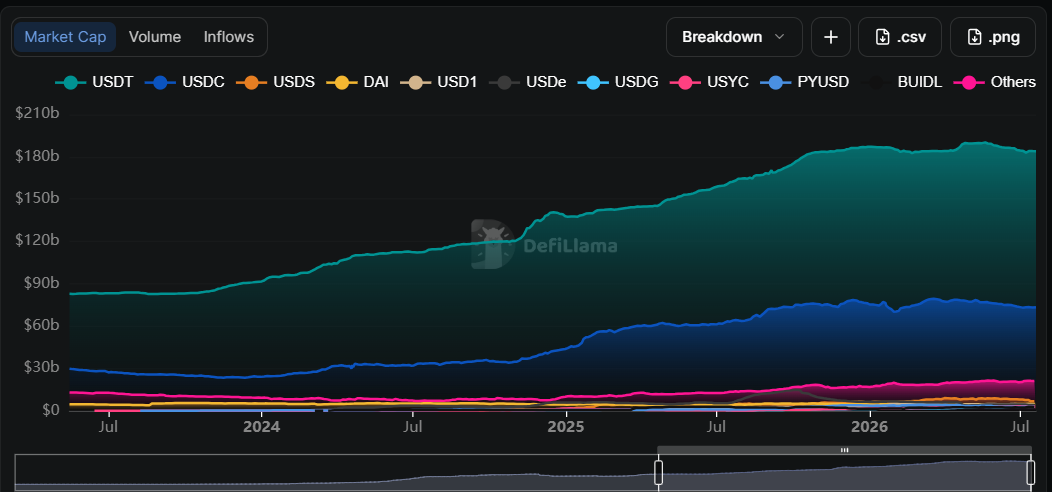
Source: Stablecoin
For issuers that already meet the Act's transparency and reserve expectations, the delayed rulemaking may simply postpone regulatory certainty. For others still adapting to the new framework, the remaining transition period offers time to prepare before the final July 2028 compliance deadline.
If you find any issues in this article or notice missing information, please feel free to reach out at team@etherworld.co for clarifications or updates.
To promote your Web3 articles, events, and projects, you may reach out anytime via EtherWorld PR for submissions and collaboration.
Related Articles
- Bitcoin's Latest Proposal Sparks Major Community Divide
- Securitize Goes Public With $1.25B NYSE Debut
- Ondo Brings BlackRock ETF & Micron Shares Onchain
- 17 Banks Join Swift's Blockchain Payment Push
- Europe's Largest Fintech Revolut to Delist USDT by August 31
To follow blockchain news, track Ethereum protocol progress, and read our latest stories, subscribe to our weekly today.
Join the EtherWorld & Avarch Internship Program and build your career in blockchain, content, social media, video, podcast editing, or operations. Send your resume and brief introduction to contact@etherworld.co.
Disclaimer: The information contained in this website is for general informational purposes only. The content provided on this website, including articles, blog posts, opinions, & analysis related to blockchain technology & cryptocurrencies, is not intended as financial or investment advice. The website & its content should not be relied upon for making financial decisions. Read full disclaimer & privacy policy.
To stay updated on blockchain news, Ethereum protocol progress, and our latest stories, subscribe to our weekly digest and YouTube channel for ELI5 content.
To promote your Web3 articles, events, project updates, and Press Releases, reach out anytime via EtherWorld PR for submissions and collaboration. For other queries, email contact@etherworld.co.
If you’d like to support our work, share the content and consider donating at avarch.eth.
Join our community on Discord and follow us on Twitter, Facebook, LinkedIn & Instagram.

 ×
×

Author

Nidhi Kumari is a Web3 content writer at EtherWorld.co, tracking ecosystem developments, funding activity, and market trends shaping the crypto space.