What Happens If Every AI Agent Gets Its Own Crypto Wallet?
What happens if every AI agent gets its own crypto wallet? Explore how AI payments, machine-to-machine commerce, stablecoins, and digital ownership could reshape the internet.
A true digital workforce has never existed online. All applications, websites, and AI tools ultimately depend on people to manage accounts, make payments, and transfer money. But this assumption has begun to change. The next step, when AI agents can do ever-more-complex tasks, is to grant them financial independence. An AI agent may be able to communicate with other software, pay for services, and make money without human involvement with the aid of a Bitcoin wallet. The internet may transform from a network of connected data to a network of independent economic actors if it happens on a significant scale.
AI Agents Would Become Economic Participants, Not Just Tools
Software has been an instrument for decades. Although it could handle data, automate tasks, and speed up manual labour, it was unable to engage in economic activity on its own. A person, a business account, or a conventional payment method was necessary for every financial choice.
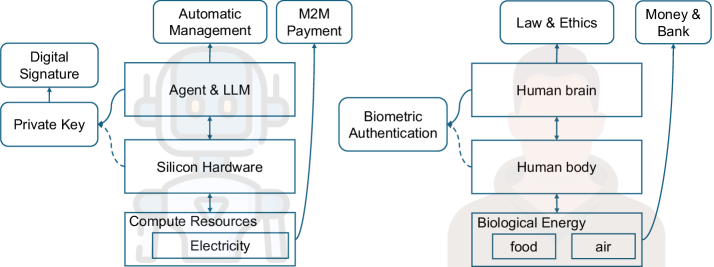
The relationship is altered by a cryptocurrency wallet. An AI agent may hold digital assets, accept payments, pay for services, and communicate with other systems without needing human consent thanks to a wallet. The agent participates actively in economic activities rather than serving as a passive assistant.
AI bots are anticipated to do increasingly complex tasks; hence, this is important. When demand increases, a software agent may rent cloud computing resources, a research agent could buy premium datasets, and a business agent could pay for digital services or APIs required to do a task. Every time money is involved, the agent might carry out these operations automatically rather than returning requests to a person.
Source: Agent Economy
The impact of this future may be considerable. By 2030, according to investment firm VanEck, there may be over 1 billion AI bots working for companies, customers, and online services.
In both the AI and cryptocurrency sectors, this concept is gaining traction. The 2024 Electric Capital Developer Report states that developer activity in AI-related cryptocurrency projects has grown dramatically, making it one of the blockchain development categories with the greatest rate of growth.
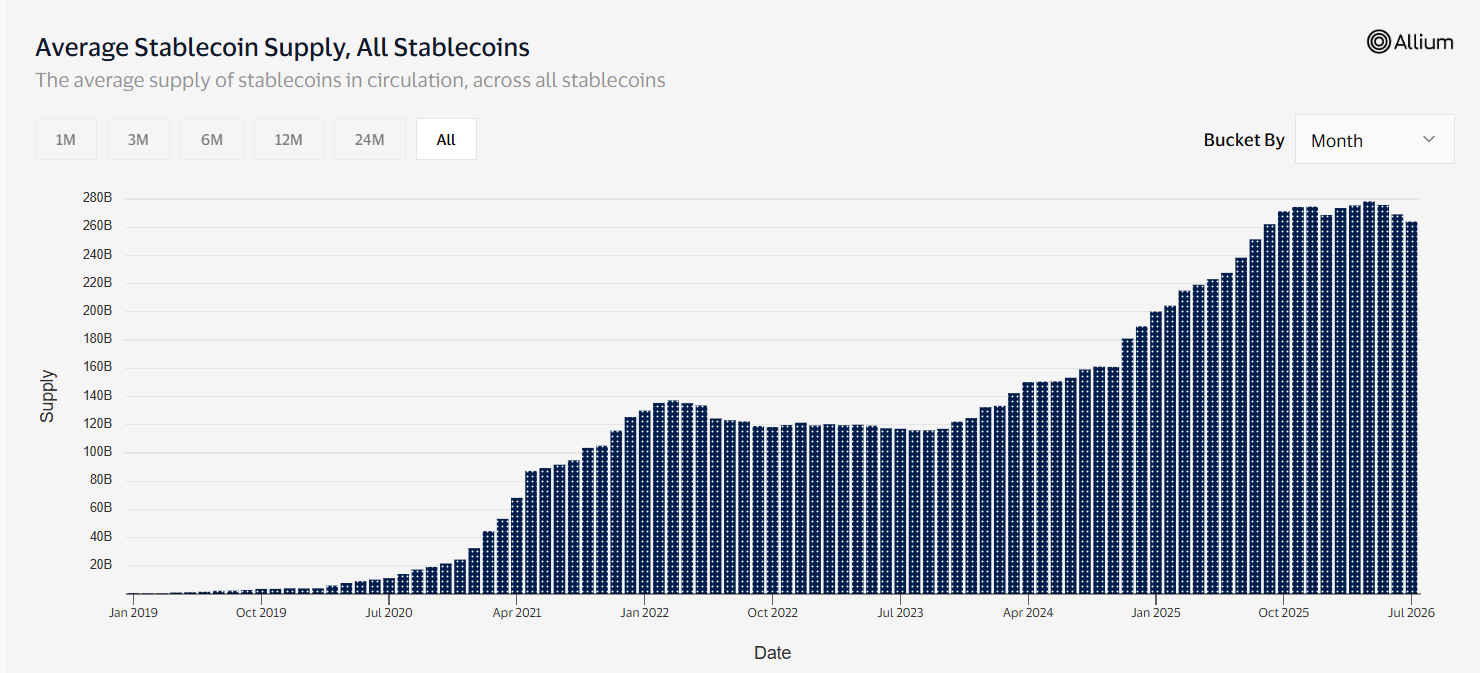
In the meantime, a lot of digital payments are already being processed using blockchain technology. Stablecoins have handled trillions of dollars in yearly adjusted transaction volume, according to Visa's on-chain analytics platform, demonstrating that blockchain payment rails are getting better at supporting actual economic activity.
The internet may transition from an economy where people use software to one where software itself becomes a customer, a service provider, and a financial actor if billions of AI agents are given access to wallets.
The Internet Could Shift Toward Machine-to-Machine Commerce
The primary purpose of the Internet was to serve human users. People use a variety of services, buy digital goods, pay monthly fees, and subscribe to software. However, an alternative model where software acts as both the buyer and the seller might be introduced by AI agents with wallets.
For a few cents, a research agent would buy access to specialised data; a coding agent might rent computer power for a few minutes; or a business assistant might pay another AI service to create designs, perform analysis, or validate data. These transactions could occur immediately rather than requiring human approval.
This is crucial because thousands of small exchanges, rather than a few big transactions, might serve as the foundation of the future AI economy. To finish a single task, an AI agent may demand dozens of services, each of which may cost a different amount. For this kind of activity, traditional payment methods were not intended.
Source: Agent Economy
The impact on the economy can be significant. Generative AI has the potential to generate between $2.6 trillion and $4.4 trillion in yearly economic value across industries, according to McKinsey. Automation may contribute significantly to such value, but whole new business models based on autonomous software may also contribute.
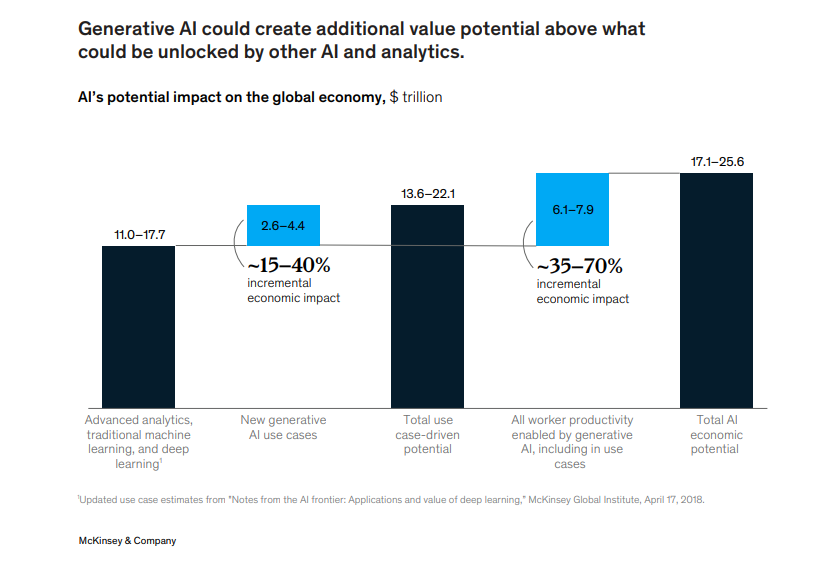
Source: McKinsey
The internet might develop into a marketplace where software continuously exchanges value without direct human intervention if AI agents start purchasing services from other AI agents.
Crypto Wallets Could Unlock an Internet Built on Micropayments
One of the most intriguing outcomes of AI wallets is the potential for a micropayment-based internet. Because payment processing expenses sometimes surpass the value being transferred, very tiny transactions have been challenging for years.
For this reason, a lot of internet companies use bundled services, ads, or memberships. It has rarely been feasible to charge someone $0.02 for a minute of computing power or $0.01 to read a single article.

Source: x402 Micro-payment Protocol
Because AI agents do not consider annual contracts or monthly budgets, this equation is altered. At any given time, they consume precisely what they require. An AI system can utilise a wallet to only pay for the resources it consumes, such as processing power, data, storage, APIs, or specialised services.

Source: Agent Distribution on Chain
Because stablecoins offer digital currency that can travel swiftly across blockchain networks, they might be crucial to this system. Stablecoins now handle trillions of dollars in yearly transactions, according to Visa On-chain Analytics, demonstrating the growing use of blockchain-based payments for actual economic activity.
Stablecoins are extending beyond trading into payments, settlements, and international transactions, according to an additional study from Artemis and Castle Island Ventures.
Future transaction volumes may increasingly reflect software paying software rather than human money transfers if AI agents grow to be significant consumers of these payment networks.
Ownership, Accountability, & Control Become Bigger Questions
Giving wallets to AI agents also raises challenging issues that technology cannot resolve on its own. As of January 1, 2025, numerous representative web3 projects have built AI agents based on ElizaOS, with their combined market capitalization surpassing $20 billion dollars.
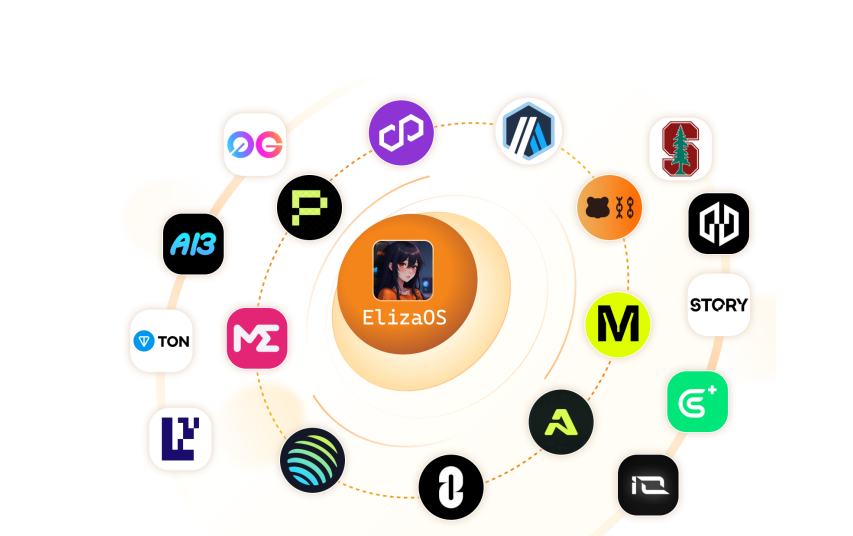
Source: Eliza: A Web3 friendly AI Agent Operating System
Who is in charge if an AI system makes poor financial decisions? Who installed the agent; the developer, the user, or the organisation that supplied the infrastructure? As AI agents become more autonomous, these questions become even more crucial.
Additionally, trust is a problem. Interacting with autonomous software differs from human evaluation of firms, contracts, and financial institutions. Users can require assurances that an AI agent is operating inside predetermined bounds and in accordance with explicit guidelines.
Policy groups are already investigating these issues. Governance, digital identity, and accountability are important concerns for AI systems in the future, according to the World Economic Forum.
In a similar vein, the OECD AI Policy Observatory keeps tabs on international conversations around responsible AI development, transparency, and supervision.

Source: Agent-to-Agent Finance
Thus, the discussion surrounding AI wallets goes beyond technology and money. Additionally, it involves developing systems that allow autonomous software to engage in economic activities without generating new risks.
The Internet May Eventually Serve AI Agents as Much as Humans
AI wallets may have more effects than only financial ones. It could change who the internet is intended for.
Websites, apps, and digital services have been developed with human users in mind for decades. Human requests are expected by search engines. Online retailers aim to attract human consumers. Payment systems make the assumption that people make choices.

Source: Agent-to-Agent Finance
However, if AI agents start to actively participate in the economy, companies might have to develop software and human products. Pricing may be directly exposed to AI systems by services. Marketplaces where agents bargain, evaluate offers, buy goods, and carry out transactions automatically might develop.
This concept is already having an impact on how tech companies envision the future. While many businesses are making significant investments in autonomous software systems, NVIDIA CEO Jensen Huang has frequently referred to AI agents as the next important phase of computing.
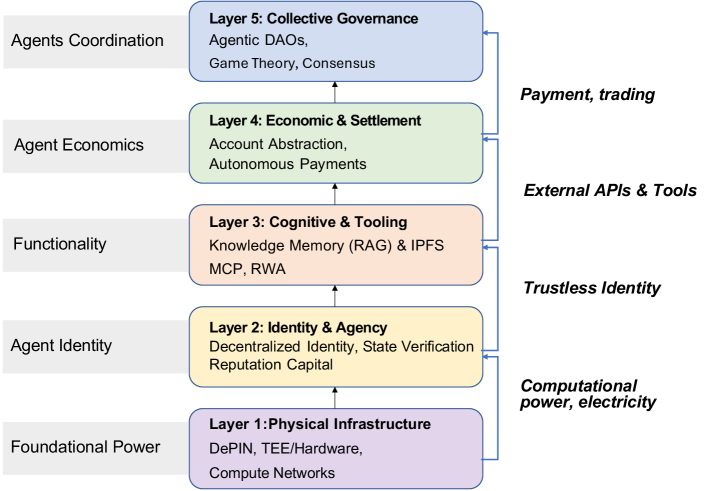
Crypto wallets may end up being the necessary infrastructure to make this future possible. They would be more than just payment instruments; they would provide AI agents access to marketplaces, an economic identity, and the capacity to engage in autonomous digital trade.

Source: Agent-to-Agent Finance
Therefore, the question is not whether all AI agents will receive cryptocurrency wallets. The more crucial question is whether autonomous software-powered future internet systems can function effectively without one.
Crypto Wallets Could Become the Financial Identity Layer for AI
AI wallets may have more significant effects than just payments. Perhaps it is identity.
Through credit cards, bank accounts, business registrations, and payment records, people already have financial identities. Currently, AI agents don't have a comparable system.
The identity layer might be a cryptocurrency wallet. Building transaction histories, managing resources, establishing trust, and interacting with digital services across platforms could all be made possible by it.
This could result in completely new markets where AI agents buy services, compare goods, negotiate pricing, confirm information, and work with other agents without continual human intervention.
According to data from Stanford's AI Index, investment in AI infrastructure is still high, but corporate use of AI is still growing globally.
AI systems will require procedures for ownership, payment, and economic engagement in addition to intelligence as they grow more sophisticated.
Because of this, the subject of AI wallets is significant. It has nothing to do with whether software can transfer funds. It concerns whether billions of intelligent systems will coexist with humans in future digital economies or if they will be designed only for humans.
The internet might cease to be a network where people utilise software if each AI bot gets its own cryptocurrency wallet. It might develop into a network where software acts as an economic actor, producing, purchasing, selling, and working together in ways that are still mostly speculative today.
If you find any issues in this article or notice missing information, please feel free to reach out at team@etherworld.co for clarifications or updates.
To promote your Web3 articles, events, and projects, you may reach out anytime via EtherWorld PR for submissions and collaboration.
Related Articles
- BitMart Is Shutting Down, Trading Ends August 26
- Coinbase Wins $150K SEC Settlement Over Missing Gensler Texts
- BitMEX to Shut Down After 11 Years
- Why did Malaysia Shut Down Balaji Network School Hub?
- Telegram Launches Gram Wallet for 1 Billion Users
To follow blockchain news, track Ethereum protocol progress, and read our latest stories, subscribe to our weekly today.
Join the EtherWorld & Avarch Internship Program and build your career in blockchain, content, social media, video, podcast editing, or operations. Send your resume and brief introduction to contact@etherworld.co.
Disclaimer: The information contained in this website is for general informational purposes only. The content provided on this website, including articles, blog posts, opinions, & analysis related to blockchain technology & cryptocurrencies, is not intended as financial or investment advice. The website & its content should not be relied upon for making financial decisions. Read full disclaimer & privacy policy.
To stay updated on blockchain news, Ethereum protocol progress, and our latest stories, subscribe to our weekly digest and YouTube channel for ELI5 content.
To promote your Web3 articles, events, project updates, and Press Releases, reach out anytime via EtherWorld PR for submissions and collaboration. For other queries, email contact@etherworld.co.
If you’d like to support our work, share the content and consider donating at avarch.eth.
Join our community on Discord and follow us on Twitter, Facebook, LinkedIn & Instagram.

 ×
×

Author

Nidhi Kumari is a Web3 content writer at EtherWorld.co, tracking ecosystem developments, funding activity, and market trends shaping the crypto space.