S&P Global to Acquire OpenZeppelin
S&P Global will acquire OpenZeppelin, combining institutional risk intelligence with smart contract security as finance moves deeper onchain.
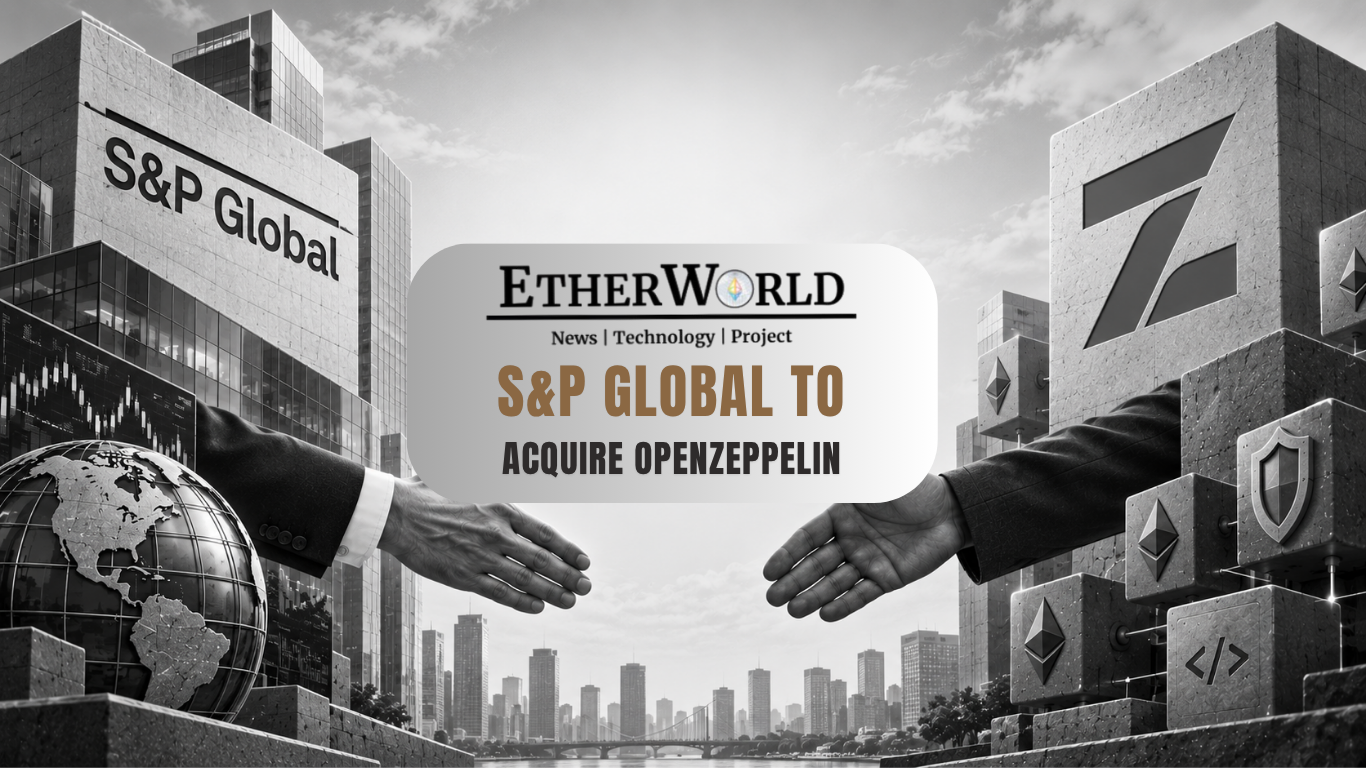
S&P Global has entered into an agreement to acquire OpenZeppelin, bringing one of the blockchain industry's most widely used smart contract security providers into a company best known for financial ratings, benchmarks, data and risk intelligence.
OpenZeppelin has spent more than a decade building smart contract libraries, security tools and audit services used across Ethereum, DeFi, stablecoins and tokenised assets. S&P Global, meanwhile, has been expanding its digital asset footprint as banks, asset managers and market infrastructure providers explore blockchain-based settlement and tokenisation.
S&P Global Moves Into Onchain Security
S&P Global said the acquisition is designed to strengthen its ability to assess risk as capital markets increasingly move onchain. According to the company, OpenZeppelin will complement its existing capabilities in benchmarks, financial intelligence and risk assessment by adding expertise around smart contracts and blockchain infrastructure.
That represents an important change in how established financial companies are approaching crypto. The first stage of institutional participation largely revolved around gaining exposure to digital assets through trading, custody and investment products. The next stage increasingly concerns the infrastructure behind those assets.
EtherWorld has previously explored how Ethereum is becoming a potential financial backend as stablecoins, tokenised securities and Layer 2 networks expand. If financial products are issued and settled using smart contracts, institutions also need ways to evaluate the software risk behind those products.
Financial terms of the acquisition were not disclosed. The transaction remains subject to customary closing conditions and is not expected to have a material impact on S&P Global's financial results.
OpenZeppelin will continue operating under its existing name as a separate business unit. CEO Demian Brener will remain in charge of the company and report to S&P Global Ratings President Yann Le Pallec.
Why OpenZeppelin Matters to Ethereum
EtherWorld recently covered OpenZeppelin's position on AI and DeFi security, where the company stressed the importance of stronger operational security as increasingly sophisticated technology changes the threat environment facing decentralized finance. That problem is growing rather than disappearing.
In April, EtherWorld reported that more than $635 million was lost across 28 DeFi exploits. August brought another series of damaging attacks, making it one of 2026's worst months for DeFi hacks.
An institution evaluating a tokenised fund does not only need to understand the issuer, liquidity, counterparty and regulatory risks. It may also need to understand whether the smart contracts controlling issuance, settlement, redemptions and asset movement contain technical vulnerabilities.
The expansion of Ethereum Institutional, which recently secured support from more than 100 ecosystem participants, illustrates how much infrastructure is now being built specifically to help financial organisations navigate Ethereum. Those institutions require custody, compliance, privacy, settlement, liquidity and increasingly security assurance.
Today we are announcing that S&P Global has entered an agreement to acquire OpenZeppelin.
— OpenZeppelin (@OpenZeppelin) September 17, 2026
Onchain finance is growing from an emerging market into core financial infrastructure, and the standards and rails our team and community built are becoming the rails of global finance.… pic.twitter.com/iADnpWzQ8F
Traditional Finance Is Moving Down the Blockchain Stack
Banks and asset managers are no longer experimenting only with crypto trading. They are testing stablecoin settlement, tokenised bonds, blockchain-based funds, programmable payments and onchain collateral systems.
EtherWorld's guide on what enterprises need to know about stablecoins examined how stablecoins are increasingly being used for payments, treasury operations and tokenised asset settlement rather than simply crypto trading. Fidelity, for example, launched the Ethereum-based FIDD stablecoin earlier this year.
Projects such as Ondo, Securitize, Chainlink and Maple are building different parts of the emerging RWA stack, as explored in EtherWorld's analysis of six projects shaping the next phase of real-world asset tokenisation. In India, SEBI recently launched Demat 2.0 for tokenised corporate bonds, connecting blockchain-based bond issuance with settlement using the RBI's wholesale digital rupee.
Three companies had already raised ₹1,025 crore through the infrastructure when EtherWorld reported on the pilot. These developments support a broader shift EtherWorld has been tracking through its coverage of Ethereum's institutional and government adoption.
S&P Global has also been expanding elsewhere in digital assets. On September 14, just three days before announcing the OpenZeppelin agreement, the company led a strategic investment in crypto market data provider Kaiko.
What the Acquisition Means for Onchain Finance
The biggest implication of the transaction may be that smart contract security is moving from a specialised crypto service toward something resembling mainstream financial risk infrastructure. Traditional financial markets rely on multiple layers of assurance.
- Credit rating agencies evaluate issuers.
- Auditors examine financial reporting.
- Market data providers track pricing and liquidity.
- Custodians secure assets.
- Regulators oversee market conduct.
A tokenised bond may be financially sound while the contract governing it contains a vulnerability. A stablecoin may be fully collateralised while an access-control mistake creates an operational risk.
A DeFi protocol may have strong economic design while an implementation bug allows funds to be drained. The repeated security incidents across DeFi demonstrate why these risks cannot be treated separately from the financial products built on top of them.
OpenZeppelin said its existing audits, engineering services, ecosystem programmes and open-source development will continue. S&P Global's institutional distribution and research capabilities are instead expected to expand the audience for those services.
The network's institutional adoption is accelerating because it offers mature smart contract infrastructure, liquidity, token standards and a large developer ecosystem. The same programmability that makes Ethereum useful for financial applications also creates technical risk that conventional finance must learn to evaluate.
To promote your Web3 articles, events, and projects, you may reach out anytime via EtherWorld PR for submissions and collaboration.
Related Articles
- Ethereum’s Issuance Debate: Could Staking Rewards Fall to Zero?
- Ethereum Foundation Ranks 62 EIPs for Hegotá
- Ethereum Protocol Update: ACDE #244
- Vitalik Buterin Outlines Ethereum's Lean Vision
- Ethereum’s Funding Debate Raises Bigger Questions for Protocol Sustainability
To follow blockchain news, track Ethereum protocol progress, and read our latest stories, subscribe to our weekly today.
Join the EtherWorld & Avarch Internship Program and build your career in blockchain, content, social media, video, podcast editing, or operations. Send your resume and brief introduction to contact@etherworld.co.
Disclaimer: The information contained in this website is for general informational purposes only. The content provided on this website, including articles, blog posts, opinions, & analysis related to blockchain technology & cryptocurrencies, is not intended as financial or investment advice. The website & its content should not be relied upon for making financial decisions. Read full disclaimer & privacy policy.
To stay updated on blockchain news, Ethereum protocol progress, and our latest stories, subscribe to our weekly digest and YouTube channel for ELI5 content.
To promote your Web3 articles, events, project updates, and Press Releases, reach out anytime via EtherWorld PR for submissions and collaboration. For other queries, email contact@etherworld.co.
If you’d like to support our work, share the content and consider donating at avarch.eth.
Join our community on Discord and follow us on Twitter, Facebook, LinkedIn & Instagram.

 ×
×

Author

Yash Kamal Chaturvedi is a Blockchain Content & Ops Specialist at Avarch LLC, writing on Ethereum & governance since 2021. Covers ACD/ACDE calls, EIPs, upgrades, staking, security & ecosystem trends.