RBI Defends Rupee: Will India’s Stablecoin Premium Rise?
RBI intervention steadies the rupee, but currency volatility and tight liquidity could push India’s stablecoin premium higher again.
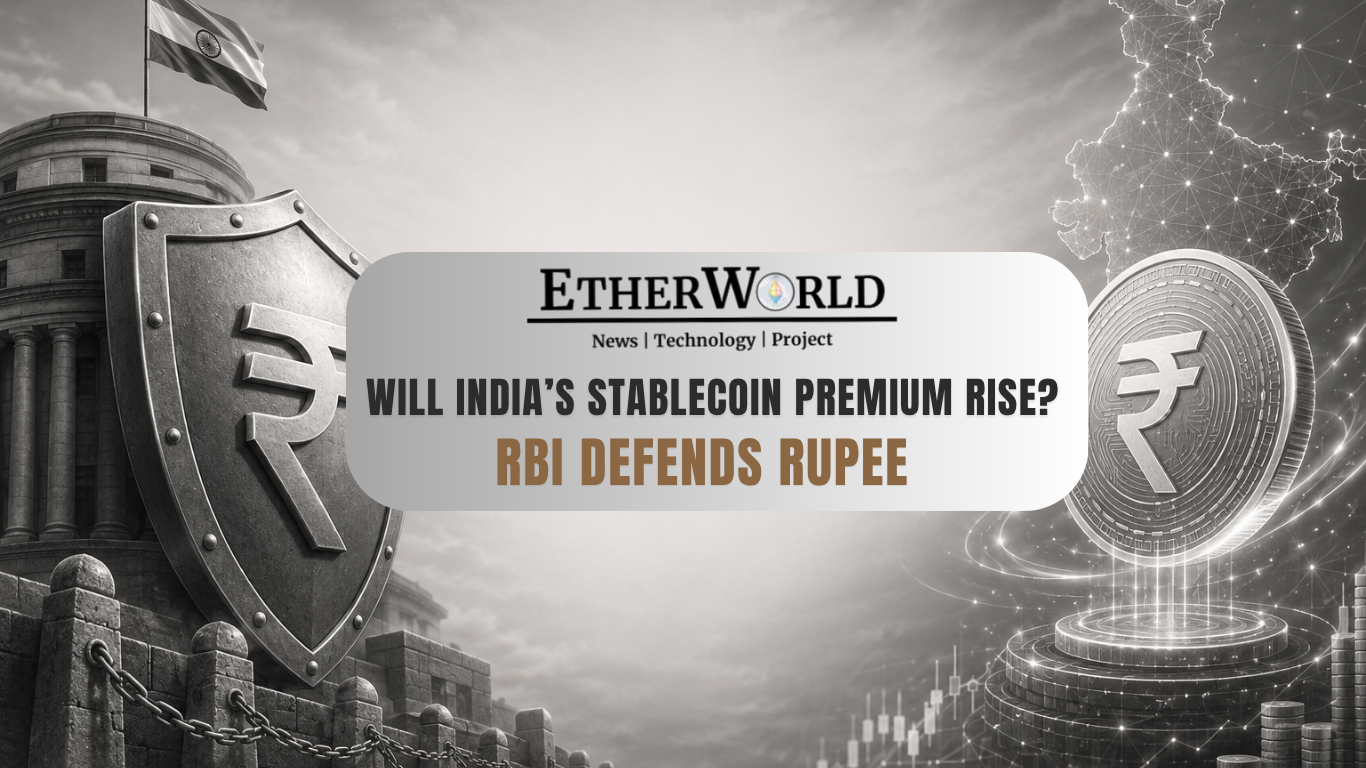
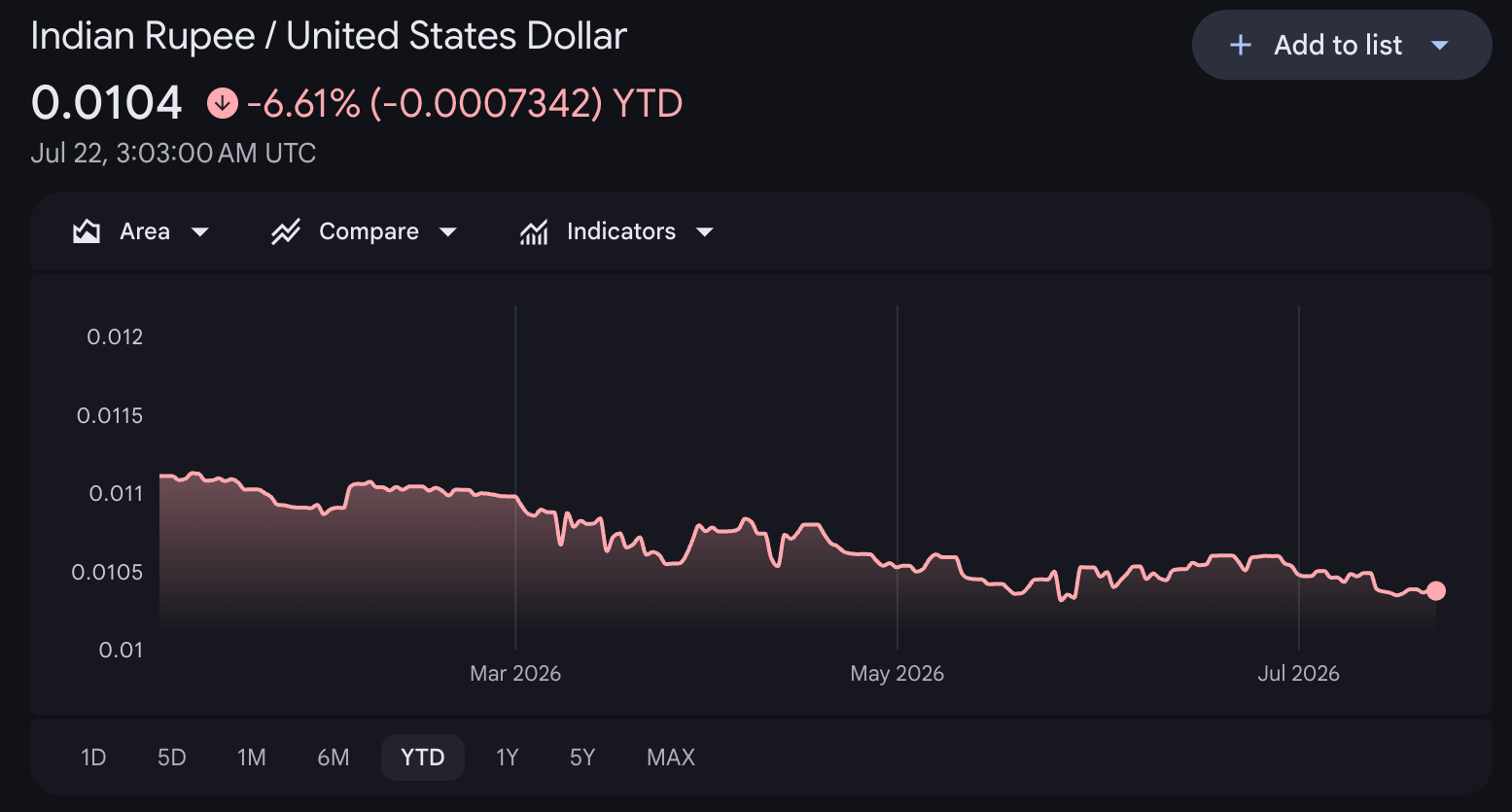
The Reserve Bank of India has reportedly intervened in the foreign-exchange market after the Indian rupee weakened to a two-month low against the US dollar, raising fresh questions about what currency volatility could mean for India’s cryptocurrency industry.
On July 20, 2026, the rupee fell as low as approximately ₹96.52 against the dollar before recovering slightly. The RBI reportedly sold dollars through state-owned banks to prevent a more disorderly decline. Rising crude-oil prices, geopolitical instability in the Middle East and persistent domestic dollar demand were among the major forces weighing on the currency.
Why RBI Intervened as the Rupee Weakened
Calling this a “collapse,” as some social-media posts have done, is exaggerated. The RBI was not rescuing a failed currency. It was attempting to reduce excessive volatility and prevent speculative pressure from accelerating.
Nevertheless, the development matters greatly for Indian cryptocurrency users. A weaker rupee does not affect only imported fuel, overseas education or foreign travel. It also changes the INR value of dollar-backed stablecoins such as USDT and USDC.
India has already experienced a severe stablecoin supply imbalance. In June 2026, India’s USDT premium reportedly climbed above 8.5%, with USDT trading near ₹102.88 while the official dollar exchange rate was approximately ₹94.65.
India imports most of the crude oil it consumes. When international oil prices rise, Indian refiners and energy companies require more US dollars to pay suppliers. That increases dollar demand and can place downward pressure on the rupee.
The recent depreciation was intensified by geopolitical uncertainty and crude prices approaching levels that could increase India’s import bill, inflation risk and current-account pressure.
The RBI has intervened several times during 2026. In May, it reportedly sold billions of dollars as the rupee approached record lows. It has also used foreign-exchange swaps and other liquidity tools. EtherWorld previously examined how an RBI $5 billion USD-INR swap revived India’s stablecoin debate.
Intervention, however, does not necessarily mean that the RBI intends to defend one permanent exchange rate. Its objective is generally to prevent disruptive movements rather than guarantee that the rupee will never depreciate. This distinction is important. If oil prices remain high and global investors continue demanding dollars, RBI intervention may slow the rupee’s fall without reversing the underlying pressure.
The central bank must also balance currency stability against the cost of repeatedly using reserves. Selling too many dollars can weaken India’s reserve buffer, while excessively defending the rupee can create an artificial exchange rate that becomes difficult to maintain.
How a Weaker Rupee Changes India’s Stablecoin Premium
A stablecoin premium is the difference between the local price of a dollar-backed stablecoin and the official value of one US dollar. For example, when USDT was trading around ₹102.88 and the dollar was worth approximately ₹94.65, the premium exceeded 8.5%. At an official exchange rate near ₹96.45, the same ₹102.88 USDT price would represent a premium closer to 6.7%.
Therefore, rupee depreciation can initially compress the percentage premium even when the actual INR price of USDT remains unchanged. That does not automatically make stablecoins cheaper for Indian buyers. Someone purchasing USDT at ₹102.88 is still paying ₹102.88. The smaller percentage premium merely reflects that the underlying dollar has become more expensive in rupee terms.
Exporters, freelancers and Web3 companies may also view dollar-backed assets as a temporary hedge against rupee depreciation. This can create additional stablecoin demand precisely when regulatory scrutiny has restricted supply.
India’s earlier premium was associated with reduced stablecoin inflows, liquidity shortages and enforcement action involving large virtual-asset transactions. When supply is constrained, even a moderate increase in demand can push USDT well above its theoretical INR value.
The weaker official rupee rate will mathematically reduce the percentage premium. At the same time, risk-driven demand and restricted supply could raise the absolute USDT price from ₹102–₹103 toward even higher levels.
USDC could become more relevant during this period because Coinbase introduced direct USDC-INR trading in India. Coinbase has also launched direct INR deposit and withdrawal rails and BTC-INR trading support.
What This Means for Indian Exchanges, Traders and Web3 Companies
A widening stablecoin premium increases entry costs for retail traders. A user paying ₹104 for an asset theoretically worth ₹96 is beginning with a substantial disadvantage. The premium must narrow or crypto prices must rise before the user can recover that additional cost.
It also fragments pricing across platforms. Exchanges with strong INR banking integrations and deeper liquidity may offer comparatively efficient execution, while smaller platforms and informal OTC markets may quote much higher prices.
This makes exchange selection increasingly important. EtherWorld’s analysis of the top Indian cryptocurrency exchanges highlighted how liquidity, regulatory compliance and INR support differ across platforms. Our guide on where Indian users should trade after recent exchange concerns similarly emphasised that FIU registration alone does not guarantee strong liquidity or user protection.
Global exchanges entering India could help close the liquidity gap. Coinbase’s renewed India push is particularly significant because it connects local users with international order books. However, its INR infrastructure has also generated questions regarding withdrawals and self-custody, as discussed in Coinbase India INR Rails Comes With a Catch.
Businesses earning revenue in dollars or stablecoins may benefit when converting funds into INR. Their dollar-denominated income becomes worth more domestically. Conversely, companies paying foreign developers, cloud providers, auditors or infrastructure vendors in dollars will face higher operating costs.
Market makers face an especially difficult environment. They must manage exchange-rate risk, crypto-price risk, banking constraints, TDS obligations and compliance requirements simultaneously. India’s 1% TDS on many crypto transactions reduces capital efficiency because funds are deducted from each qualifying trade.
When combined with an 8% stablecoin premium, the total friction can push sophisticated traders toward offshore or informal channels. The government’s tightening oversight of large OTC transactions may improve transparency, but it could also reduce legitimate liquidity unless regulated alternatives are developed. The issue sits within India’s wider regulatory debate, recently examined when the Parliamentary Finance Panel met the RBI over cryptocurrency regulations and the RBI rejected giving private crypto assets legal monetary status.
RBI Can Defend the Rupee but Not Fix Crypto’s Liquidity Gap
The RBI’s intervention may stabilise the official USD-INR market, but it cannot directly resolve India’s stablecoin premium. The premium is not driven only by the rupee’s exchange rate.
It reflects restricted crypto liquidity, limited banking access, compliance costs, enforcement risk, fragmented order books and strong demand for digital dollars. Even if the RBI successfully strengthens the rupee, USDT could continue trading above fair value if stablecoins cannot enter Indian markets efficiently. Conversely, a weaker rupee may reduce the reported percentage premium without making stablecoins meaningfully more affordable.
This exposes a contradiction in India’s digital-asset policy. The RBI remains sceptical of private stablecoins. A former deputy governor argued that India has no compelling case for private stablecoins, particularly when the country already has UPI and a central-bank digital currency.
But Indian demand for USDT and USDC is not primarily driven by the need to replace UPI. Users need dollar liquidity for international crypto markets, cross-border settlement, global applications and protection against currency volatility.
As EtherWorld discussed in Does India Need Stablecoins When UPI Already Works?, domestic payment efficiency and international digital-dollar access solve different problems. India could respond by developing regulated stablecoin gateways, clearer rules for reserves and issuers, transparent OTC markets and better INR liquidity on compliant exchanges.
It could also explore regulated rupee-denominated blockchain assets, including models resembling India’s proposed sovereign-backed stablecoin. Until then, the premium will remain an unofficial indicator of stress within India’s crypto-financial system.
To promote your Web3 articles, events, and projects, you may reach out anytime via EtherWorld PR for submissions and collaboration.
Related Articles
- India Intensifies Crypto Oversight as ED Freezes ₹4,190 Crore and Sends 44,057 Tax Notices
- India’s RBI Rejects Crypto Legal Status Before Finance Panel
- Parliament Finance Panel to Meet RBI Over Crypto Regulations
- India Needs Clear Crypto Rules, Says GNLU Report
- What Happens If India Bans Crypto?
To follow blockchain news, track Ethereum protocol progress, and read our latest stories, subscribe to our weekly today.
Join the EtherWorld & Avarch Internship Program and build your career in blockchain, content, social media, video, podcast editing, or operations. Send your resume and brief introduction to contact@etherworld.co.
Disclaimer: The information contained in this website is for general informational purposes only. The content provided on this website, including articles, blog posts, opinions, & analysis related to blockchain technology & cryptocurrencies, is not intended as financial or investment advice. The website & its content should not be relied upon for making financial decisions. Read full disclaimer & privacy policy.
To stay updated on blockchain news, Ethereum protocol progress, and our latest stories, subscribe to our weekly digest and YouTube channel for ELI5 content.
To promote your Web3 articles, events, project updates, and Press Releases, reach out anytime via EtherWorld PR for submissions and collaboration. For other queries, email contact@etherworld.co.
If you’d like to support our work, share the content and consider donating at avarch.eth.
Join our community on Discord and follow us on Twitter, Facebook, LinkedIn & Instagram.

 ×
×

Author

Yash Kamal Chaturvedi is a Blockchain Content & Ops Specialist at Avarch LLC, writing on Ethereum & governance since 2021. Covers ACD/ACDE calls, EIPs, upgrades, staking, security & ecosystem trends.