Indonesia Blocks Polymarket Over Gambling
Indonesia blocks Polymarket as regulators tighten scrutiny on crypto-based prediction markets, classifying event speculation platforms under anti-online gambling laws.
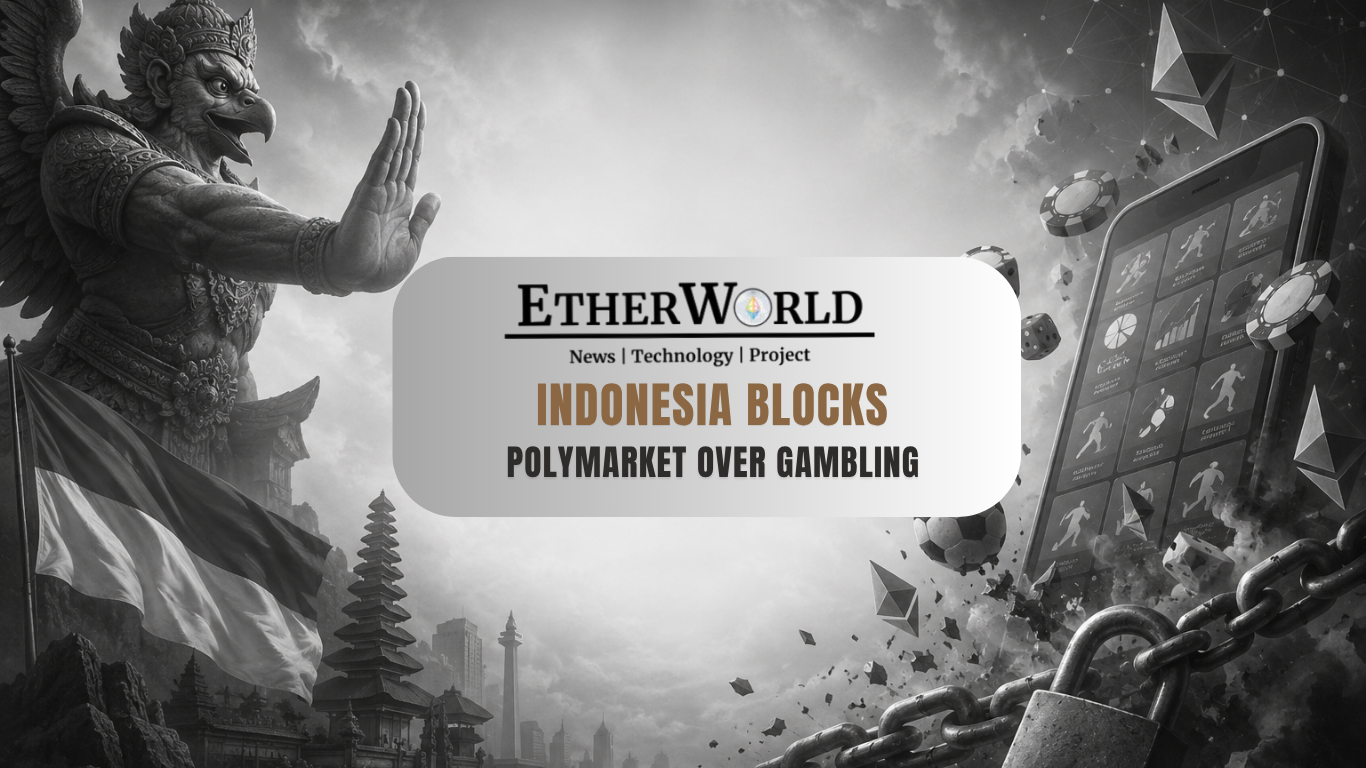
Due to concerns that the cryptocurrency-based prediction tool Polymarket violates Indonesia's strict anti-online gambling regulations, access to the service has been restricted. With this action, Indonesia joins an increasing number of countries that are scrutinising prediction markets, which let users use digital assets to make bets on actual events.
The embargo was implemented by Komdigi, Indonesia's Ministry of Communication and Digital Affairs, which said that national legislation forbade sites that facilitate betting-like activities. Although Polymarket presents itself as a decentralised prediction market rather than a sportsbook, authorities think its event-based trading structure is similar to online gambling.
- Indonesia Targets Prediction Markets Linked to Crypto Betting
- Why Indonesian Authorities See Polymarket as Gambling?
- Polymarket Faces Growing Regulatory Pressure Globally
Indonesia Targets Prediction Markets Linked to Crypto Betting
In Southeast Asia, Indonesia has maintained one of the strictest anti-online gambling policies, and authorities have been stepping up their enforcement actions in the cryptocurrency space. Officials contended that Polymarket violates the nation's gambling laws by enabling users to wager money on unpredictable outcomes, such as political events, sporting events, and economic advancements.
Access to Polymarket's website and associated services is apparently impacted by the restriction throughout Indonesia. Additionally, authorities cautioned the public not to use VPNs or other ways to get around the limitation. As part of a broader digital enforcement campaign, the government has already taken comparable action against thousands of gambling-related websites and services.
By utilising stablecoins and blockchain technology, Polymarket enables users to purchase and sell shares linked to event results. While proponents consider prediction markets as sentiment indicators and information tools, regulators in a number of nations perceive them as being very similar to betting sites.
Why Indonesian Authorities See Polymarket as Gambling?
For Indonesian regulators, the financial speculating component of prediction markets is the main problem. Polymarket functions similarly to wagering since users can make or lose money based on how real-world events turn out.
The majority of gambling activities are illegal in Indonesia, including internet betting services. Authorities contend that just because blockchain-based platforms employ decentralised infrastructure or bitcoin payments, they shouldn't be exempt.
Concerns regarding consumer safety and the financial dangers associated with cryptocurrency-based betting activities were also voiced by officials. Because these platforms operate outside of conventional financial supervisory frameworks, regulators worry that they may expose ordinary users to speculative losses.
The government's action is part of a larger regulatory trend in which authorities are beginning to look at decentralised applications not just as platforms for crypto innovation but also through the prism of current gambling and banking legislation.
Polymarket Faces Growing Regulatory Pressure Globally
Polymarket's decision to be blocked by Indonesia is indicative of a broader worldwide trend in which governments are increasing their control over cryptocurrency-based prediction markets. The platform has already been subject to regulatory investigation in a number of jurisdictions, mostly because of issues with event speculation, derivatives trading, and whether these markets function more like gambling sites than financial products.
The fact that prediction markets operate in a legal limbo is one of the main obstacles facing regulators. While some authorities categorise them as illicit betting ecosystems where people risk money on dubious outcomes, others see them as cutting-edge forecasting tools. As platforms like Polymarket continue to grow internationally, this discrepancy in interpretation has put constant pressure on them to comply.
Polymarket's popularity has increased amid significant elections, geopolitical events, and advances in the cryptocurrency market despite the scrutiny. Because users view these marketplaces as real-time indications of public emotion and probability, trading volumes frequently spike during politically sensitive times. Governments, however, are beginning to wonder if that feature is essentially different from online gambling.
This change in regulations also closely relates to topics covered in our earlier blog post, India Blocks Polymarket & Kalshi Over Illegal Betting Concerns, when Indian officials voiced similar concerns about offshore prediction sites that enabled speculative betting.
The concept that nations with stringent anti-gambling legislation are starting to examine prediction markets through a considerably more severe regulatory lens is supported by Indonesia's most recent action. Regulators are increasingly classifying these platforms alongside regular internet gambling services rather than seeing them as financial innovation, particularly when users are financially exposed to event outcomes.
If you find any issues in this article or notice missing information, please feel free to reach out at team@etherworld.co for clarifications or updates.
To promote your Web3 articles, events, and projects, you may reach out anytime via EtherWorld PR for submissions and collaboration.
Related Articles
- THORChain Halts Trading After $10.7M Vault Compromise
- UAE Approves Crypto.com for Government Fee Payments
- BlackRock Expands Ethereum Push With Tokenized Treasury Funds
- KelpDAO Exits LayerZero After Massive $292M Exploit
- Solana & XRP ETFs Outshine Bitcoin Funds
To follow blockchain news, track Ethereum protocol progress, and read our latest stories, subscribe to our weekly today.
Disclaimer: The information contained in this website is for general informational purposes only. The content provided on this website, including articles, blog posts, opinions, & analysis related to blockchain technology & cryptocurrencies, is not intended as financial or investment advice. The website & its content should not be relied upon for making financial decisions. Read full disclaimer & privacy policy.
To stay updated on blockchain news, Ethereum protocol progress, and our latest stories, subscribe to our weekly digest and YouTube channel for ELI5 content.
To promote your Web3 articles, events, project updates, and Press Releases, reach out anytime via EtherWorld PR for submissions and collaboration. For other queries, email contact@etherworld.co.
If you’d like to support our work, share the content and consider donating at avarch.eth.
Join our community on Discord and follow us on Twitter, Facebook, LinkedIn & Instagram.

 ×
×

Author

Nidhi Kumari is a Web3 content writer at EtherWorld.co, tracking ecosystem developments, funding activity, and market trends shaping the crypto space.