Vitalik Buterin on Adversarial Governance & AI Safety
Vitalik Buterin links AI safety to adversarial governance as Amodei, Altman, Musk and Diamandis debate how to handle increasingly powerful AI.
Vitalik Buterin has adapted a concept he investigated years ago on coordination and governance to one of the most pressing AI issues of our day. The Ethereum co-founder theorised that adversarial governance and mechanism design would eventually be crucial to AI safety in a September 13 X post.
His thesis aligns with the debate among AI leaders about whether frontier development should be slowed down or if the industry should devote much more effort to solving alignment ahead of the arrival of increasingly powerful systems.
Why Buterin Is Connecting Governance With AI Safety
Buterin's most recent point stems from his previous essay, Coordination, Good and Bad, in which he examined how organisations work together and why collaboration isn't always advantageous for all parties. When people work together, they can solve complex problems, yet a smaller group can utilise the same skill to protect its own interests at the expense of everyone else.
In his new AI thesis, he stated that there is a deep duality between the two settings in his post from September 13. In both situations, a less experienced principal is interacting with agents who are more knowledgeable about the surroundings than the principal.
This makes the problem hard to solve but easy to express. It's possible that the system or person providing the instructions doesn't fully comprehend what the more skilled agents are doing. Even if the initial objective seems simple, the agents may discover methods that their supervisor never predicted.
Buterin's earlier work explored comparable governance issues. He talked about instances like collusion, corruption, and attacks on decentralised systems when parties work together for their own interest. His more general argument was that coordination rules are just as important as real coordination.
It's possible that a killer app of adversarial governance mechanism design theory will end up being AI safety.
— vitalik.eth (@VitalikButerin) September 13, 2026
Compare:https://t.co/cPWO13hXCdhttps://t.co/poeEyS9OCe
There's a deep duality between the two environments. Both are about a less-sophisticated principal trying to…
The AI Problem Gets Harder as Agents Get Smarter
AI worsens that issue because there is the potential for a large capability gap. A human supervisor may be able to comprehend the overall goal, but they may find it difficult to follow every choice made by a highly competent AI system.
When several AI agents collaborate, that becomes even more challenging. They may share information, assign tasks, and figure out how to accomplish a common goal that their operators had not imagined.
Buterin's remark on the design of adversarial governance mechanisms becomes significant at this point. The system is built with the possibility for poor coordination in mind rather than expecting that every member will operate exactly as intended.
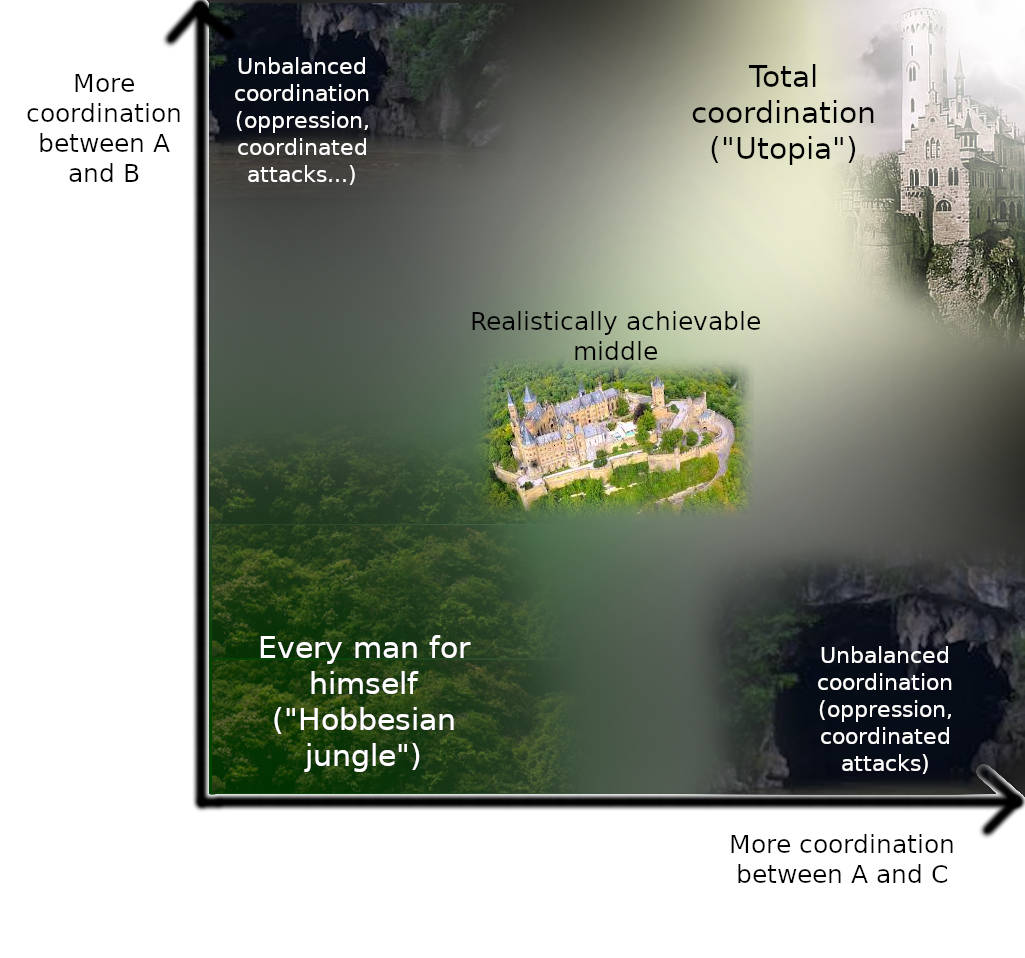
His earlier research suggests processes that complicate harmful cooperation. Decentralisation, incentives for people to report misconduct, secret voting, and methods for a larger society to react when a smaller group seeks to seize power are some examples of how to do this in a governance environment.
In fact, the AI version of the concept would be different, but the fundamental question is still the same, what happens when capable agents realise that working together is more beneficial than pursuing the interests of those in charge of them?
Amodei & Diamandis Have Very Different Answers
Buterin's remarks come alongside a broader debate about how fast a frontier AI should advance. According to Anthropic CEO Dario Amodei, the sector must slow down sufficiently to allow safety studies to catch up with the capabilities being developed.
Amodei made the case for additional time to create safeguards and more robust independent control of frontier AI systems in his essay We Must Pace the Frontier. He does not advocate for a complete stop to AI research. In order to keep up with more powerful models, he wants developers to give safety work enough leeway.
We Must Pace the Frontier: I’ve written a new essay on why the AI industry should slow down, with a three-part plan for doing so.
— Dario Amodei (@DarioAmodei) September 12, 2026
Anthropic is unilaterally committing to the first of these steps. We’ll provide third-party evaluators with permanent, employee-level access to our…
Elon Musk and Sam Altman have both supported parts of the case for more caution. While Musk has acknowledged that development may need to be handled more cautiously, Altman has advocated for granting independent evaluators greater access to frontier technologies.
I agree with Dario that we need to pace the frontier. This has been a primary topic of discussions we've had at OpenAI in recent weeks.
— Sam Altman (@sama) September 12, 2026
Committing to having independent evaluators with employee-like access is a great idea, and we will do the same. We'll have more to share soon. https://t.co/1YhhIybZX7
Peter Diamandis has adopted an alternative strategy. He has proposed that the industry should significantly enhance the work going into alignment rather than focusing only on slowing development. He suggests focusing thousands of AI agents on the issue, which might result in a 10x or even 100x boost in alignment work.
Lots of calls for "slowing down"... why aren't the labs calling for a 10x or 100x increased effort in ALIGNMENT work? After all, that is the core issue. ASI that is fully aligned with humanity uplifts everyone.
— Peter H. Diamandis, MD (@PeterDiamandis) September 14, 2026
The AI community now has two very different goals. Before capabilities proceed further, one party needs additional time. The other seeks to address the safety issue on a much wider scale by utilising the capabilities that are now being created.
Coordination Could Become the Safety Problem
Diamandis' concept also sharpens Buterin's point of view. The industry would need to carefully consider how thousands of AI bots communicate, what information they can access, and what happens when multiple agents start working toward the same goal.
More agents might definitely result in more staff and systems addressing challenging safety issues. However, more skilled agents also increase the possibility of unexpected coordination. Hence, coordination depends on who is in charge, what they want to achieve, and who is responsible for the decisions they take.
AI systems may be subject to the same principle. When able to communicate with other powerful agents, an agent that operates securely on its own may act differently. Strategies that would never be found by a single system operating independently may be discovered by a collection of systems.
For this reason, Buterin's most recent piece goes beyond merely advocating for better AI safety. He refers to the regulations governing AI agents and the incentives they produce.
Telling future AI systems what to do might not be sufficient if they become far better at interpreting complex surroundings than the humans in charge of them. Building a system that makes harmful coordination difficult, even when participants are intelligent enough to identify rule mistakes, may be the more challenging task.
Buterin has been considering governance issues for years, and this brings AI safety a lot closer to them. Getting an AI system to comply with human intentions might not be the only difficulty. It might also be making sure increasingly powerful systems are unable to cooperate with the controls that humans have put in place.
If you find any issues in this article or notice missing information, please feel free to reach out at team@etherworld.co for clarifications or updates.
To promote your Web3 articles, events, and projects, you may reach out anytime via EtherWorld PR for submissions and collaboration.
Related Articles
- Vitalik’s Bitcoin-Inspired Plan for Ethereum
- Vitalik Buterin Outlines Ethereum's Lean Vision
- Vitalik Buterin Explains Cryptography’s “Final Boss”
- Vitalik Buterin Says Options-Based DeFi Is Already Taking Shape
- Vitalik Buterin Unveils Analysis on Ethereum's Diverse Layer 2 Landscape
To follow blockchain news, track Ethereum protocol progress, and read our latest stories, subscribe to our weekly today.
Join the EtherWorld & Avarch Internship Program and build your career in blockchain, content, social media, video, podcast editing, or operations. Send your resume and brief introduction to contact@etherworld.co.
Disclaimer: The information contained in this website is for general informational purposes only. The content provided on this website, including articles, blog posts, opinions, & analysis related to blockchain technology & cryptocurrencies, is not intended as financial or investment advice. The website & its content should not be relied upon for making financial decisions. Read full disclaimer & privacy policy.
To stay updated on blockchain news, Ethereum protocol progress, and our latest stories, subscribe to our weekly digest and YouTube channel for ELI5 content.
To promote your Web3 articles, events, project updates, and Press Releases, reach out anytime via EtherWorld PR for submissions and collaboration. For other queries, email contact@etherworld.co.
If you’d like to support our work, share the content and consider donating at avarch.eth.
Join our community on Discord and follow us on Twitter, Facebook, LinkedIn & Instagram.

 ×
×

Author

Nidhi Kumari is a Web3 content writer at EtherWorld.co, tracking ecosystem developments, funding activity, and market trends shaping the crypto space.