South Korea Stablecoin Rules Begin Dec 3' 2026
South Korea introduces new foreign exchange reporting rules for overseas virtual asset transfers from December 3, 2026, strengthening monitoring and financial oversight.
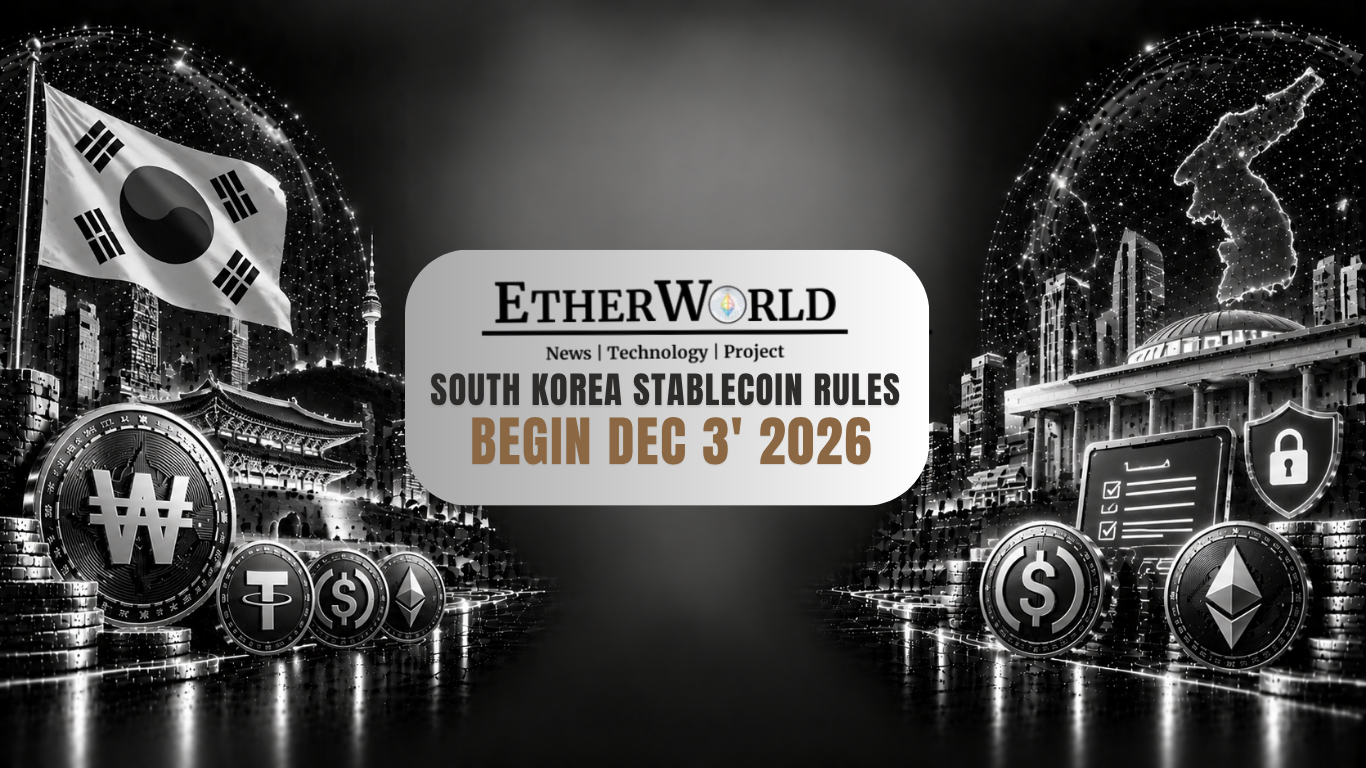
South Korea is getting set to change its Foreign Exchange Transactions Act on December 3, 2026, to increase monitoring of virtual asset transfers overseas. Businesses that handle cross-border transfers now have to register and report, and the Bank of Korea's foreign exchange information system is used to process transaction data.
In order to balance stricter regulation with the creation of regulated digital asset services and payment options, South Korea is looking at how digital assets fit into its financial system.
Foreign Exchange Law Changes Take Effect on December 3
The Foreign Exchange Transactions Act of South Korea has been revised to provide a statutory framework for tracking virtual asset transfers across borders. Promulgated on June 2, 2026, the legislation's pertinent sections are set to go into effect on December 3.
Businesses transferring virtual assets between domestic and foreign virtual asset service providers, as well as between domestic service providers and personal wallets, will be subject to the monitoring system under the new framework.
On October 6, 2026, the Ministry of Finance and Economy published planned changes to the Act's Enforcement Law. These proposed regulations outline how companies would register, what data they must submit, and what operating standards they must adhere to.
For crypto companies that handle foreign payments, this is a significant move. Regulators will have a better-organised method for collecting and analyzing cross-border transfer data rather than depending on restricted visibility into transactions involving digital assets.
Bank of Korea Reporting Targets Financial Oversight
A central feature of the new framework is the reporting of virtual asset transfer information through the Bank of Korea’s foreign exchange information system.
Businesses covered by the rules will have to register and report the required transaction details. The information will also be shared with the National Tax Service, Korea Customs Service, Financial Supervisory Service and Financial Intelligence Unit.
This arrangement connects foreign exchange monitoring with tax enforcement, customs oversight and investigations into suspicious financial activity.
The government wants to close any loopholes that would let people or companies transfer money abroad without having to comply with current foreign currency regulations.
Investigators may be able to find transfers connected to money laundering, tax evasion, and other illicit financial crimes with improved access to transaction data.
Therefore, compliance for virtual asset service providers will entail more than just transfer processing. Businesses that qualify must fulfil registration requirements, keep up the required operational arrangements, and submit data in compliance with the relevant regulations.
Stablecoin Payments Face a Changing Regulatory Environment
As they allow for cross-border value transfers, stablecoins are important to this regulatory change. The December 3 amendments, however, should not be interpreted as establishing a comprehensive regulation governing the creation of stablecoins or designating each stablecoin as an officially recognised form of payment.
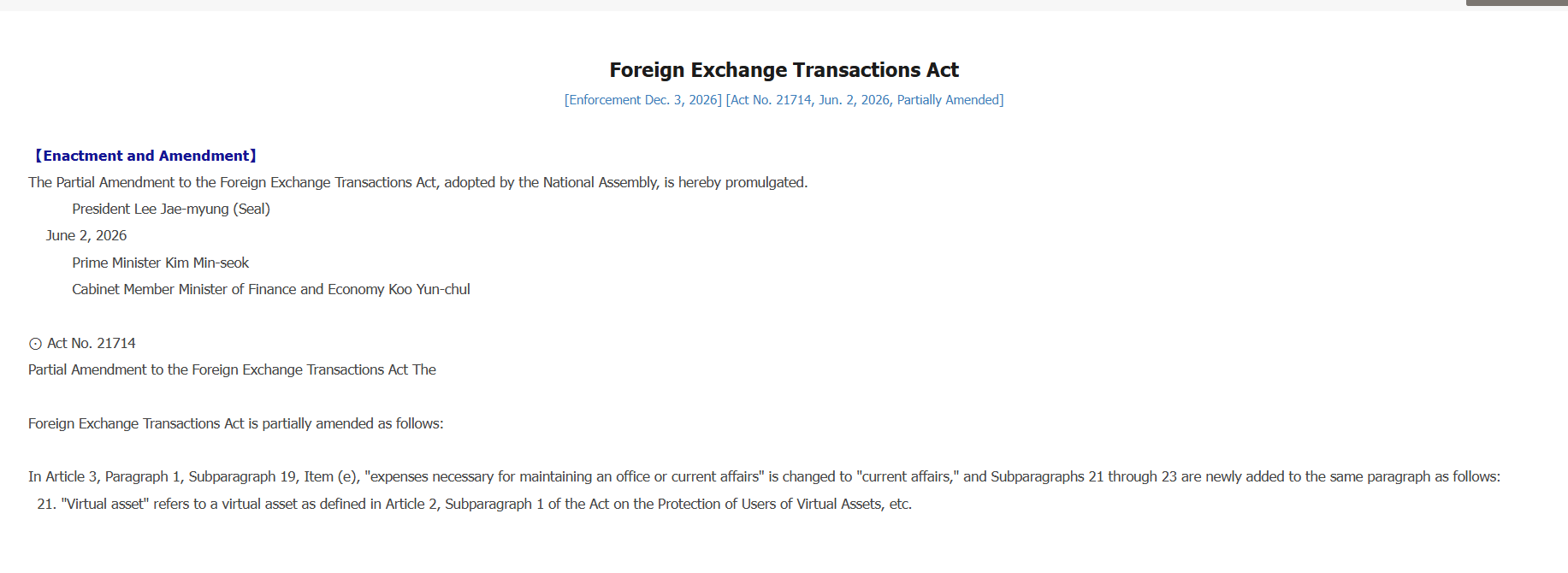
With a number of legal initiatives, South Korea is changing its approach to digital assets. The Foreign Exchange Transactions Act amendment concentrates on monitoring cross-border transfers, but more legislative clarification is needed to address the more general issue of how stablecoins can be minted, distributed, and used for payments.
The distinction is important for companies that use stablecoins in international transactions. Depending on the participants and the nature of the transaction, a stablecoin transfer may be subject to applicable virtual asset and foreign exchange regulations.
Businesses can better grasp their reporting obligations with the aid of more precise regulations. Virtual asset service providers' offshore transfer activities may be structured differently as a result of registration and compliance requirements.
Digital Asset Legislation & Payment Pilots Remain in Focus
To create a more thorough framework for digital assets, South Korea is likewise contemplating a more expansive Digital Asset Basic Act. The modified Foreign Exchange Transactions Act, which deals with cross-border transfer monitoring, is not being implemented concurrently with its development.
In the meantime, banks and financial technology companies have been investigating digital payment systems, such as services targeted at foreign tourists and merchant payments based on stablecoins. Even while individual pilots do not always result in national regulatory approval, such projects demonstrate the commercial interest in leveraging digital assets for payments.
The direction of the wider legislation will be important for issuers, banks, payment providers and merchants seeking clarity on how stablecoins can be used within South Korea’s financial system.
For now, December 3 marks a defined milestone for overseas virtual asset transfers. Businesses should distinguish the confirmed reporting framework from the broader policy discussions surrounding stablecoin issuance and payment use.
If you find any issues in this article or notice missing information, please feel free to reach out at team@etherworld.co for clarifications or updates.
To promote your Web3 articles, events, and projects, you may reach out anytime via EtherWorld PR for submissions and collaboration.
Related Articles
- Dubai VARA Approves Kraken Parent Payward
- Coinbase Wants Employees to Build AI Models Without Writing Code
- Gnosis Chain Activates Ethereum Fast Confirmation Rule
- Starknet Targets Quantum Resistance by 2027
- 79thVault Loses $12.5M in 79AU Hot Wallet Hack
To follow blockchain news, track Ethereum protocol progress, and read our latest stories, subscribe to our weekly today.
Join the EtherWorld & Avarch Internship Program and build your career in blockchain, content, social media, video, podcast editing, or operations. Send your resume and brief introduction to contact@etherworld.co.
Disclaimer: The information contained in this website is for general informational purposes only. The content provided on this website, including articles, blog posts, opinions, & analysis related to blockchain technology & cryptocurrencies, is not intended as financial or investment advice. The website & its content should not be relied upon for making financial decisions. Read full disclaimer & privacy policy.
To stay updated on blockchain news, Ethereum protocol progress, and our latest stories, subscribe to our weekly digest and YouTube channel for ELI5 content.
To promote your Web3 articles, events, project updates, and Press Releases, reach out anytime via EtherWorld PR for submissions and collaboration. For other queries, email contact@etherworld.co.
If you’d like to support our work, share the content and consider donating at avarch.eth.
Join our community on Discord and follow us on Twitter, Facebook, LinkedIn & Instagram.

 ×

Author

Nidhi Kumari is a Web3 content writer at EtherWorld.co, tracking ecosystem developments, funding activity, and market trends shaping the crypto space.