Post-Tokenization: What Comes Next?
What happens after stocks become tokens? Explore stock-token premiums, memecoin demand, liquidity, arbitrage and the economics of post-tokenization markets.
Tokenization is becoming increasingly exciting as a market-structure experiment rather than as a technical success. A stock might engage with markets that the underlying equity was never intended to serve once it is on the chain. The conversation was sparked by Binji, bringing renewed attention to how tokenized stocks are moving beyond simple ownership into broader onchain markets. Tokenization is also gaining momentum, with tokenized real-world assets surpassing $25 billion onchain, showing how quickly traditional assets are moving onto blockchain networks.
From Stock Exposure to Onchain Liquidity
After tokenization, the asset can have a second economic life, which is a significant development. The typical use of a token that represents a stock is not always limited to holding exposure to that company. It can be used as a quote asset for another token or as a trading pair, collateral, or liquidity asset.
The current stock-token and memecoin action is intriguing because of this. The post makes the case that because some stock tokens were being used in markets related to memecoins, they started to trade much over their reference value. Because they suddenly think the underlying company is worth more, traders are not necessarily paying a premium in that scenario. It's possible that they only require the token because it's now valuable elsewhere.
As a result, the demand curve is significantly changed. While attention can come almost rapidly, the token's supporting balance sheet may not grow as quickly.
The distinction is important because tokenized securities might have substantially different structures and holder rights, as stated in the SEC's 2026 framework. Some are produced by third parties through custody agreements or synthetic exposure, while others are issuer-sponsored.
Some thoughts on stock tokens, memecoins, and attention vs balance sheet economics:
— binji (@binji_x) August 31, 2026
Tokenization is NOT interesting, what happens post-tokenization IS.
Over the past weekend, several stock tokens that represent exposure to public equities began trading way higher than their…
The Memecoin Effect on Stock Tokens
It is not always a sign that the tokenised market has found a new fundamental value when a stock is trading higher than its underlying reference price. Alternatively, it can indicate a lack of instantly accessible tokenised inventory.
Let's say a tokenised stock typically follows a $100 underlying share. The logical course of action is arbitrage, i.e., buy the underlying exposure and sell the expensive token if demand from an on-chain market unexpectedly drives the token to $150. However, for that trade to be successful, new tokenised inventory must be able to enter the market through creation, redemption, custody, and settlement mechanisms.
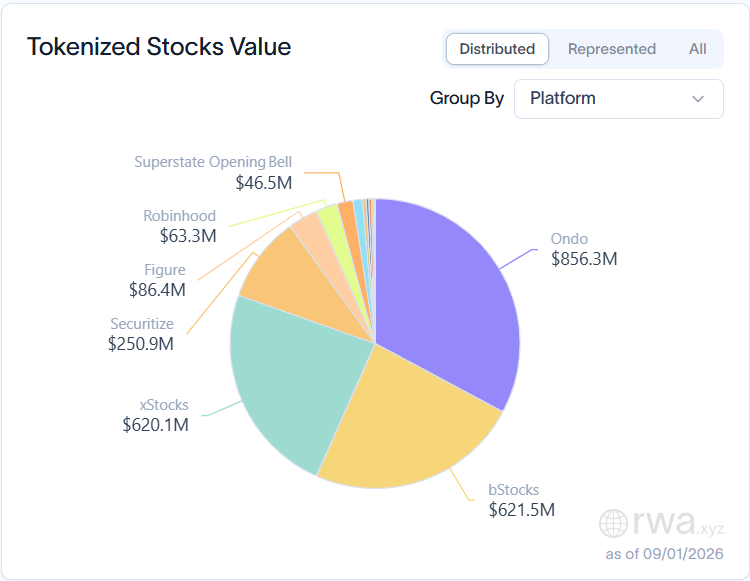
At this point, the headline market capitalization of the underlying company loses significance in favor of effective float. Even if a company has billions of dollars' worth of outstanding shares, this does not imply that billions of dollars' worth of tokenised inventories are instantly accessible to meet onchain demand.
In particular, the SEC has emphasized market infrastructure, investor rights, custody, and redemption as crucial concerns pertaining to tokenised securities.
Price, Supply & the Arbitrage Gap
The phrase "attention vs. balance-sheet economics" is helpful in this situation.
The majority of memecoin marketplaces are attention-driven. Within minutes, an narrative can draw thousands of traders and generate demand. But in the end, a tokenized stock is dependent on an underlying financial system. The stock must be held, custody must be maintained, a token must be created or redeemed, liquidity must be provided, and the consequent exposure must be managed.
This leads to an intriguing discrepancy.
While the balance-sheet side of the market advances gradually, the attention side might move vertically. The price of a stock token may rise far above the actual equity before arbitrage and fresh inventory catch up if a on-chain community suddenly becomes interested in it due to its inclusion in a memecoin ecosystem.
As a result, there may be a market where the token's usefulness briefly overshadows the asset it represents.
That is possibly the most significant development following tokenization. The token has evolved into a financial building block, and the blockchain is no longer just used to register ownership.
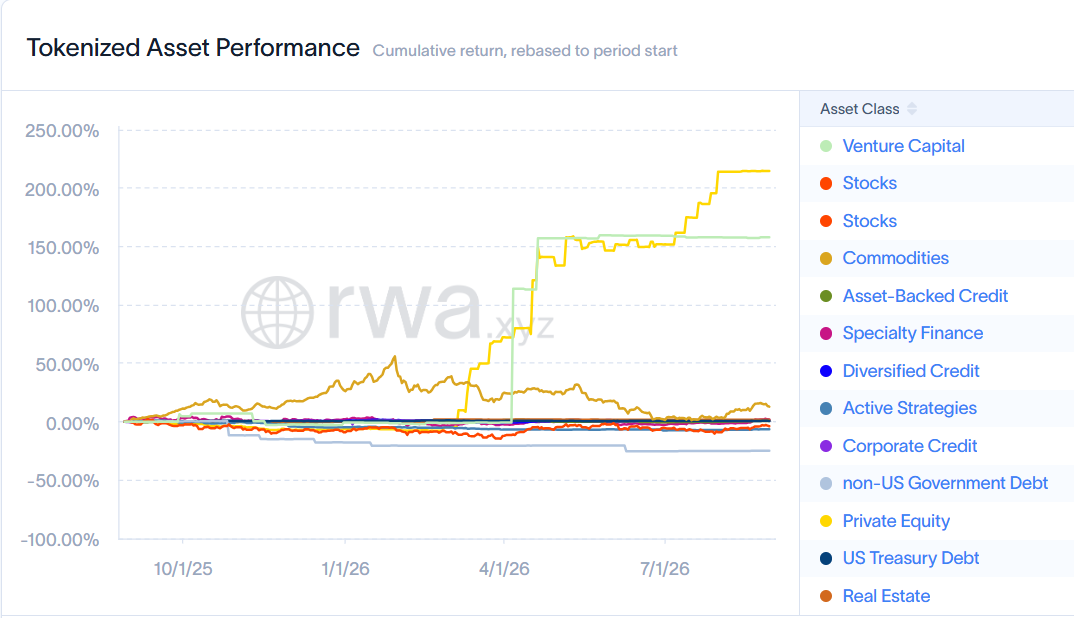
Where Post-Tokenization Economics Goes Next
Thus, the events around the token will dictate the next stage of tokenization.
Infrastructure must enable considerably deeper liquidity, quicker formation and redemption, clear collateral arrangements, and dependable arbitrage if stock tokens are to serve as building blocks for on-chain markets. Additionally, market players will have to differentiate between the price of the tokenized version of the underlying stock and its inherent value.
When traditional markets close but onchain markets stay open, this is very crucial. While there is no active primary-market price discovery for the underlying stock, a token may continue to trade. Demand, scarcity, and speculation that are not directly related to the underlying stock may be reflected in the token throughout that time.
This question is already being addressed in the direction of institutional market infrastructure. Tokenization has the potential to alter how securities are issued, traded, and managed, according to the SEC's August 2026 institutional-tokenization study, which highlights that custody, legal enforceability, authoritative recordkeeping, collateral, and settlement are all significant concerns.
For this reason, post-tokenization economics might end up being more significant than tokenization itself. The first query concerned the possibility of placing an asset onchain. What markets start to develop around it after it arrives is the more important question.
If you find any issues in this article or notice missing information, please feel free to reach out at team@etherworld.co for clarifications or updates.
To promote your Web3 articles, events, and projects, you may reach out anytime via EtherWorld PR for submissions and collaboration.
Related Articles
- August 2026 Among Worst Months for DeFi Hacks
- More Markets Loss Impact Revised to $410K
- $9.3M Drained from More Markets Lending Reserve
- ECB Pushes Central Bank Money On-Chain
- Coinbase Launches Bitcoin-Backed Mortgages
To follow blockchain news, track Ethereum protocol progress, and read our latest stories, subscribe to our weekly today.
Join the EtherWorld & Avarch Internship Program and build your career in blockchain, content, social media, video, podcast editing, or operations. Send your resume and brief introduction to contact@etherworld.co.
Disclaimer: The information contained in this website is for general informational purposes only. The content provided on this website, including articles, blog posts, opinions, & analysis related to blockchain technology & cryptocurrencies, is not intended as financial or investment advice. The website & its content should not be relied upon for making financial decisions. Read full disclaimer & privacy policy.
To stay updated on blockchain news, Ethereum protocol progress, and our latest stories, subscribe to our weekly digest and YouTube channel for ELI5 content.
To promote your Web3 articles, events, project updates, and Press Releases, reach out anytime via EtherWorld PR for submissions and collaboration. For other queries, email contact@etherworld.co.
If you’d like to support our work, share the content and consider donating at avarch.eth.
Join our community on Discord and follow us on Twitter, Facebook, LinkedIn & Instagram.

 ×
×

Author

Nidhi Kumari is a Web3 content writer at EtherWorld.co, tracking ecosystem developments, funding activity, and market trends shaping the crypto space.