Polygon PoS Incident Post-Mortem
Polygon PoS faced a partial Bor RPC outage in December 2025, disrupting node access without halting block production & highlighting the growing importance of infrastructure resilience.
Between December 17 & December 18, 2025, the Polygon PoS network experienced a partial service disruption affecting Bor, the block-producing & transaction execution client. The issue primarily impacted RPC availability, leading to stalled responses across several infrastructure providers.
Importantly, the chain itself never went offline. Block production continued uninterrupted, validators remained active, & transactions continued to be processed throughout the incident.
What Exactly Failed
The incident was not a consensus failure. Instead, it emerged at the execution layer, where multiple Bor nodes stalled simultaneously. This resulted in:
- RPC request failures across several providers
- Temporary desynchronization among some validator nodes
- Block explorers lagging due to delayed node synchronization
Despite these disruptions, the block producer remained operational, confirming that Polygon’s consensus path was never compromised. Several core components of the Polygon PoS network remained stable throughout the incident:
- Blocks continued to be produced
- A subset of RPC nodes stayed fully operational
- Transactions were accepted & executed
- No chain halts or reorgs occurred
This afternoon, Polygon PoS experienced an issue affecting a subset of RPC nodes. The network remained online and continued producing blocks throughout the incident, with no chain downtime.
— Polygon Foundation (@0xPolygonFdn) December 17, 2025
The team quickly identified and rolled out a patch to operators to restore full service…
This distinction is critical. The incident exposed infrastructure fragility, not protocol-level failure.
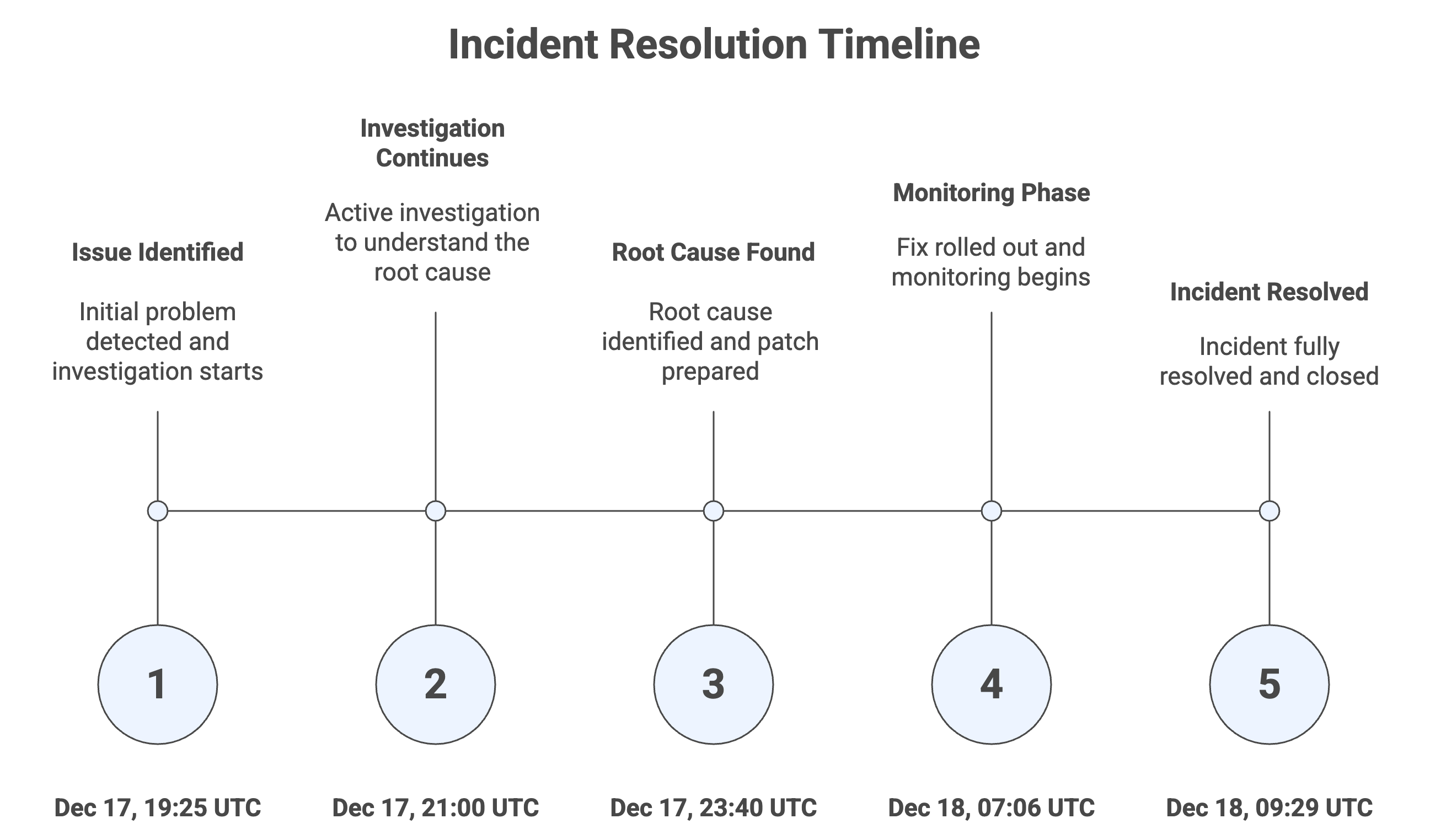
Response Timeline & Mitigation
Once the issue was detected, Polygon engineers activated a war room to coordinate investigation & remediation across teams & node operators.
A targeted patch was deployed to affected operators, after which nodes began resynchronizing & validators progressively returned to quorum. For most users, RPC availability defines whether a blockchain feels online.
Even though Polygon PoS continued producing blocks, degraded RPC access impacted wallets, dApps, explorers, & exchanges that depended on affected endpoints. This incident highlights a broader industry reality, i.e., execution infrastructure & access layers are now as critical as consensus itself.
Broader Takeaways for the Polygon Ecosystem
The Bor incident reinforces several structural lessons:
- Redundant RPC providers reduce user impact
- Client concentration increases correlated failure risk
- Observability gaps can distort outage perception
- Rapid operator coordination remains a strength
Polygon’s transparent updates & swift mitigation prevented escalation, but the event underscores the need for continued investment in infra-level resilience alongside protocol upgrades.
The December Bor incident was not a failure of Polygon PoS consensus, but a stress test of its execution & access layers. Polygon passed the most critical test, i.e., no chain halt, no data loss, no consensus break while also exposing areas that require further hardening as the network scales toward higher institutional & application load.
If you find any issues in this blog or notice any missing information, please feel free to reach out at yash@etherworld.co for clarifications or updates.
Related Articles
Disclaimer: The information contained in this website is for general informational purposes only. The content provided on this website, including articles, blog posts, opinions, & analysis related to blockchain technology & cryptocurrencies, is not intended as financial or investment advice. The website & its content should not be relied upon for making financial decisions. Read full disclaimer & privacy policy.
For Press Releases, project updates & guest posts publishing with us, email contact@etherworld.co.
Subscribe to EtherWorld YouTube channel for ELI5 content.
Share if you like the content. Donate at avarch.eth.
You've something to share with the blockchain community, join us on Discord!
Author

Blockchain Content & Ops Specialist, Avarch LLC.