Polygon Network Hits 100M Gas Limit
Polygon Network hits a 100M gas limit milestone, boosting block capacity & pushing TPS beyond 2,380 to support high-demand, real-time on-chain applications.
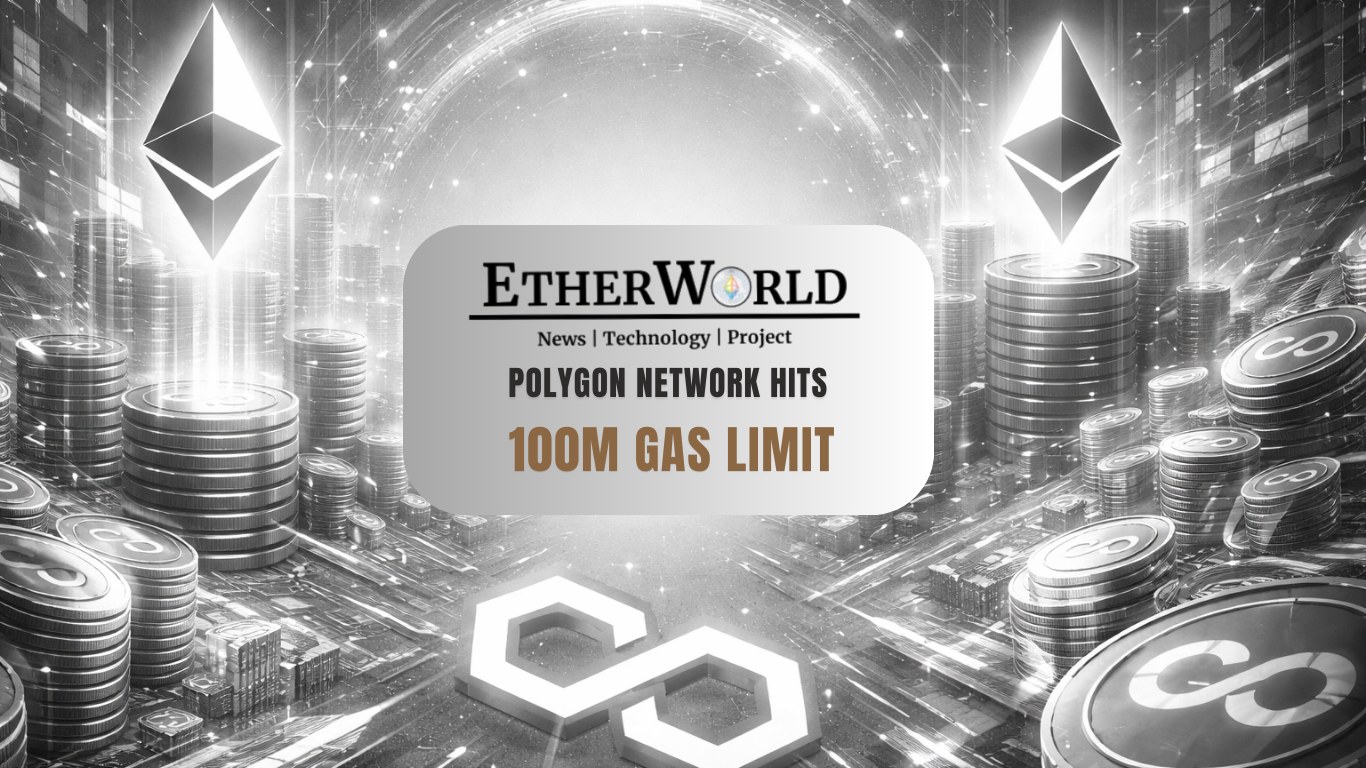
According to Polygon, network performance has advanced to a new level, with transaction throughput (TPS) surpassing 2,380 and the blockchain's gas limit hitting 100 million. These improvements show the chain can handle very high transaction demand, supporting Polymarket's ultra-short 5-minute markets, where markets settle every few minutes.
Polygon is one of the fastest Layer-2 ecosystems in cryptocurrency, due to its high performance, which enables it to handle large loads and settle transactions quickly without significant congestion.
- Polygon Breaks New Ground with 100M Gas Limit & Surging TPS
- Polymarket's 5-Minute Markets Ride on Polygon's Performance
- Polygons' Broader Network Performance & Ecosystem Context
- What Does This Means for the Future of On-Chain Apps?
Polygon Breaks New Ground with 100M Gas Limit & Surging TPS
Gradually, Polygon has reached a significant milestone. The network can now manage a lot more activity than it could previously, with transaction speeds exceeding 2,380 per second during peak hours and each block bearing a substantially heavier workload. To put it simply, Polygon is simultaneously carrying more traffic and moving more quickly.
In order to understand why this is important, consider the gas limit as the blockchain's equivalent of the size of each delivery vehicle. By raising it to 100 million, Polygon has significantly increased the size of those trucks, enabling more smart contract activities and transactions to pass through the system simultaneously. Thus, abrupt spikes in activity don't cause everything to stop.
This is even more significant given that Polygon isn't solely designed for capacity. In real-world scenarios, it is already handling thousands of transactions per second. Such speed is critical for contemporary decentralised applications, particularly those platforms that rely on fast updates and almost instantaneous settlements.
Smoother experiences are the result for both developers and users. Because Polygon currently has the breathing room to keep things operating regularly, Ethereum's main network frequently slows down and becomes costly when traffic increases. The network is clearly becoming an infrastructure that can handle high-demand, real-world blockchain applications.
JUST IN: Gas limit is now 100 MILLION and TPS pushing 2,380+
— Polygon | POL (@0xPolygon) February 15, 2026
Only Polygon can handle the load of @Polymarket 5min markets
10% of gigagas speed has officially been achieved. https://t.co/QtBs8KRfz6 pic.twitter.com/8bqpVzKTfl
Polymarket's 5-Minute Markets Ride on Polygon's Performance
With the launch of 5-minute markets, Polymarket allows users to trade on actual outcomes that settle every five minutes. It is a quick-paced structure that makes trading predictions more like real-time. The network's increased capability is further demonstrated by the fact that Polymarket is based on Polygon. It's challenging to support markets that update and close this often, and Polygon's ability to do it with ease demonstrates its increasing capability to run large-scale, high-speed blockchain apps.
These 5-minute cryptocurrency prediction markets provide a special use case for blockchain applications where throughput and performance are crucial because they update and settle rapidly. The high-frequency market format of Polymarket and the recently increased gas limit and throughput of Polygon indicate that Layer-2 networks can now start to power real-time financial products that were previously only possible with centralised systems.
This correlation between application demand and network performance reflects a larger trend in the industry: in order to make prediction markets and decentralised finance (DeFi) competitive with conventional systems, high-speed blockchain infrastructure is becoming more and more essential.
Polygons' Broader Network Performance & Ecosystem Context
Although the 2,380+ TPS estimates and the latest 100 million gas limit are moment-specific, Polygon's larger architecture seeks to enable a variety of real-world applications. In addition to mentioning its capacity to manage large transaction volumes with dependable finality and low prices, Polygon Network explains its goal as offering quick, affordable, and scalable blockchain rails.
Polygon's ecosystem has supported billions of transactions and millions of users over the years. It also creates tools that let developers scale their apps without encountering any problems.
Therefore, the performance milestones reported, from gas limits to TPS figures, are not discrete numbers but rather are a part of a continuous roadmap that aims to increase throughput and flexibility in the real world.
What Does This Means for the Future of On-Chain Apps?
A 100 million gas limit and a TPS of about 2,380 on Polygon demonstrate that Layer-2 scaling solutions are moving into a new stage of development. Polygon's current configuration can handle the steady, high throughput needed for short periods of time in high-intensity applications, such as Polymarket's 5-minute markets. High-volume DeFi protocols, fast-settling prediction markets, and other real-time blockchain applications may see broader acceptance as a result.
Polygon's position as a fast Layer-2 ecosystem might become a focus point for developers looking to create the next wave of decentralised financial products, as long as development teams keep pushing these boundaries and more information on verified on-chain performance measurements becomes available.
If you find any issues in this article or notice missing information, please feel free to reach out at team@etherworld.co for clarifications or updates.
To promote your Web3 articles, events, and projects, you may reach out anytime via EtherWorld PR for submissions and collaboration.
Related Articles
- Polygon Sets January Record With $256 Million in Stablecoin Transfers
- MetaMask Adds 200+ Tokenized US Stocks & ETFs
- Telcoin’s eUSD Goes Live on Polygon
- Polygon PoS Incident Post-Mortem
- Polygon in 2029: Open Money Stack
To follow blockchain news, track Ethereum protocol progress, and read our latest stories, subscribe to our weekly today.
Disclaimer: The information contained in this website is for general informational purposes only. The content provided on this website, including articles, blog posts, opinions, & analysis related to blockchain technology & cryptocurrencies, is not intended as financial or investment advice. The website & its content should not be relied upon for making financial decisions. Read full disclaimer & privacy policy.
To stay updated on blockchain news, Ethereum protocol progress, and our latest stories, subscribe to our weekly digest and YouTube channel for .
To promote your Web3 articles, events, project updates, and Press Releases, reach out anytime via EtherWorld PR for submissions and collaboration. For other queries, email contact@etherworld.co.
If you’d like to support our work, share the content and consider donating at avarch.eth.
Join our community on Discord and
Author

Content Writer