India’s Ministry of Finance Expands Crypto Enforcement Training
India intensifies crypto oversight as the Ministry of Finance expands blockchain-forensics training for officers & begins exploring tokenization and programmable financial systems.

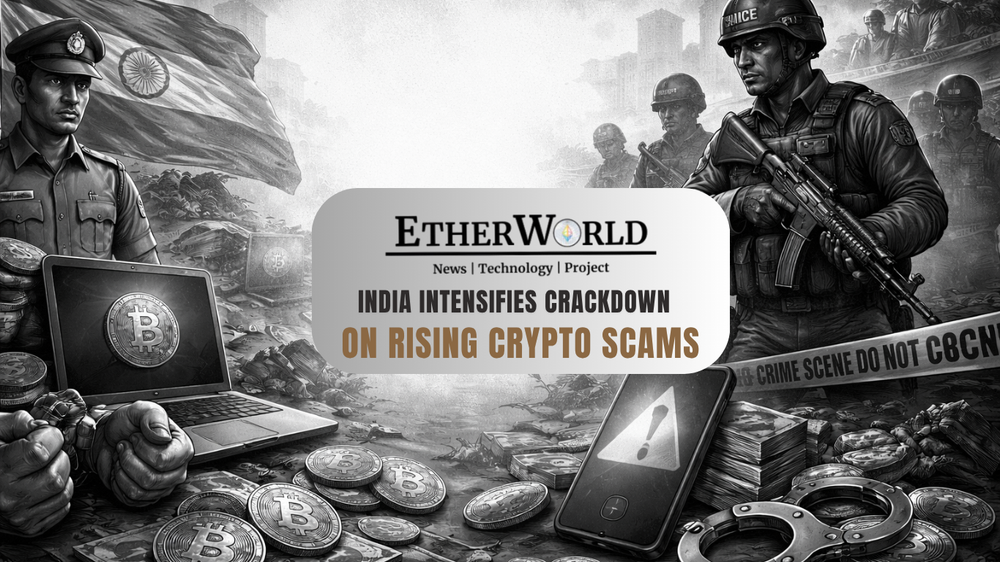
In one of the strongest signals yet of India’s tightening stance on crypto misuse, the Ministry of Finance has initiated a fresh wave of enforcement-focused capacity building across law-enforcement and judicial agencies. The government has begun training officers in blockchain analysis, digital forensics, wallet tracing techniques & cross-chain fund-movement detection, marking a major escalation of its efforts to counter black-money flows routed through cryptocurrencies.
- A Structured Training Push to Strengthen Enforcement
- Black-Money Flows in Crypto Now a Priority Target
- Regulators Explore Tokenization & Programmability
- A National Strategy for a More Complex Crypto Landscape
The initiative comes at a time when crypto-linked economic offences have grown more sophisticated, with laundering networks using privacy-enhancing tools, decentralized exchanges, and cross-border asset mobility to evade scrutiny. To address this, the government has turned to specialised programs conducted at the National Forensic Sciences University (NFSU) Goa, an institution under the Ministry of Home Affairs, to equip investigators with the technical skills required to track illicit crypto activity across multiple blockchains.
A Structured Training Push to Strengthen Enforcement
The Ministry of Finance has launched a cohesive, structured strategy to expand blockchain-literacy & investigative ability across agencies including the Enforcement Directorate (ED), Income Tax Department, FIU-IND, and state cyber cells.
The specialised NFSU curriculum includes:
- Wallet attribution, cross-chain flow tracking & transaction-graph analysis
- Identifying darknet-linked wallets and P2P laundering routes
- Investigating ransomware, extortion, terror-financing & NFT fraud
- Hands-on training with blockchain explorers & forensic intelligence tools
- Understanding mixers, tumblers, and chain-hopping mechanisms
- Legal frameworks under IT Act, PMLA, UAPA, BNS, FATF compliance
- Courtroom-oriented modules for presenting blockchain evidence
This marks India’s largest coordinated expansion of crypto-related enforcement skills to date.
Black-Money Flows in Crypto Now a Priority Target
The Ministry of Finance has confirmed that officers are now being trained specifically to tackle the risks of black-money routed through crypto channels, especially via:
- Unregistered offshore exchanges
- Peer-to-peer networks not following KYC norms
- Stablecoins used for quick cross-border transfers
- Privacy tokens and crypto-mixing platforms
- NFT-based asset laundering
Officials say the government’s motivation is not merely theoretical. In recent months, enforcement agencies have uncovered networks using crypto to bypass banking rails, channel extorted funds into privacy coins, or settle illicit trade transactions through stablecoin-denominated escrows.
Each such case underscores the need for forensic expertise at the earliest stage of investigation. Participants are trained to track these patterns, correlate digital identities, and recognise wallet-clustering signatures that connect pseudonymous actors.
Experts believe this structured training will significantly reduce investigative dependency on private-sector blockchain-intelligence platforms, enabling officers to generate leads internally and build faster case momentum.
Regulators Explore Tokenization & Programmability
While the enforcement push marks the most visible policy action, the Ministry of Finance has simultaneously begun exploring tokenization, programmability, and new blockchain use-cases that could support regulated innovation in India’s financial system.
🚨 BREAKING: 🇮🇳 Regulators are now exploring tokenization, programmability and new blockchain use-cases.
— Crypto India (@CryptooIndia) December 9, 2025
Source: Ministry of Finance
Senior officials confirm that regulators are studying how tokenized assets, programmable securities, and smart-contract-driven financial instruments could streamline compliance, improve auditability, and enhance the efficiency of government payments. The exploration is still at an early stage but reflects a broader global trend where financial regulators are evaluating blockchain not only as a risk to be policed but also as an infrastructure layer capable of delivering greater transparency.
These early-stage explorations align India with global directions adopted by the EU, Singapore, UAE & Hong Kong.
A National Strategy for a More Complex Crypto Landscape
The country is preparing for a more complex financial future shaped by:
- Rising crypto adoption among retail and small businesses
- Increasing sophistication of laundering & terror-financing methods
- Global regulatory pressure through the FATF framework
- Domestic economic exposure to cross-border digital assets
- Demand for greater transparency in financial infrastructure
India’s challenge is substantial: crypto continues to evolve faster than traditional regulatory toolkits. Enforcement bodies encounter new laundering strategies nearly every month.
Scam networks have grown more internationalised. And decentralized protocols complicate attribution, jurisdiction, and evidence recovery. By building structured skills among its officers, India is positioning itself to respond with agility.
Officials indicate that future steps may include:
- Advanced NFSU modules in DeFi forensics & smart-contract auditing
- A national blockchain-intelligence framework
- Stricter compliance requirements for offshore exchanges
- A unified crypto-transaction reporting system
- Pilot sandbox projects exploring tokenized public infrastructure
- Enhanced cross-agency & international cooperation
More capacity-building programmes are expected across NFSU campuses, focusing on real-world case studies, AI-assisted forensic tooling, and deeper legal harmonisation.
If you find any issues in this blog or notice any missing information, please feel free to reach out at yash@etherworld.co for clarifications or updates.
Related Articles
Disclaimer: The information contained in this website is for general informational purposes only. The content provided on this website, including articles, blog posts, opinions, & analysis related to blockchain technology & cryptocurrencies, is not intended as financial or investment advice. The website & its content should not be relied upon for making financial decisions. Read full disclaimer & privacy policy.
For Press Releases, project updates & guest posts publishing with us, email contact@etherworld.co.
Subscribe to EtherWorld YouTube channel for ELI5 content.
Share if you like the content. Donate at avarch.eth.
You've something to share with the blockchain community, join us on Discord!
Author

Blockchain Content & Ops Specialist, Avarch LLC.