Women, Web3, & the Future of Financial Freedom
A look at the global financial gap for women & how Web3 may open new paths to financial independence.
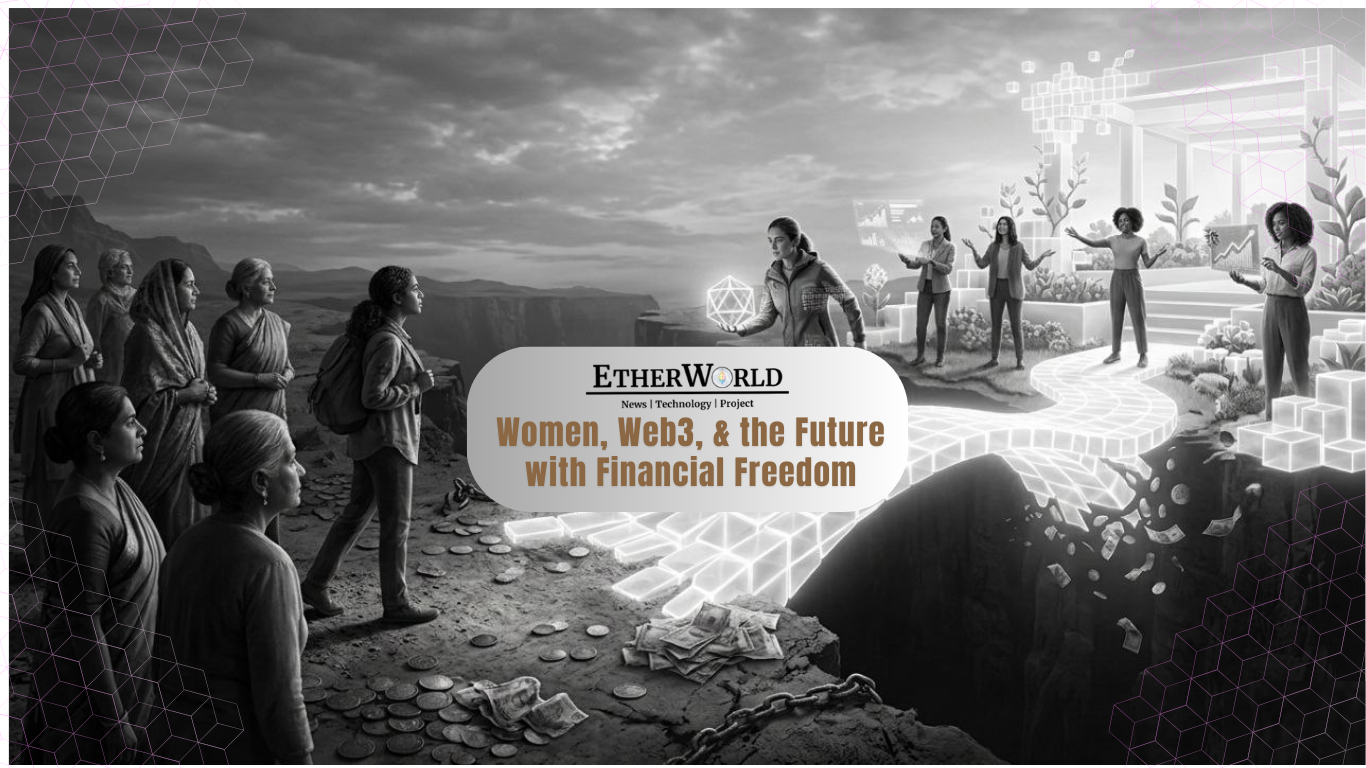
International Women’s Day often prompts us to reflect on fairness, opportunity, and empowerment. One important aspect of empowerment that remains unequal in many parts of the world is control over money.
Many of us open a bank account, receive a salary, or send money to family members as part of our daily lives. We often forget to recognize how normal these actions feel. Yet millions of people worldwide still lack access to these basic financial services.
The World Bank’s Global Findex Database reports that nearly 740 million women worldwide lack a bank account. Without access, they struggle to save money, receive digital payments, or tap into formal credit systems. These missing tools make managing finances, building savings, or launching a business much harder.
For many women, financial independence does not just mean earning money, but it means actively accessing and controlling financial resources.
- The Global Financial Gap for Women
- How Web3 Changes Financial Access
- Opportunities for Women in the Web3 Economy
- The Representation Gap in Crypto
The Global Financial Gap for Women
Financial inequality is a problem that we are still dealing with. We have made some progress in helping people get an education and a job. There are still big gaps when it comes to owning money and being part of the financial system.
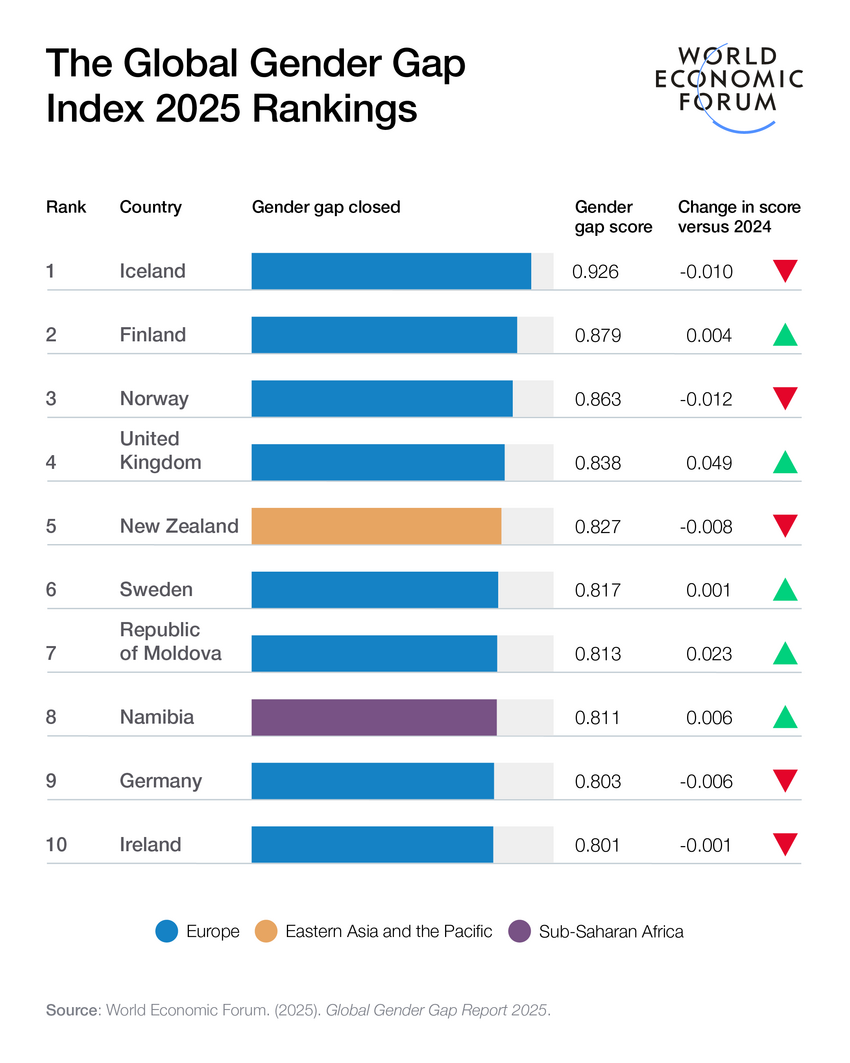
The World Economic Forum Global Gender Gap Report 2025 says that if we keep going at the pace it will take more than a hundred years to close the gap between men and women when it comes to working getting an education and having a say in politics.
It will take the world about 123 years to reach a point where men and women're equal if we do not speed up. The report says that now the gap between men and women is about 68.8% closed in 148 economies, which means there are still big differences in how men and women participate in the economy, politics and other areas.
There are reasons why women do not have as much money as men.
- Women are less likely to own money or invest in things that might make them more money.
- Women who start their businesses do not get much money from investors.
- In some places women are not allowed to own property or make decisions because of laws or social rules.
These problems mean that women are less likely to have access to bank accounts, loans, or investments. Studies have shown this over and again. Financial inequality and the financial gap affect women. The financial gap is a problem that we need to solve.
Traditional financial systems rely on centralized institutions such as banks, payment networks, & government regulatory frameworks. These institutions provide stability & oversight in many parts of the world.
Financial access can be disrupted by conflict, economic instability, sanctions, or institutional failures. Banking systems may collapse during political crises. International transfers may be restricted by regulatory frameworks. Inflation can erode savings stored in national currencies.
How Web3 Changes Financial Access
Instead of relying entirely on centralized institutions such as banks, decentralized networks allow individuals to interact directly with digital assets & financial tools.
A user can create a digital wallet in minutes. Once connected to the network, the wallet can send or receive assets globally.
This architecture introduces several key characteristics:
- Permissionless participation allows anyone with internet access to join the network.
- Self-custody enables users to control their assets through private keys.
- Borderless transactions allow funds to move internationally without traditional banking channels.
- Smart contracts automate financial services such as lending or trading.
Technological innovation often becomes meaningful only when it solves real problems. Several real-world examples illustrate how digital assets have been used to expand financial access.
Roya Mahboob is known as one of Afghanistan’s first female tech business leaders. Before most people had heard of cryptocurrency, she used Bitcoin in a useful way. Many Afghan women could not use banks, and even if they earned money, it was hard for them to keep control of it. Mahboob saw digital money as a possible answer to this ongoing problem.
Mahboob’s first project started around 2012 with a website called Film Annex. Young Afghan women wrote blogs and shared digital content online, and Mahboob paid them with Bitcoin. Almost 2,000 students and bloggers took part in the program. Most of them could not open a bank account.
The importance of these early projects became clearer after the Taliban came back to power in 2021. As the financial system became less stable and using banks became harder, some former students still had money in cryptocurrency wallets. In some cases, these savings helped pay for moving to safer places during the crisis.
Mahboob’s experience illustrates an alternative perspective on cryptocurrency. Mahboob’s story shows a different way to look at cryptocurrency. While many people view it as a risky investment, digital money can provide useful financial tools in places where traditional banks leave people out. It lets users get paid, save money, and manage their own finances, even when there are no traditional banks.
Opportunities for Women in the Web3 Economy
Unlike traditional industries that rely on geographic proximity or formal employment structures, many Web3 projects operate through open collaboration models.
Women are contributing to the ecosystem in roles such as:
- Blockchain developers
- Protocol researchers
- DAO contributors
- NFT artists
- Community leaders
- Web3 educators
- Technical writers
Many of these roles can be done from anywhere because they are remote and people over the world can access them. This means people who live in places where there are not technology jobs can still be a part of the ecosystem.
In Kenya Lorraine Marcel started called Bitcoin Dada. Bitcoin Dada is a community that helps women learn about finance. The community offers training in things like literacy and digital wallets and entrepreneurship.

The goal is to help women build financial independence through knowledge & access to digital tools. The Web3 economy supports a wide range of income models. Contributors may earn through open-source grants, decentralized organizations, or ecosystem funding programs.
The Representation Gap in Crypto
Despite its open architecture, the cryptocurrency ecosystem still faces representation challenges. Research from Gemini’s State of Crypto Report suggests that early cryptocurrency communities were heavily male dominated.
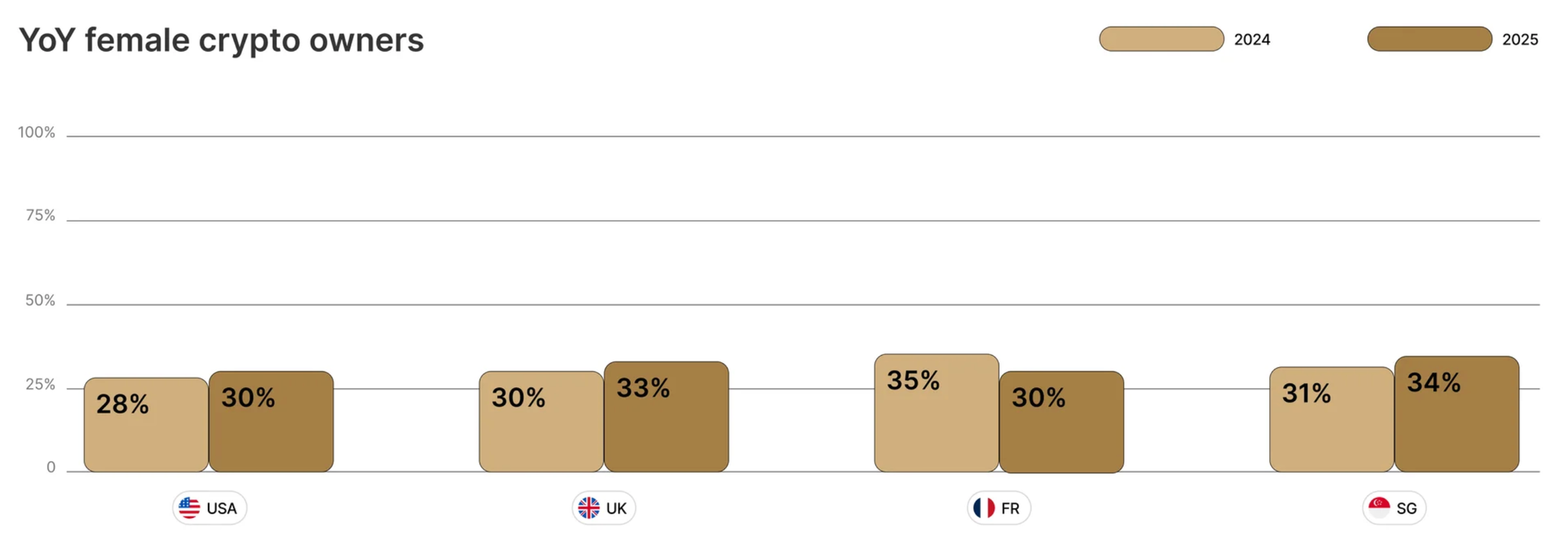
In recent years, new communities have formed to help women get involved in Web3 and close the representation gap in blockchain technology.
One of the communities that people can see is SheFi. SheFi is trying to make DeFi easier for women to use. They have learning groups and workshops and sessions where people can get help from others. SheFi teaches people about things like crypto wallets and DeFi protocols.
There are also communities of people coming together in the Ethereum ecosystem. Women in Ethereum Protocol is trying to get women involved in the technical side of Ethereum and in making decisions about how it works. This community was started by contributors from the Ethereum Foundation and ECH Institute. Pooja Ranjan, one of the co-founders of WiEP, shares:
“Ethereum opened doors I didn’t know existed. I believe many more women deserve access to these opportunities.”
The WiEP community aims to create a space where women feel welcome to learn about Ethereum, engage in discussions, and contribute to shaping decisions within the ecosystem.
This community is started by people from Ethereum Foundation and ECH Institute. Women in Ethereum Protocol wants to make a space where women can feel welcome to talk about Ethereum and help make decisions about it.
Women are already doing things like researching and developing and starting businesses and teaching and leading groups in the Web3 ecosystem. Web3 has tools that can help people be more independent by letting them participate in systems all, around the world and contribute to networks that are not controlled by one group and build ways to make money that are not limited by traditional rules.
If you find any issues in this blog or notice any missing information, please feel free to reach out at yash@etherworld.co for clarifications or updates.
To promote your Web3 articles, events, and projects, you may reach out anytime via EtherWorld PR for submissions and collaboration.
Related Articles
- Meet the 10 Women Who Are Shaping the Future of Ethereum
- EtherWorld Weekly — Edition 353
- Highlights from the All Core Developers Execution (ACDE) Call #231
- Firsts, Conversations and AI - EthDenver 2026
- All you need to know about Ethereum Hegota Upgrade
To follow blockchain news, track Ethereum protocol progress, and read our latest stories, subscribe to our weekly today.
Disclaimer: The information contained in this website is for general informational purposes only. The content provided on this website, including articles, blog posts, opinions, & analysis related to blockchain technology & cryptocurrencies, is not intended as financial or investment advice. The website & its content should not be relied upon for making financial decisions. Read full disclaimer & privacy policy.
To stay updated on blockchain news, Ethereum protocol progress, and our latest stories, subscribe to our weekly digest and YouTube channel for ELI5 content.
To promote your Web3 articles, events, project updates, and Press Releases, reach out anytime via EtherWorld PR for submissions and collaboration. For other queries, email contact@etherworld.co.
If you’d like to support our work, share the content and consider donating at avarch.eth.
Join our community on Discord and follow us on Twitter, Facebook, LinkedIn & Instagram.
Author

Blockchain Content & Ops Specialist, Avarch LLC.