Coinbase Pushes Back on Senate Banking Crypto Bill
Coinbase CEO Brian Armstrong warns that a proposed U.S. Senate crypto bill could undermine privacy, stifle innovation, & tilt regulation in favor of traditional banks.
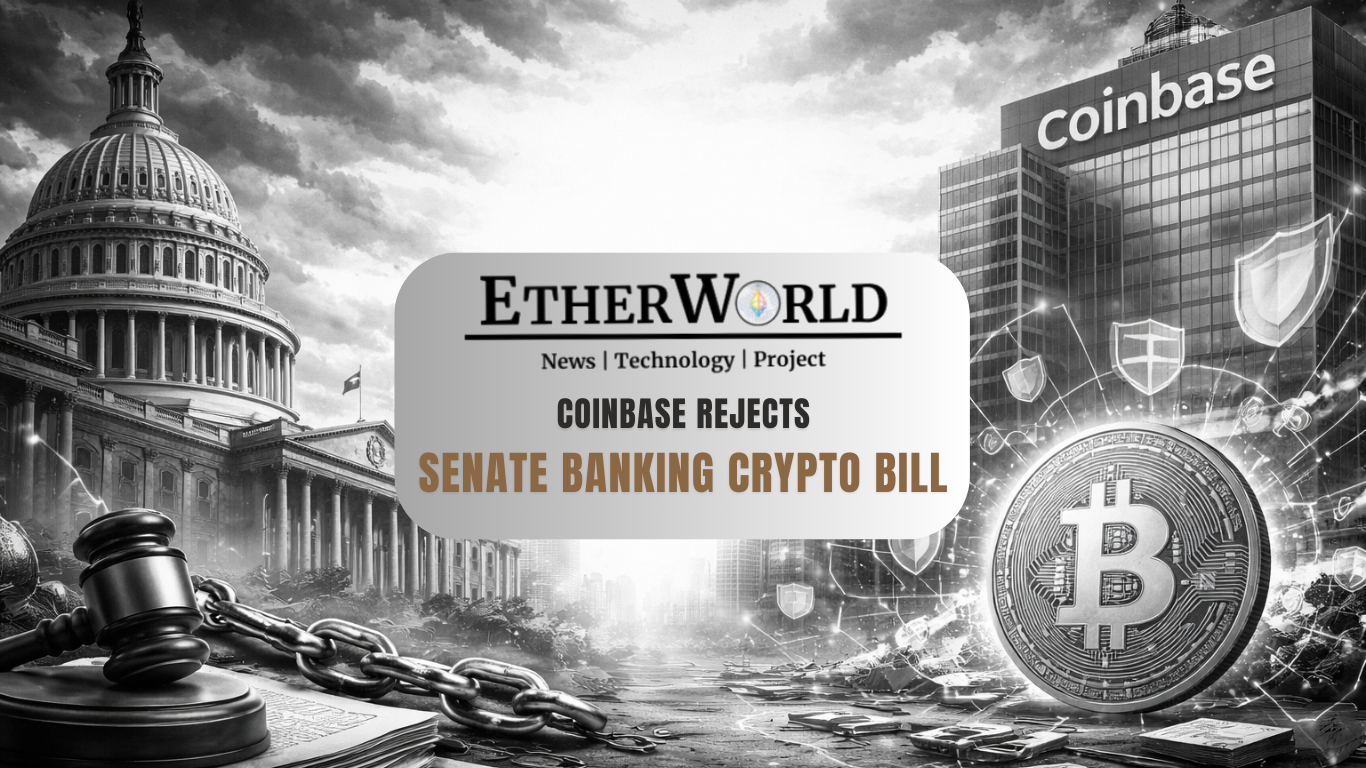
Coinbase has formally distanced itself from the latest draft of a U.S. Senate Banking Committee crypto bill, with CEO Brian Armstrong warning that the proposal, if passed in its current form, would do more harm than good to the American digital asset ecosystem.
In a public statement issued after reviewing the draft text over a 48-hour period, Armstrong said Coinbase “unfortunately can’t support the bill as written,” citing a series of provisions that he argued would undermine innovation, weaken privacy protections, & tilt the regulatory playing field in favor of traditional financial institutions.
The comments mark one of the strongest interventions yet from a major U.S. crypto exchange in the ongoing debate over how digital assets should be regulated at the federal level.
- Tokenized Equities at Risk
- Regulatory Turf Wars: CFTC vs SEC
- Stablecoins & Competition with Banks
- A Broader Debate About the Future of Crypto in America
The Senate Banking Committee has been working toward a bipartisan framework aimed at bringing greater clarity to crypto markets, particularly around stablecoins, market structure, & oversight responsibilities between regulators. The effort comes amid years of regulatory uncertainty, enforcement-driven policy, & growing concern that innovation is moving offshore.
Against that backdrop, Coinbase’s rejection carries weight. As one of the largest publicly listed crypto companies in the world, Coinbase has positioned itself as an advocate for clearer rules, consistent standards, & constructive engagement with lawmakers.
Armstrong’s message, however, suggests that not all regulation is better than no regulation. “We’d rather have no bill than a bad bill,” he wrote, arguing that the draft would be “materially worse than the current status quo.”
Tokenized Equities at Risk
One of the most serious objections raised by Coinbase relates to what Armstrong described as a de facto ban on tokenized equities. Tokenized equities have been widely viewed as a bridge between traditional capital markets & onchain infrastructure.
Proponents argue they could lower settlement times, improve transparency, & expand global access to financial markets. According to Armstrong, the Senate draft effectively shuts down this category by imposing restrictions that make compliant issuance or trading unworkable.
Such a move, he warned, would stifle a promising area of innovation before it has a chance to mature within U.S. regulatory boundaries. Another major point of contention is the bill’s treatment of decentralized finance.
Armstrong said the draft includes provisions that would severely limit DeFi activity, while simultaneously granting the government expansive access to user financial data. In his view, this combination risks eroding fundamental privacy rights without delivering proportional consumer protection benefits.
By extending surveillance-style requirements designed for centralized intermediaries into decentralized systems, the bill could force DeFi developers either to shut down or to exclude U.S. users entirely. Such an outcome, Armstrong implied, would push experimentation & talent abroad rather than addressing risks through targeted, technology-aware regulation.
After reviewing the Senate Banking draft text over the last 48hrs, Coinbase unfortunately can’t support the bill as written.
— Brian Armstrong (@brian_armstrong) January 14, 2026
There are too many issues, including:
- A defacto ban on tokenized equities
- DeFi prohibitions, giving the government unlimited access to your financial…
Regulatory Turf Wars: CFTC vs SEC
The bill also raises concerns about the balance of power between U.S. financial regulators. Armstrong specifically pointed to what he described as an erosion of the authority of the Commodity Futures Trading Commission, effectively making it subordinate to the Securities and Exchange Commission in crypto oversight.
For years, the crypto industry has argued that a clear division of responsibilities between the CFTC & SEC is essential for predictable regulation. The CFTC has traditionally overseen commodities markets, while the SEC regulates securities issuance & trading.
By consolidating more power under the SEC, Armstrong warned, the bill risks entrenching a more restrictive, enforcement-heavy approach that could discourage compliant innovation rather than encourage it.
Stablecoins & Competition with Banks
Stablecoins remain a core focus of the Senate Banking Committee’s work, & the draft includes amendments that Armstrong says would eliminate rewards on stablecoin holdings. These rewards are typically funded through interest earned on reserve assets.
Coinbase argues that banning them would prevent crypto-native firms from competing with traditional banks, effectively allowing incumbents to suppress new payment & savings models. From Coinbase’s perspective, such restrictions would limit consumer choice & slow innovation in digital payments.
Despite his criticism, Armstrong acknowledged the bipartisan effort behind the bill. He praised lawmakers for attempting to reach consensus but stressed that goodwill does not guarantee good outcomes.
In Coinbase’s assessment, the draft would lock in structural disadvantages that could take years to unwind. As a result, Armstrong said the company would rather see no bill passed than endorse legislation that damages innovation & competition.
A Broader Debate About the Future of Crypto in America
The dispute highlights a deeper policy question facing U.S. lawmakers: should crypto regulation prioritize restriction & control, or balance risk management with long-term competitiveness?
Industry participants increasingly warn that heavy-handed regulation could push talent, capital, & infrastructure abroad. Armstrong framed Coinbase’s position as a call for parity, arguing that crypto should be regulated on a level playing field with other financial services.
Coinbase says it will continue engaging with policymakers to push for a revised draft that protects consumers without undermining privacy, innovation, or fair competition. Whether the Senate Banking Committee adjusts its approach remains uncertain.
If you find any issues in this blog or notice any missing information, please feel free to reach out at yash@etherworld.co for clarifications or updates.
Related Articles
Disclaimer: The information contained in this website is for general informational purposes only. The content provided on this website, including articles, blog posts, opinions, & analysis related to blockchain technology & cryptocurrencies, is not intended as financial or investment advice. The website & its content should not be relied upon for making financial decisions. Read full disclaimer & privacy policy.
For Press Releases, project updates & guest posts publishing with us, email contact@etherworld.co.
Subscribe to EtherWorld YouTube channel for ELI5 content.
Share if you like the content. Donate at avarch.eth.
You've something to share with the blockchain community, join us on Discord!
Author

Blockchain Content & Ops Specialist, Avarch LLC.