Celebrating Five Years of the Beacon Chain
A look at how five years of the Beacon Chain shaped Ethereum’s Merge, Shapella and scaling roadmap.

On 1 December 2020, Ethereum switched on the Beacon Chain and began a change that would quietly reshape the network from the inside out. At that moment, it was seen as the first step toward Proof of Stake, nothing more.
Five years later, it is clear that this was the turning point that made everything that followed possible. The Beacon Chain is the reason the Merge succeeded, the reason withdrawals opened through Shapella, the reason data blobs and lower rollup fees arrived with Proto Danksharding and the reason the latest MEV and PBS conversations even matter today.
In this blogpost, we look back at what the Beacon Chain delivered, how Ethereum has grown since 2020 and why this remains one of the most remarkable consensus transitions ever attempted.
- Beacon Chain & the Start of Proof of Stake
- Validator & Staking Growth
- The Merge & Its Impact
- Shapella & Withdrawals
- Upgrades Enabled by the Beacon Chain
Beacon Chain & the Start of Proof of Stake
When the Beacon Chain went live, Ethereum was still entirely dependent on Proof of Work. The new chain brought in a parallel Proof of Stake system that ran quietly alongside the main network.
It introduced validator attestations, epoch based finality and the very first staking deposits through the official deposit contract. More importantly, the Beacon Chain carried the architecture that would later power the Merge and replace the old consensus model altogether.
Source: BBC
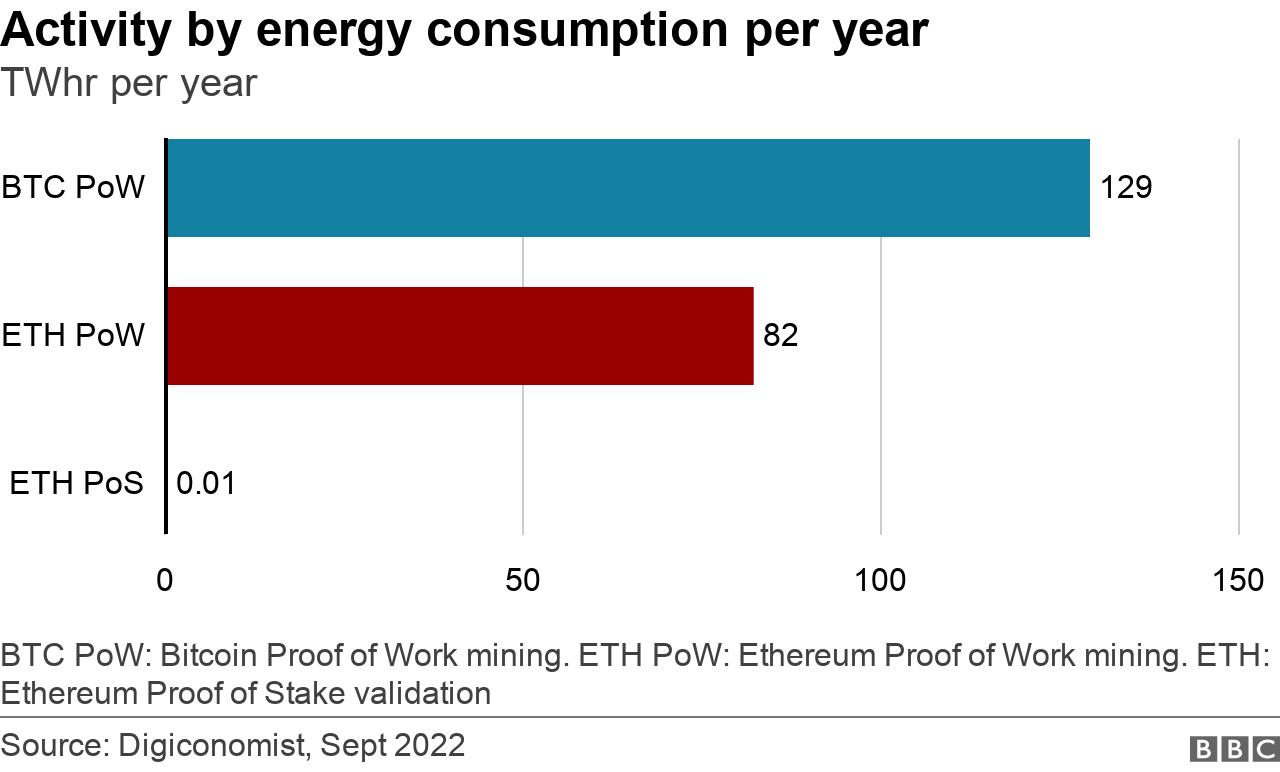
When Ethereum finally completed the transition in 2022, the impact was immediate and dramatic. The network’s energy use dropped by almost ninety nine point ninety five percent, placing Ethereum among the most energy efficient public blockchains in the world.
EtherWorld’s early Merge coverage remains one of the most referenced explanations of how this shift actually unfolded in practice.
Validator & Staking Growth
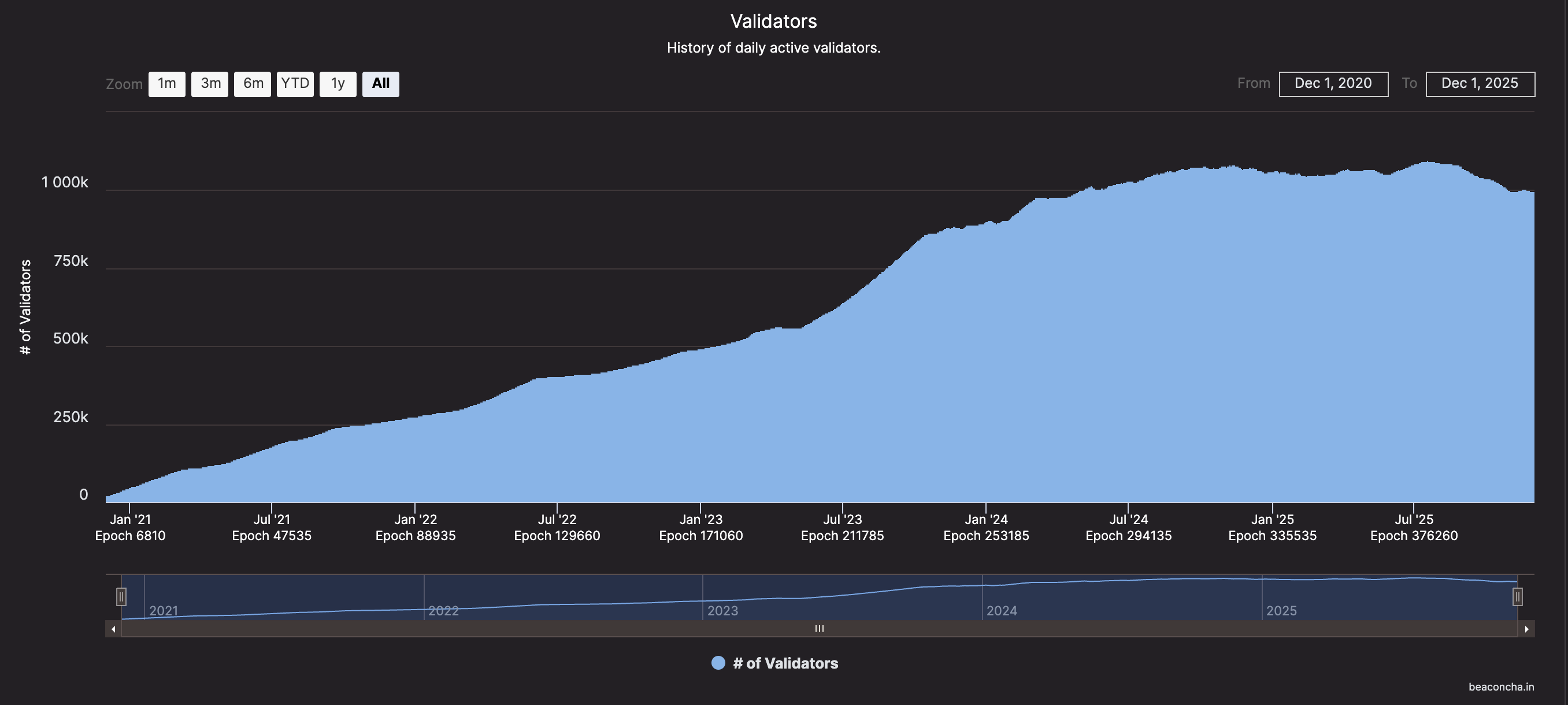
At genesis, the Beacon Chain started its journey with just over twenty one thousand validators. Five years later, that small beginning has grown into one of the most impressive staking expansions in the entire blockchain space.
Source: beaconcha.in
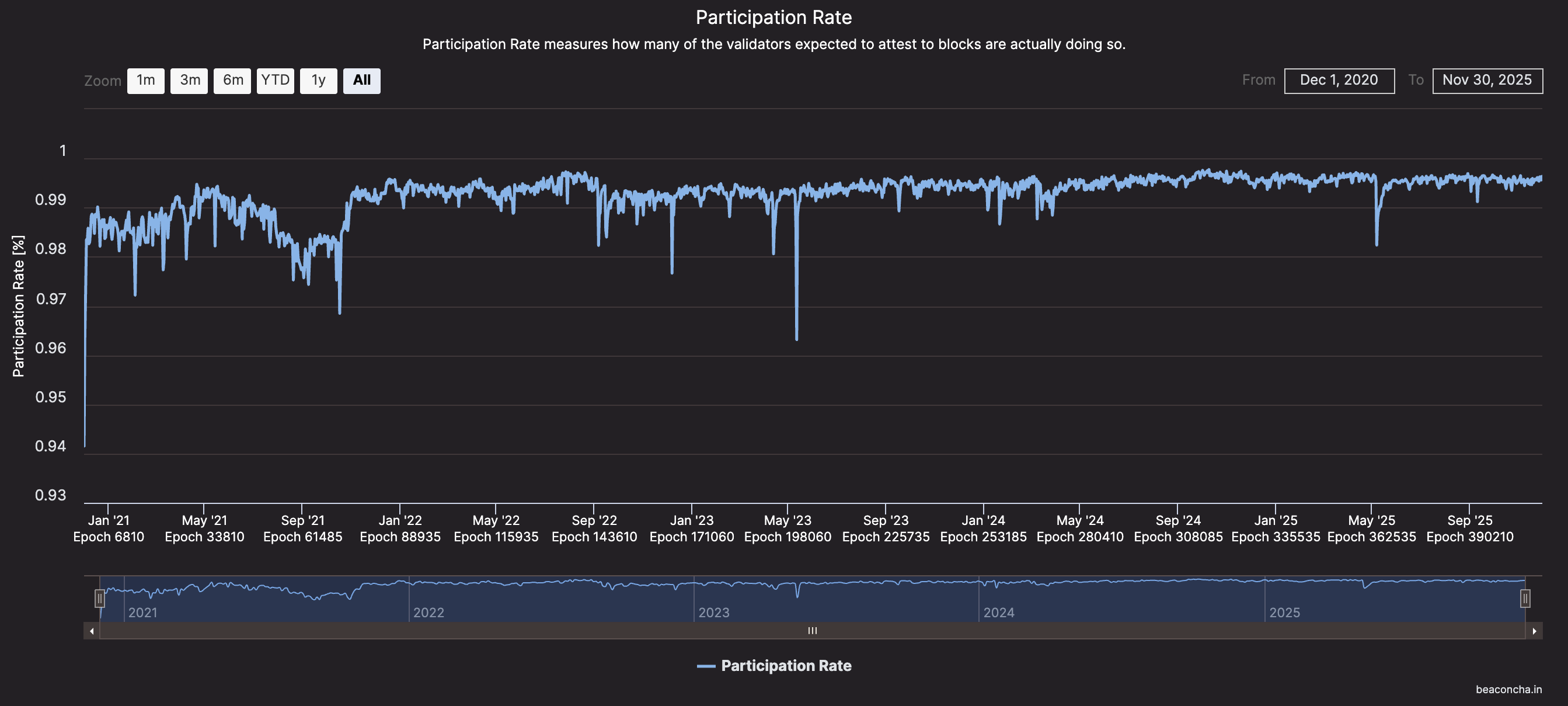
Ethereum now has more than one million active validators and participation consistently above ninety eight percent. This makes Ethereum the largest Proof of Stake validator set in existence.
Source: beaconcha.in
The introduction of Shapella also played a major role in this growth, as withdrawals gave people the confidence to stake without locking their funds indefinitely. Liquid staking then accelerated the momentum, and the wider layer two ecosystem began using staked ETH as a core asset in DeFi, which increased adoption even further.
The Merge & Its Impact
When the Merge finally took place on 15 September 2022, the Beacon Chain completed the job it had been quietly preparing for since its launch. Ethereum moved away from Proof of Work and shifted fully to Proof of Stake in a live transition that kept the chain running without interruption.
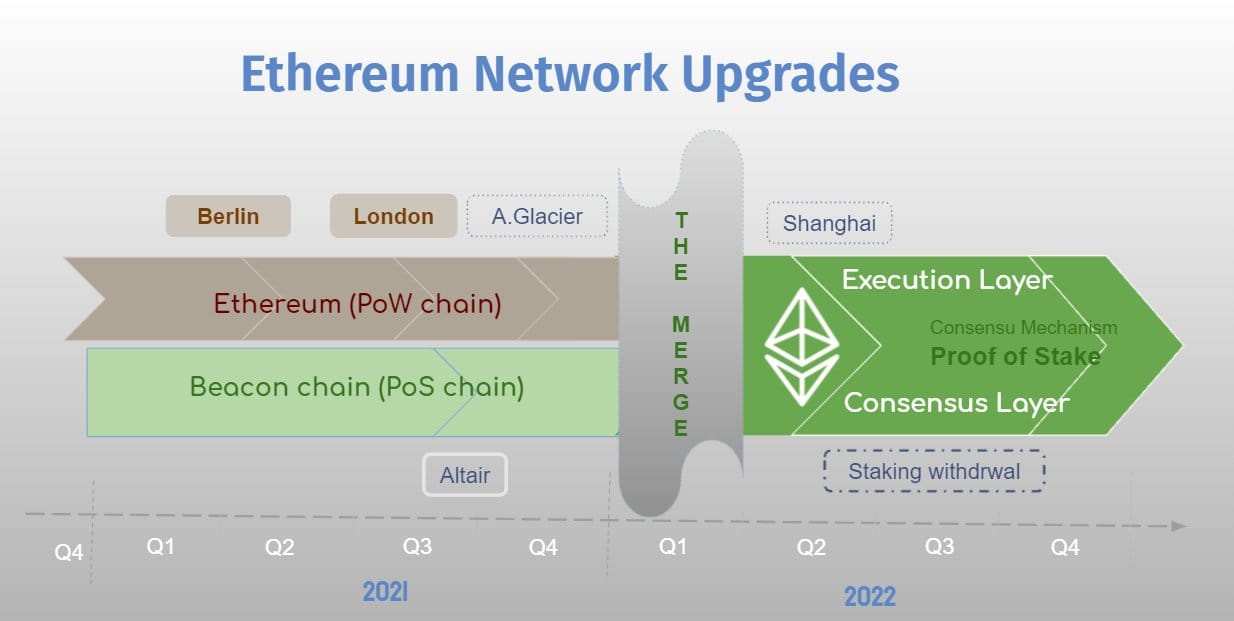
Image Source: Ethereum Cat Herders
Blocks continued to finalize, applications operated normally and users barely noticed the upgrade happening in real time. This smooth execution was the result of years of research, testnets, shadow forks and coordination between client teams, all of which were highlighted in EtherWorld’s early coverage of the expected changes around the Merge.
Shapella & Withdrawals
The arrival of Shapella in April 2023 changed the relationship between users and the staking system in a very real way. For more than two years, people had been staking ETH without any option to withdraw, which created a sense of uncertainty even among long term supporters.
Once withdrawals finally opened, the reaction surprised almost everyone. Instead of triggering a wave of selling, Shapella reassured the entire ecosystem that staking was safe, flexible and predictable.
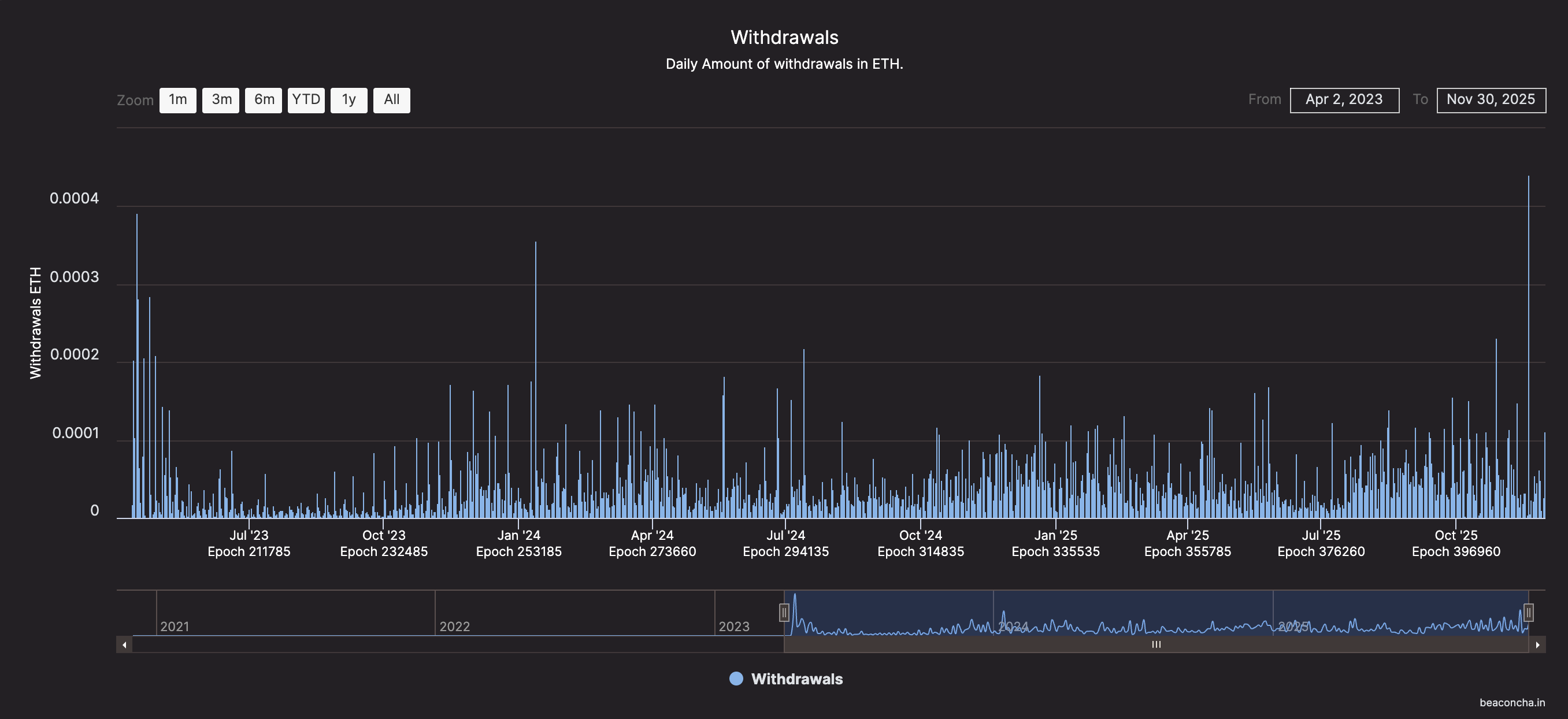
Source: beaconcha.in
Validators could finally exit, rebalance or simply claim their rewards without worrying about indefinite lock periods. This confidence boost is what pushed staking participation even higher in the months that followed, and the data from beaconcha.in shows how rapidly both deposits and validator counts climbed after the upgrade went live.
Upgrades Enabled by the Beacon Chain
Every major improvement that came after the Merge has been built on the back of the Beacon Chain’s architecture.
- Proto Danksharding, which introduced data blobs and brought down rollup fees across the ecosystem, relied entirely on the new consensus model that the Beacon Chain provides.
- The same is true for the ongoing work around Proposer Builder Separation and the broader MEV landscape, where researchers and client teams are trying to make block production more fair and more decentralised.
2/ Quick summary #ACDT62
— Pooja Ranjan | ranjan.eth (@poojaranjan19) December 1, 2025
Facilitated by @BarnabasBusa
🎂 5 Years of Beacon Chain!
A huge milestone for Ethereum’s decentralization and consensus journey!
🔷Fusaka:
- msf-1 completed last week
- No major bugs found ✅
- Ready and feeling safe for mainnet fork this Wednesday 🔥…
Looking ahead, upgrades like Heka Bogota, single slot finality, stronger fork choice rules and wider use of distributed validator technology are all possible because the Beacon Chain gives Ethereum a reliable and adaptable foundation. In a way, the Beacon Chain turned the protocol into something that can evolve without risking the entire network.
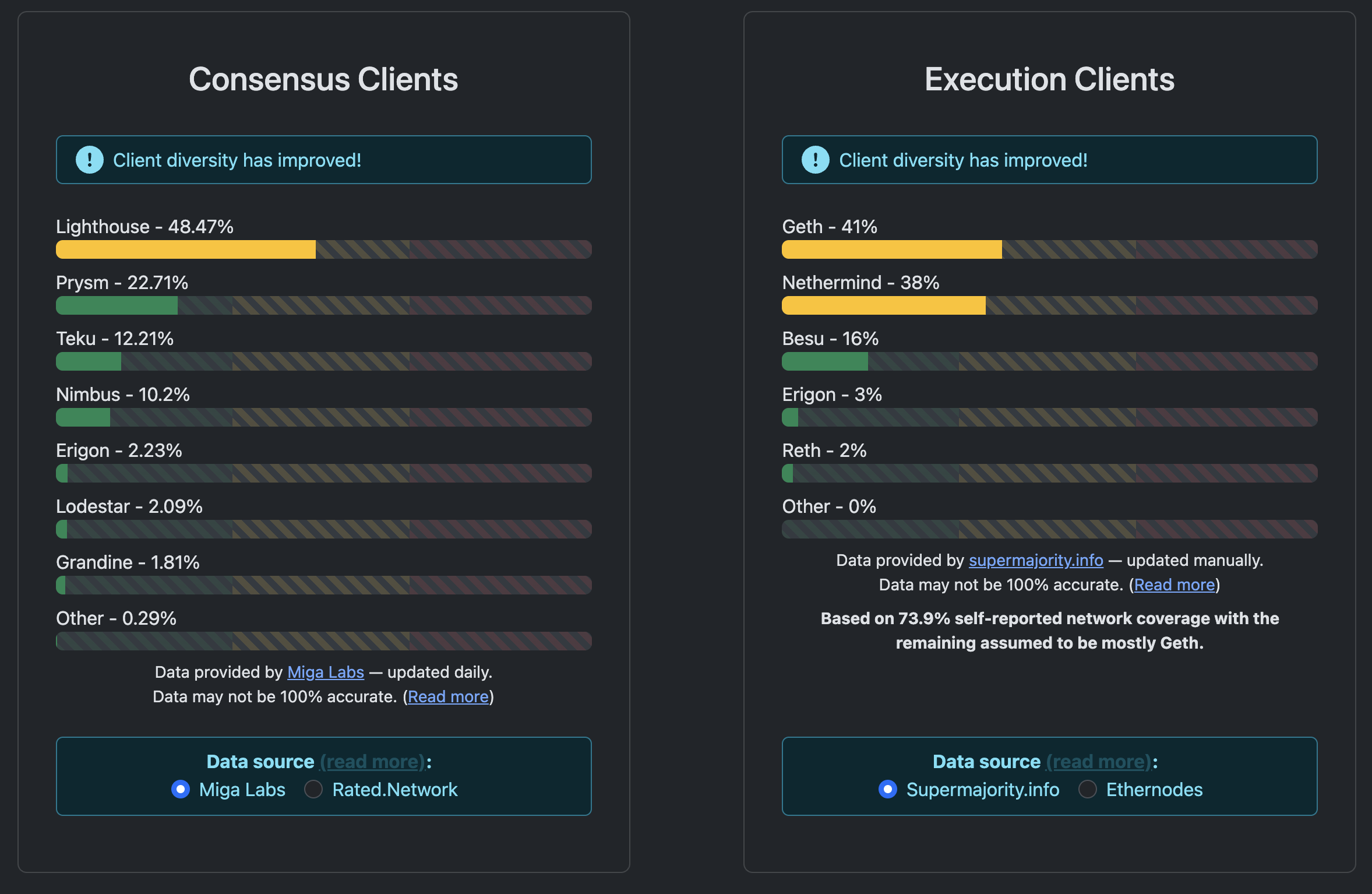
Source: clientdiversity.org
Ethereum now operates on a tiny fraction of the energy it once consumed. Decentralisation has also moved in a healthier direction, with more validators, more client diversity and more community involvement than at any point in the past.
All of this has strengthened the network’s credibility, especially because the most complex upgrade in its history happened without downtime and without harming any on chain activity. The Beacon Chain was more than the start of Proof of Stake.
Its stability enabled Shapella, Proto Danksharding, PBS reforms, upcoming fast finality research and the transition into the Heka Bogota era. Five years later, it remains one of the most important engineering achievements in blockchain.
The Beacon Chain allowed Ethereum to modernise without stopping, without splitting and without compromising decentralisation. Its next chapter will support full Danksharding and enshrined PBS, shaping Ethereum for the decade ahead.
If you find any issues in this blog or notice any missing information, please feel free to reach out at yash@etherworld.co for clarifications or updates.
Related Articles
- Ethereum Launches $2 Million Fusaka Audit Contest to Fortify Protocol Security
- Ethereum Developers Announce "The Weld" Repository Merger
- Ethereum Developers Target September 22 for Holesky Client Releases
- Ethereum Developers Face Blockers in Shadowfork Testing Ahead of Fusaka
- A New Playbook for Ethereum: Fusaka Rethinks Testnet & Mainnet Schedules
Disclaimer: The information contained in this website is for general informational purposes only. The content provided on this website, including articles, blog posts, opinions, & analysis related to blockchain technology & cryptocurrencies, is not intended as financial or investment advice. The website & its content should not be relied upon for making financial decisions. Read full disclaimer & privacy policy.
For Press Releases, project updates & guest posts publishing with us, email contact@etherworld.co.
Subscribe to EtherWorld YouTube channel for ELI5 content.
Share if you like the content. Donate at avarch.eth.
You've something to share with the blockchain community, join us on Discord!
Author

Blockchain Content & Ops Specialist, Avarch LLC.